UK Police Abandoned Crime Prediction Models Staff Couldn't Trust
Bristol's sprawling predictive analytics program scored half a million residents using sensitive data, but key algorithms were quietly scrapped after accuracy concerns.
Police built a massive predictive system without public knowledge
Avon and Somerset Police in the UK developed at least 23 separate machine learning models to predict criminal behavior, creating what one officer called a "league table" of the region's most dangerous people. The effort centered on the Think Family Database, launched in 2016, which compiled records on nearly half a million Bristol residents—including police intelligence, mental health data, housing status, and school meal eligibility—without their knowledge or consent.
The database and its algorithms aimed to identify risks ranging from burglary and domestic abuse to child exploitation. One police data scientist described the approach at a 2022 event as dumping "all that data in a big bucket" and stirring "it with a data-science spatula" to produce risk scores for everyone.
But according to documents obtained by WIRED through public records requests conducted with Liberty Investigates, the Bristol Cable, and Lighthouse Reports, at least two of these predictive models were quietly abandoned after Bristol City Council staff said they could no longer trust the results.
Why it matters
As the UK moves to embrace AI across criminal justice—led in part by the former Avon and Somerset chief constable who now heads the national College of Policing—this investigation reveals how even well-resourced predictive policing programs can fail in practice. The findings raise questions about transparency, accuracy, and the use of sensitive social data as proxies for crime risk, issues that will only intensify as these systems spread.
Models designed to protect children deemed unreliable
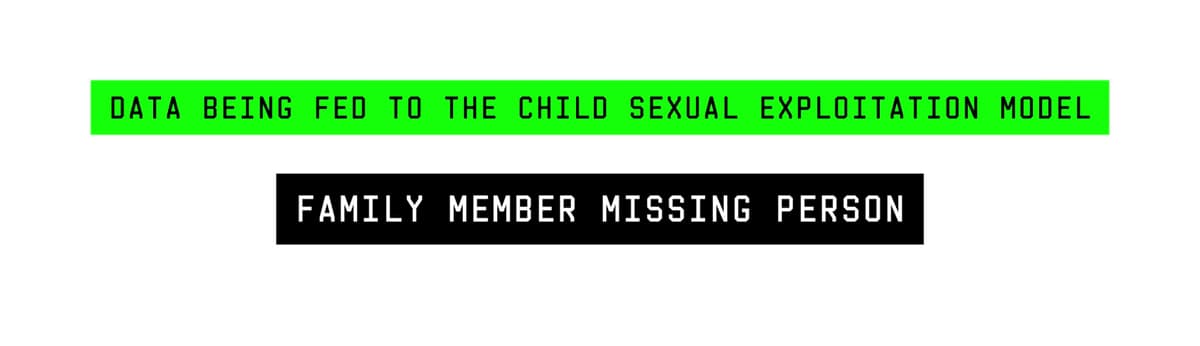
The Child Sexual Exploitation (CSE) and Child Criminal Exploitation (CCE) models drew on data from police, councils, and public agencies including whether families received housing support, were in rent arrears, or children received free school meals. A 2018 review by Cardiff University's Data Justice Lab noted these variables "can in practice be proxies for poverty."
An independent 2023 review by Social Finance, obtained by WIRED, found the risk-scoring models were the "weakest element" of the project. Council staff reported a "lack of accuracy" had undermined their usefulness. The review revealed that police had stopped incorporating Bristol City Council data into the models, instead attempting to profile children across the entire five-council Avon and Somerset region using only police data.
After that change, social workers told reviewers that vulnerable children "were not listed" in results. One staff member said: "I wouldn't go into a meeting saying I've seen this on TFD, because I wouldn't be confident that that is accurate enough." Another noted: "We know there's young girls that get criminally exploited, but they don't come up, we don't talk about them cause they don't fit."
Lack of transparency and oversight
John Pegram, leader of a local police accountability group, says he didn't learn about the Offender Management App—designed to hold data on 300,000 people—until 2023, years after its creation. When he requested information about his own data in 2024, police refused to disclose details. Only after hiring solicitors did police confirm he was included in the system.
Elle Pearson, a Royal Holloway University researcher studying the programs, told WIRED that "in some instances it might just be one person who's creating these risk models that are making decisions affecting potentially hundreds of thousands of people."
A 2021 review by the now-dissolved Centre for Data Ethics and Innovation found "ethical tensions" with the project, noting that "legality is not the same as legitimacy" when gathering sensitive data through legal gateways rather than building public trust.
Police data comprising over 36,000 model performance scores reviewed by an independent analyst for WIRED showed what appeared to be "genuinely poor predictive performance" in some cases.
These details were first reported by WIRED in partnership with Liberty Investigates, the Bristol Cable, and Lighthouse Reports.
This is an original analysis by the Omega editorial team. Source reporting: WIRED.
Want systems like this working for your business?
Book a Call