UK Plans AI Age Scans for Asylum Seekers Despite Bias Concerns
Internal government testing reveals facial age estimation technology misidentifies children as adults, particularly among Sub-Saharan Africans.
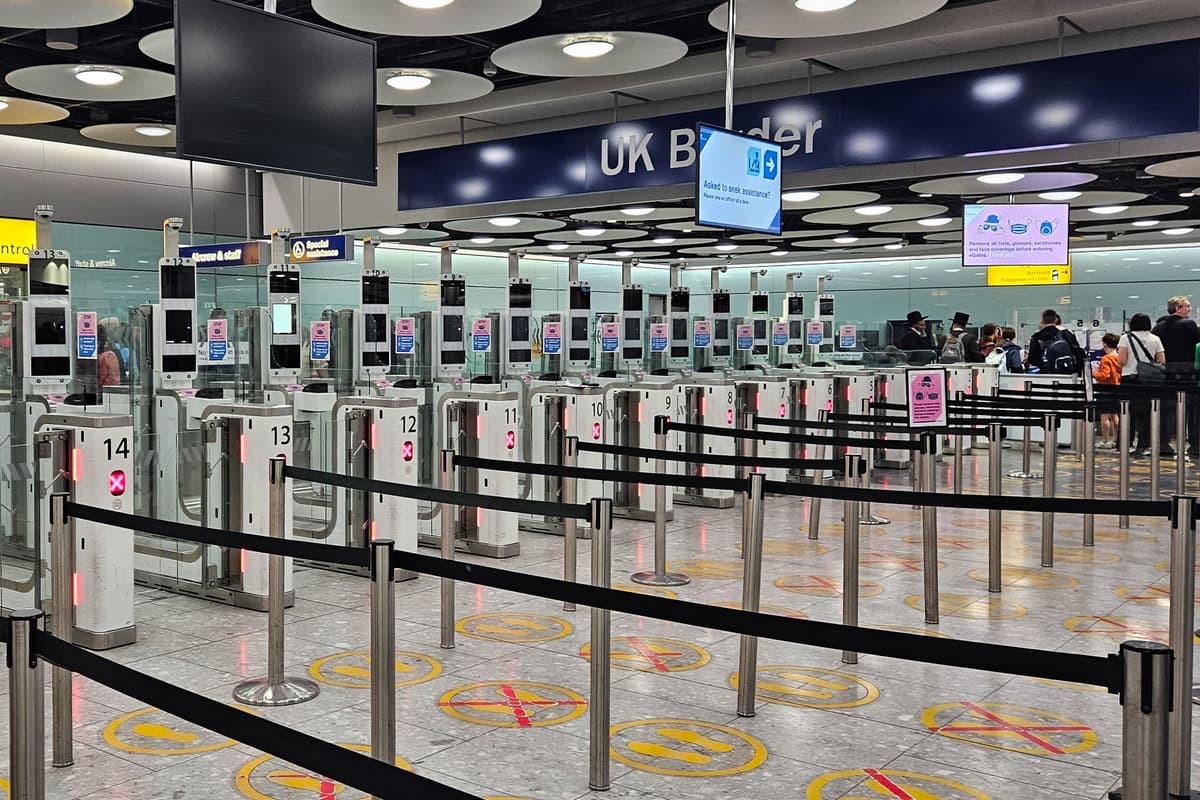
The United Kingdom government intends to deploy facial age estimation technology at its borders starting in 2027 to help determine the ages of asylum seekers who arrive without documentation. The decision makes the UK the first nation known to use AI-powered age scanning in this context, despite internal testing that reveals significant accuracy problems and racial bias.
An internal Home Office report obtained by WIRED and Lighthouse Reports shows that the technology performs substantially worse when analyzing images of Sub-Saharan Africans—the largest group of migrants currently subject to age assessments in the UK. For female Sub-Saharan Africans, the system's age estimates were off by an average of 4.6 years, meaning a 13.5-year-old girl could be classified as an 18-year-old adult.
Why it matters
Misclassifying children as adults at borders has immediate, severe consequences: minors lose legal protections and can be placed in adult detention centers. The UK's move to deploy facial age estimation despite documented flaws sets a precedent that other nations may follow as governments worldwide increase surveillance of migrants. The technology's bias against the very populations most likely to undergo these assessments raises fundamental questions about algorithmic fairness in high-stakes government decisions.
Testing revealed systematic problems
The leaked April 2025 report details testing of seven facial age estimation algorithms against more than 2.5 million images. Even the best-performing system showed "substantial deviations" when analyzing Sub-Saharan Africans and tended to predict that 17-year-olds were over 18. The system also performed worse on females across demographics.
Photo quality emerged as a critical variable. Images taken at initial border encounters were "routinely worse" than follow-up photos, and the report acknowledged it couldn't determine whether poor image quality or the physical condition of asylum seekers after arduous journeys had greater impact on accuracy. Years of testing by the US National Institute of Standards and Technology confirm that lower-quality photos typically produce larger errors in age estimation systems.
The Home Office disbanded a scientific committee that advised on age estimation methods while exploring AI implementation. Tim Cole, an emeritus professor of medical statistics at University College London and former committee member, describes the face scans as "hideously inaccurate." Cole says the committee wanted to highlight inadequacies in facial age estimation but was not given the opportunity before being shut down.
Operational concerns remain unaddressed
The Home Office spent more than $400,000 in May 2025 on face-scanning technology from German company Cognitec, one of the seven algorithms tested. Analysis of public data shows Cognitec's system misclassified twice as many 16-year-olds as being 18 or older when tested on lower-quality border crossing photos compared to higher-quality visa images.
While the Home Office maintains the technology will be an "additional" tool that won't replace human judgment, it has not explained how border officers will use the system in practice or what training they will receive to address its documented weaknesses. Previous inspection reports found that staff conducting age assessments received no specific training until 2023 and that human-led processes have included poor record-keeping and inadequate explanations.
Sixty-two organizations, including rights group Foxglove, sent an open letter to the UK government asking it to scrap the program. "Children seeking asylum have often suffered unimaginable trauma," says Martha Dark, Foxglove's co-executive director. "They should not be the test subjects for experimental tech that has baked-in inaccuracy and racist bias."
The findings were first reported by WIRED and Lighthouse Reports in collaboration with The Independent.
This is an original analysis by the Omega editorial team. Source reporting: WIRED.
Want systems like this working for your business?
Book a Call