UK Elevates AI Minister to Cabinet, Dissolves Tech Department
Kanishka Narayan gains cabinet seat as DSIT is dismantled and responsibilities dispersed across government.
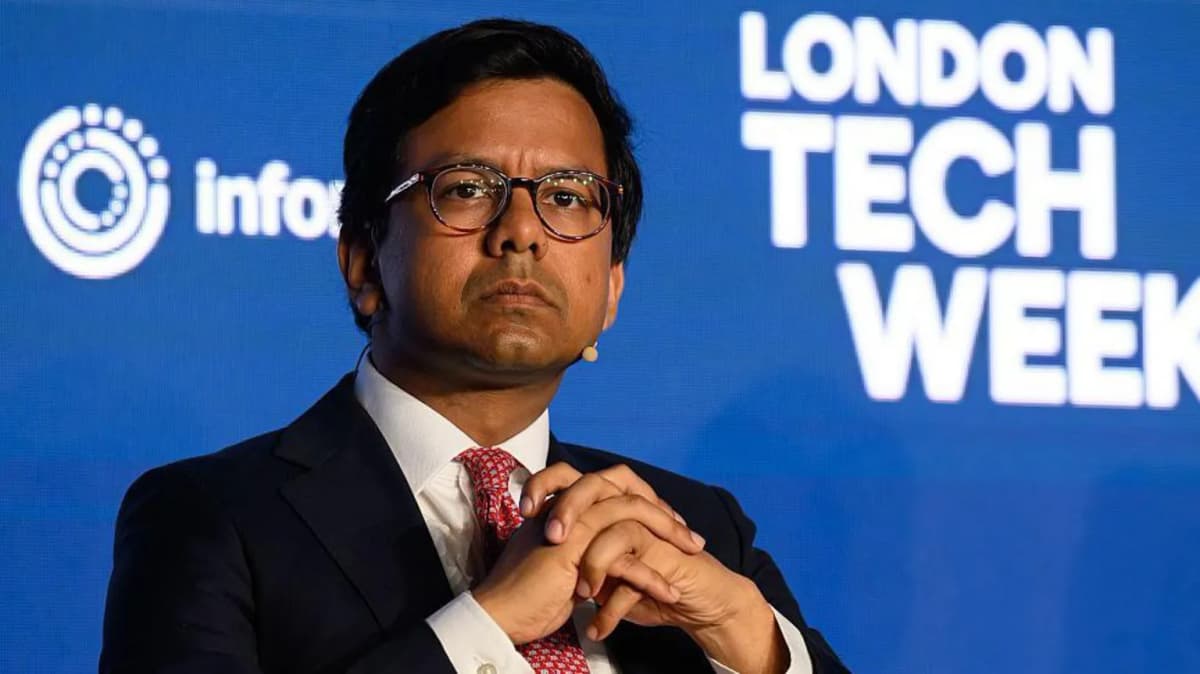
The United Kingdom has restructured its technology governance, elevating its AI Minister to cabinet level while simultaneously dissolving the Department for Science, Innovation and Technology.
Kanishka Narayan, who serves as AI Minister, will now attend cabinet meetings under Prime Minister Andy Burnham's government. The move comes as DSIT—created by the Conservative Sunak government in 2023—is being dismantled, with its responsibilities redistributed across other government departments.
The reorganization eliminates the dedicated technology secretary position previously held by Liz Kendall, who was removed when Burnham became Prime Minister. Narayan, originally appointed by former Prime Minister Sir Keir Starmer, characterized his cabinet invitation as evidence of "deep commitment to AI's importance."
The Minister's Background and Mandate
Born in India and raised in Cardiff, Narayan entered Parliament in 2024 as MP for the Vale of Glamorgan after working in both government and business. As Parliamentary Under-Secretary of State in Starmer's government, he oversaw AI opportunities, the AI Security Institute, semiconductors, and online safety—briefs he is expected to continue managing without departmental leadership.
Narayan described AI as "likely the most significant technology in human history" in a social media post, outlining aspirations for a "reindustrialised Britain, stronger national security, public services transformed for the better." He acknowledged public concerns about job displacement and the pace of technological change.
Infrastructure and Energy Challenges
Professor Adam Beaumont, chairman of telecoms firm AQL, identified infrastructure resilience as the most pressing issue facing the new minister. He emphasized the need for increased domestic computing capacity through additional data centres, though such expansion has proven controversial due to concerns about water supply strain.
Beaumont stressed that energy infrastructure represents the critical bottleneck: "Without power there's no compute, without the compute there's no knowledge economy. All our aspirations on digital growth are reliant on the assumption of readily available energy, but that is not growing in line with the exponential growth of AI."
Political and Economic Pressures
Professor Gina Neff, head of the Minderoo Centre for Technology and Democracy at the University of Cambridge, noted that job displacement from AI remains one of the most pressing policy challenges. She observed that for a Labour government to stake electoral success on AI benefits, "people need to feel the benefits before any job losses."
Dom Hallas, head of the Startup Coalition tech trade body, cautioned that dismantling DSIT should not slow technology policy momentum. He advocated for spreading AI adoption throughout government and the broader public sector.
Why it matters
The cabinet elevation signals executive-level prioritization of AI policy at a time when computing infrastructure, energy capacity, and workforce transition present immediate practical constraints. Whether concentrating AI authority while dispersing broader technology responsibilities accelerates or fragments policy execution will shape the UK's competitive position in a technology domain where infrastructure lead times measure in years.
These details were first reported by BBC News.
This is an original analysis by the Omega editorial team. Source reporting: AI Watch.
Want systems like this working for your business?
Book a Call
