UChicago Law Bans Laptops for 1Ls to Combat AI Dependence
The university's law school will prohibit first-year students from using phones, tablets, and laptops in class starting fall 2025.
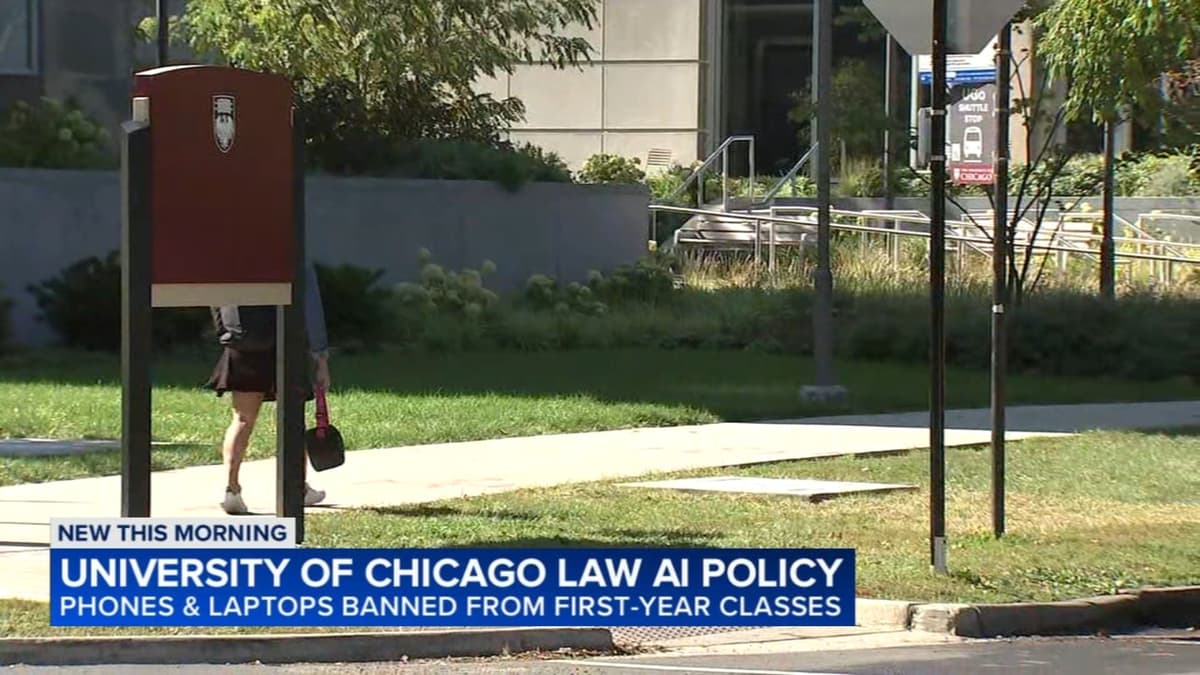
Law School Implements Device Ban for First-Year Students
The University of Chicago Law School will prohibit first-year students from using phones, tablets, and laptops in class beginning this fall, marking one of the most restrictive technology policies adopted by a major law school in response to artificial intelligence tools.
The ban applies specifically to 1L students and aims to ensure they develop critical thinking and analytical skills without depending on AI assistance during their foundational year of legal education.
Why it matters
This policy represents a significant institutional response to generative AI in professional education. While many schools are still debating how to integrate AI tools, Chicago's approach suggests some elite institutions believe the technology poses risks to skill development during crucial early training. The move could influence policy discussions at other law schools weighing similar concerns about AI's impact on legal reasoning and independent analysis.
Policy Details and Exceptions
The restrictions extend beyond classroom learning to assessment environments, where phones and laptops will remain prohibited during exams regardless of year. However, the policy includes accommodations for students with disabilities who require electronic devices.
Professors retain authority to designate specific students to take notes electronically for the class, providing a mechanism for shared documentation while maintaining the general device restriction.
AI Education Reserved for Upper-Level Courses
The law school established an AI committee in 2023 to evaluate how the technology should factor into legal education. Based on feedback from that committee, the school determined that students must first master traditional legal analysis before learning to work with AI tools.
AI instruction will be incorporated into upper-level courses, where students with foundational skills can explore how the technology applies to legal practice. Faculty teaching elective courses will have flexibility to develop their own AI policies tailored to specific subject matter.
Strategic Versus Reactive Approach
The university framed the policy as promoting strategic and independent thinking rather than simply blocking technology. The distinction matters: the school isn't rejecting AI as irrelevant to legal practice, but rather sequencing when and how students encounter it during their education.
By reserving device use for upper-level students and allowing faculty experimentation in electives, the policy attempts to balance preparing future lawyers for an AI-enabled profession while ensuring they can function effectively without technological assistance.
These details were first reported by ABC7 Chicago.
This is an original analysis by the Omega editorial team. Source reporting: AI Watch.
Want systems like this working for your business?
Book a Call
