UC Santa Barbara Researchers Give AI Geometric Understanding
New neural network architecture treats data as continuous functions rather than discrete points, making systems more robust and reliable.
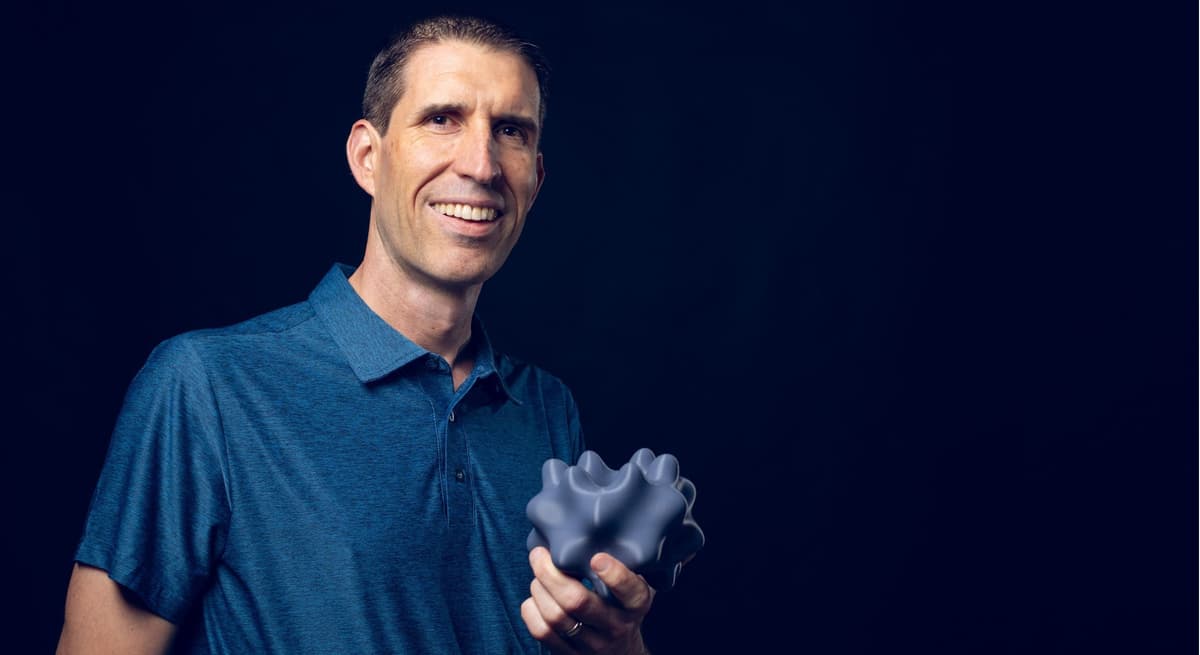
Researchers at UC Santa Barbara have developed a new approach to artificial intelligence training that addresses a fundamental limitation: most AI systems lack an understanding of geometry.
Professor Paul Atzberger and graduate student Blaine Quackenbush created what they call Geometric Neural Operators (GNPs), a neural network architecture that incorporates mathematical concepts from differential geometry. The team recently released version 2.0 of their open-source Python package, along with technical papers and pre-trained model weights on GitHub.
The pattern recognition problem
Conventional AI training encourages models to identify patterns in large datasets, making them effective at recognizing things similar to their training examples. This approach breaks down when systems encounter significantly different inputs, limiting their utility in novel applications.
Traditional neural networks lack innate understanding of geometric properties like the arc-length of a curve or the curvature of a surface. Instead, they rely on general patterns in overall shapes or arrangements of specific data points.
A continuous approach to data
The UC Santa Barbara team's architecture takes a fundamentally different approach by treating discrete data points as samples from underlying continuous functions. This makes the AI agnostic to how shapes are represented using discrete points.
"We're leveraging concepts from mathematics and differential geometry so these AI algorithms see the data as more than just a collection of floating points," Atzberger explained in the announcement. The system provides awareness of interconnected parts made up of edges, curved surfaces and other geometric forms.
Because the algorithm maps points to functions, it returns consistent results regardless of how data is sampled or organized. This makes it robust against noise and methodological variations. The geometric approach also enables the system to handle shapes very different from those in its training data.
Practical applications
The research team demonstrated that GNPs can solve heat transport problems on intricately shaped surfaces, eliminating weeks of manual programming work. Users can input any point cloud representation of a surface and receive curvature, metrics or other geometric properties in a noise-resistant way.
The system works bidirectionally—it can identify an object's shape based on measurements and extends beyond surfaces to three-dimensional or higher-dimensional spaces.
Atzberger's group envisions applications in designing engineered parts with multiple constraints, such as optimizing heat propagation in cooling fins. The methods could also accelerate complex physical simulations in biological systems like cell membranes or fluid flows around complicated shapes. The team is currently extending their methods for computer-aided design, LIDAR data processing, and computational physics simulations.
Why it matters
As AI systems take on more critical roles in healthcare, autonomous vehicles, and other high-stakes domains, their opacity poses serious safety risks. When current AI techniques fail, identifying the cause is often difficult because they operate as "black boxes." By giving AI systems conceptual frameworks that mirror human understanding of geometry, researchers are working toward more transparent and auditable systems—a crucial step as these tools permeate sectors with legal liabilities and equity implications.
The details were first reported by UC Santa Barbara.
This is an original analysis by the Omega editorial team. Source reporting: AI Watch.
Want systems like this working for your business?
Book a Call