Uber Reclaims 70,000 CPU Cores Through Dynamic Go Runtime Tuning
The company's Zero Growth Stack decouples infrastructure from demand, but AI coding tools drive monthly developer costs to $2,000.
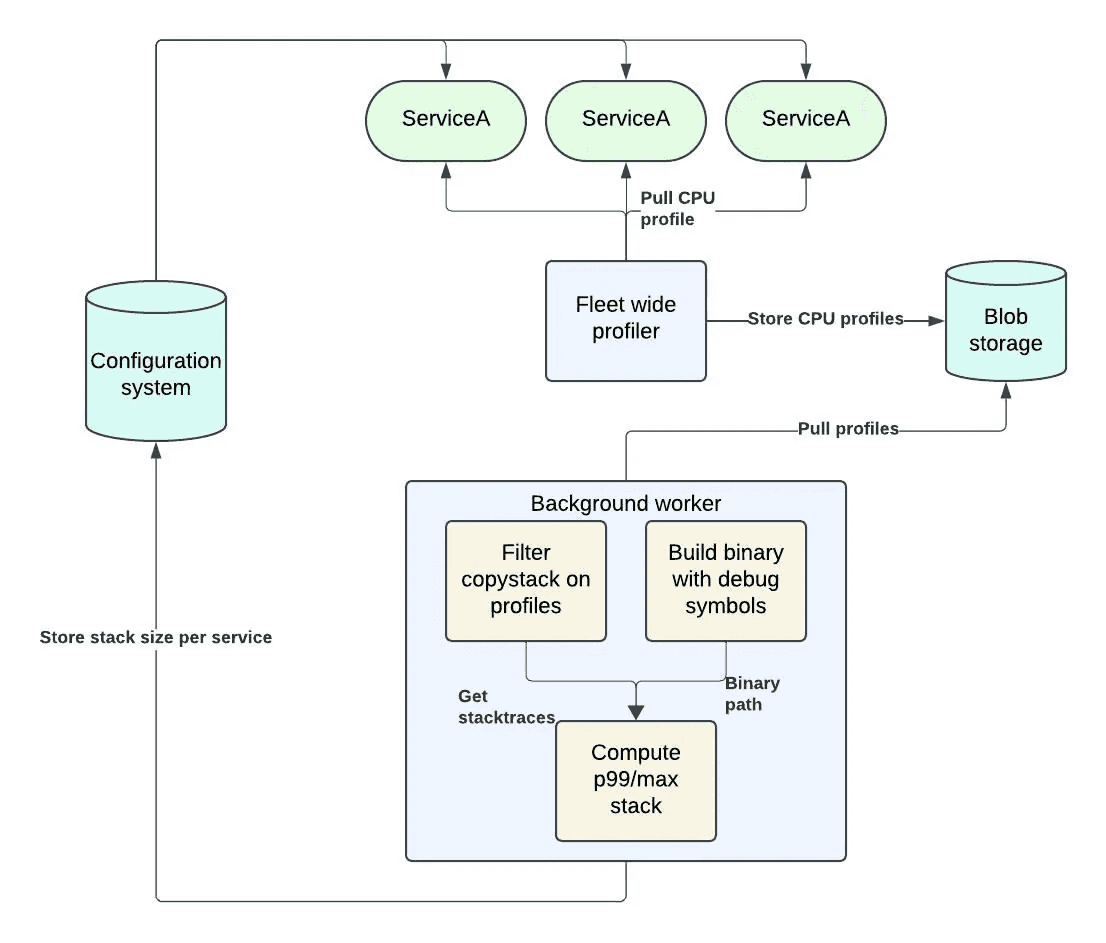
Uber's infrastructure strategy targets efficiency over expansion
Uber has developed what it calls a "Zero Growth Stack"—an infrastructure approach designed to maintain service scaling without proportional hardware expansion. The strategy centers on automated runtime optimization and disciplined AI lifecycle management, allowing the company to reduce its physical footprint while supporting business growth.
According to InfoQ, which first reported these details, the initiative achieved measurable results through a custom Go runtime optimization tool that reclaimed 70,000 CPU cores across 30 production services.
Dynamic garbage collection replaces static tuning
The core technical innovation is GOGCTunner, a library that automates adjustment of Go's GOGC parameter. Traditional static garbage collection tuning proved inadequate for services with memory footprints ranging from 100MB to 1GB. GOGCTunner integrates with cgroup memory limits and monitors live object utilization to dynamically adjust GC frequency relative to heap growth.
The system maintains heap size at 1.25 times live objects while enforcing a 70% memory utilization threshold to prevent out-of-memory failures. This control loop replaced manual configuration across mission-critical services, delivering the substantial core reclamation.
AI coding tools create new cost pressures
While infrastructure efficiency improved, Uber's adoption of generative AI in software development introduced economic friction. The company deployed a multi-layer architecture: a platform layer using Michelangelo AI as a model gateway, a context layer with an MCP Gateway for internal source code injection, specialized background agents including Minion and Shepherd, and review tools like uReview and Code Inbox.
Adoption reached 92% of engineers monthly, with AI authoring 31% of new code and Autocover generating over 5,000 unit tests per month. However, AI-related costs increased sixfold since 2024. Token-based billing models exhausted budgets, pushing individual developer costs to $2,000 monthly by early 2026.
Cost governance replaces unconstrained access
Uber responded by implementing usage caps of $1,500 per developer and shifting from aggregate cost tracking to granular metrics. The company is now auditing AI-generated code efficacy, moving beyond simple throughput measures.
Proposed metrics include a "net code quality ratio" comparing post-release hotfix frequency between AI-authored and human-authored code, and "compute efficiency per feature" to assess whether AI-generated code overhead—including potentially redundant tests—aligns with infrastructure sustainability goals.
Why it matters
Uber's experience illustrates a fundamental tension in enterprise AI adoption: tools that accelerate development can simultaneously create infrastructure and cost burdens that offset productivity gains. The company's shift from celebrating AI adoption rates to scrutinizing per-feature compute efficiency signals a maturation in how organizations evaluate generative AI ROI. As more enterprises hit similar cost ceilings, Uber's metrics framework—particularly the focus on code quality ratios rather than volume—may provide a template for sustainable AI integration.
These details were first reported by InfoQ.
This is an original analysis by the Omega editorial team. Source reporting: AI Watch.
Want systems like this working for your business?
Book a Call