Trust in AI Splits Sharply by Country, Gender, Age, Politics
New survey data reveals stark divides in who believes artificial intelligence will benefit society — and who stands to lose.
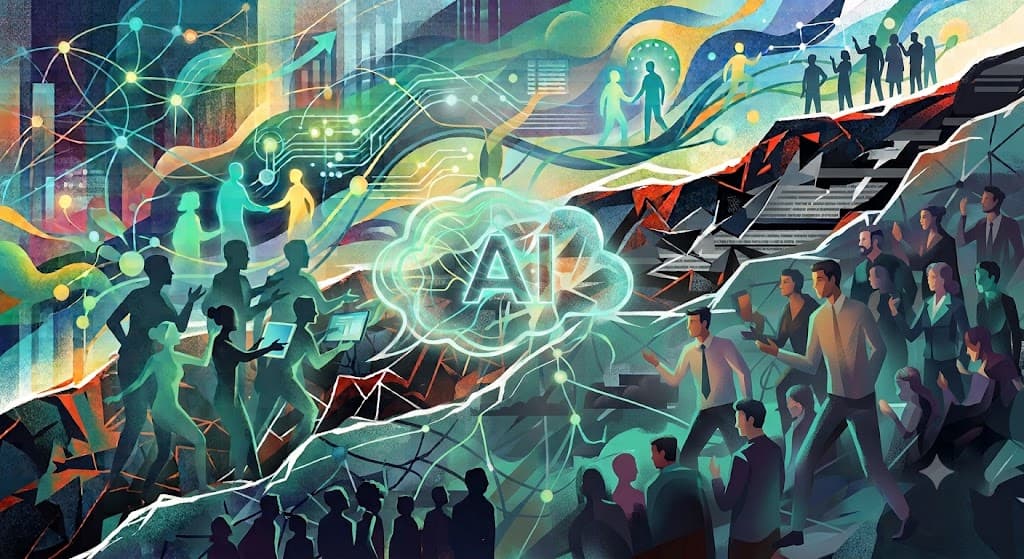
Public confidence in artificial intelligence varies dramatically depending on where you live, your gender, age, and political affiliation — with some of the gaps reaching startling proportions, according to new survey data analyzed by AI researcher Oren Etzioni.
The geographic divide stands out most starkly. Nearly nine in ten people in China trust AI, according to Edelman's research, while barely one-third of Americans share that confidence. Stanford's AI Index finds a similar chasm when asking whether AI's benefits outweigh its drawbacks: most Chinese respondents say yes, while most Americans express doubt.
The pattern suggests that trust in AI tracks closely with two factors: confidence in institutions and expectations of personal economic gain. Both run higher in many Asian countries with rapidly growing economies, where AI represents opportunity rather than displacement.
Gender and generational gaps
In the United States, men are roughly twice as likely as women to expect AI will benefit society, according to Pew Research. That gap widens even further among AI researchers themselves. The difference persists despite women now using chatbots at the same rate as men — a shift that occurred over the past two years. Women are also more likely to say AI development is moving too quickly.
Age creates its own paradox. Adults under 50 use ChatGPT at twice the rate of older generations, Pew reports, yet those under 30 are most convinced AI will harm society. This reflects concrete concerns: younger workers recognize they're most exposed to AI-driven job displacement. Gen Z respondents are more likely than any older cohort to expect AI will damage their employment prospects, according to Harris Poll data.
Why it matters
These divides reveal that AI is being built primarily by those most enthusiastic about it — researchers and technologists with careers tied to its success — while the broader public remains skeptical. The gap between expert optimism and public wariness has real implications for regulation, adoption, and the social contract around emerging technology. Most AI researchers expect the technology to help their countries over the next two decades, but fewer than one in five members of the general public share that view.
Professional stakes and political shifts
Professional exposure shapes attitudes predictably. Technology workers welcome AI in the workplace while transportation workers oppose it — a pattern that reflects whose livelihoods face disruption. The experts who understand AI's capabilities and limitations fear catastrophic scenarios less than the public, but they also have fortunes riding on the technology's success.
Political attitudes have shifted rapidly. Two years ago, Republicans were the primary AI skeptics. Today, Democrats have caught up and surpassed them in distrust. Just over half of Republicans now trust Washington to regulate AI, compared to barely one-third of Democrats, Pew finds. AI companies now enjoy more admiration on the right than the left, according to Harris Poll data, as Republicans warm to a technology boom their party increasingly champions.
Despite partisan differences, majorities in both parties worry regulation will do too little rather than too much. The split centers on who should do the regulating, not whether regulation is needed.
The analysis, drawing on surveys from Edelman, Pew Research, Stanford's AI Index, and Harris Poll, was first reported by GeekWire's AI Watch.
This is an original analysis by the Omega editorial team. Source reporting: AI Watch.
Want systems like this working for your business?
Book a Call
