Trump's Anthropic Export Ban Exposes Europe's AI Dependency
A sudden White House order blocking Claude AI from foreign markets has forced European leaders to confront their reliance on American technology.
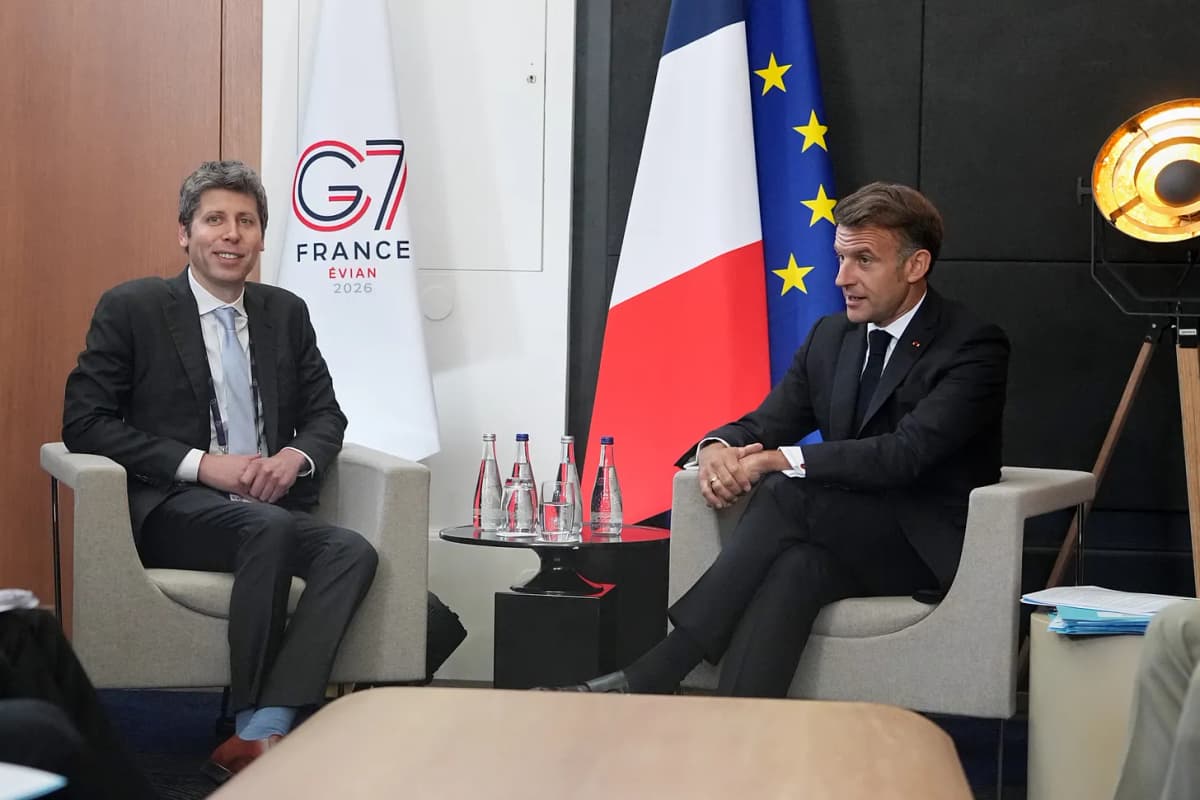
When the G7 summit dedicated its third day to artificial intelligence this week, European leaders sat across from the CEOs of America's dominant AI companies. Within days, the White House would demonstrate exactly how precarious that relationship has become.
Last Friday night, the Trump administration imposed sweeping export controls on Anthropic with virtually no warning. The company received just 90 minutes to comply with an order blocking its Claude AI models—Fable 5 and Mythos 5—from foreign customers. The justification: vulnerabilities that could be exploited by U.S. adversaries posed national security risks, a concern reportedly raised by Amazon.
The ban forced Anthropic to immediately suspend access for non-U.S. customers and even prevented foreign national employees from working on the models. According to Channel 4 News, which first reported these details, the move caught European officials completely off guard.
Why it matters
Europe has spent years talking about AI sovereignty and reducing dependence on American technology. The Anthropic ban revealed that talk hasn't translated into capability. When access to cutting-edge AI can be severed in 90 minutes by executive order, Europe's digital infrastructure sits on a foundation it doesn't control—a strategic vulnerability with implications for economic competitiveness, national security, and political autonomy.
The G7 scramble
The timing couldn't have been more pointed. At the G7 summit, leaders including European Commission President Ursula von der Leyen and French President Emmanuel Macron had to pivot from discussing AI regulation to pleading for guaranteed access. They pushed for a "trusted partners" scheme to ensure European access to leading American AI models.
The irony was stark: the same officials championing European digital independence were now lobbying to maintain their pipeline to U.S. technology.
Sam Altman of OpenAI, Dario Amodei of Anthropic, and Demis Hassabis of Google DeepMind attended the summit lunch. Notably absent was Elon Musk, whose Grok AI lags behind competitors like ChatGPT and Claude.
No guarantees from Washington
President Trump offered no concrete commitments on AI cooperation in his post-summit remarks, saying only that AI "is going to be the biggest thing ever. It's both great and it could be bad." No deal to share U.S. AI models with European partners appeared in the official list of agreements.
A source close to Anthropic told Channel 4 News the company believes it's near resolving what it calls a "misunderstanding" with the White House, suggesting the export ban could be lifted soon. But the underlying vulnerability remains.
Trump has publicly discussed taking stakes in leading American AI firms because of their strategic importance. If the administration views AI as a lever for geopolitical pressure—comparable to how tariffs are deployed—future disputes could trigger similar shutdowns.
Europe's AI gap
France's Mistral represents Europe's most advanced homegrown AI effort and received a G7 lunch invitation. The UK hosts promising AI startups, but they lack the funding scale of American counterparts. Without a European AI champion capable of matching ChatGPT or Claude, the continent remains subject to decisions made in Washington.
The Anthropic episode may prove temporary, but it exposed a permanent problem: Europe's critical digital infrastructure depends on technology that can be switched off by foreign executive order. Until that changes, talk of AI sovereignty remains exactly that.
These details were first reported by Siobhan Kennedy at Channel 4 News.
This is an original analysis by the Omega editorial team. Source reporting: AI Watch.
Want systems like this working for your business?
Book a Call