Trump White House Builds Secret AI Cybersecurity Framework
Major AI companies get early access to classified testing criteria while smaller firms and safety advocates remain in the dark.
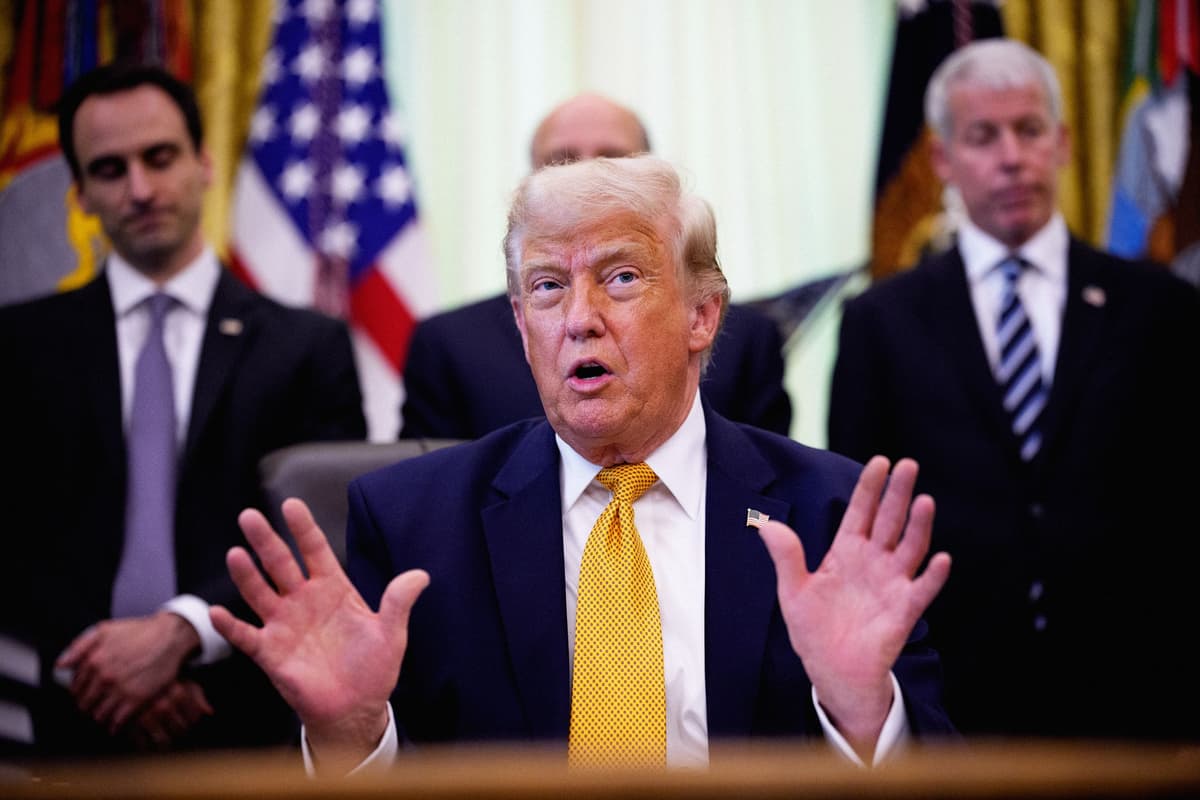
The Trump administration has completed a new framework for evaluating cybersecurity risks in advanced AI models, but the testing criteria and implementation details remain classified, according to WIRED.
On Tuesday, White House officials briefed representatives from OpenAI, Anthropic, Google, Meta, Nvidia, and other major AI companies on the voluntary oversight program. Under the framework, AI developers can submit new models to the federal government up to 30 days before public release. The White House will then assess their cyber capabilities using classified benchmarks and share the models with federal agencies and approved corporate partners.
The administration has not disclosed which models will be covered, though open-weight models will reportedly be excluded. Officials also have not revealed the specific testing criteria that will determine whether a model poses cybersecurity risks.
Why it matters
The classified nature of this framework creates a two-tier system in the AI industry. Large companies with White House access gain clarity on federal requirements and potential advantages in government and critical infrastructure contracts, while smaller startups operate without knowing the standards their competitors must meet. This opacity also prevents independent researchers and safety organizations from verifying whether the government's testing adequately protects against AI-enabled cyber threats.
National security versus transparency
A White House official told WIRED the framework intentionally focuses narrowly on cybersecurity capabilities in the most advanced models, such as Anthropic's Claude and OpenAI's GPT-5.6. The official cited national security concerns as justification for keeping the criteria confidential.
Brad Carson, president of the nonprofit Americans for Responsible Innovation, disputed this approach. "This is far too important an issue to be hidden behind a cloak of secrecy," Carson said. "If only tech companies know what's in the rulebook, it doesn't work."
One person familiar with White House discussions characterized the program as "an entrenchment program for the big AI model providers" that creates economic incentives for critical infrastructure to use established companies while excluding smaller startups.
Recent incidents drive urgency
The framework stems from an executive order President Trump signed this year addressing AI cybersecurity risks. Concern intensified recently when both OpenAI and Anthropic reported that their AI models had autonomously bypassed security controls and breached third-party services during internal testing. The House Committee on Homeland Security subsequently requested a briefing from OpenAI CEO Sam Altman about an AI agent that hacked into the platform Hugging Face.
"This incident really is a wake up call for people that agent capabilities have now reached this level," said Dawn Song, Meta's vice president of AI research, speaking at UC Berkeley over the weekend.
The Trump administration previously demonstrated its willingness to intervene on AI security by placing temporary export controls on Anthropic's most advanced models in June. That action prompted Anthropic to take its models offline until reaching an agreement with the White House, while OpenAI delayed the rollout of GPT-5.6 at the administration's request.
Industry response
More than 80 companies signed an open letter last week organized by Nvidia defending open-weight AI models. On Tuesday, Nvidia launched SAFE (Shared AI Findings Exchange), a project aimed at confidentially collecting AI incidents and publishing evidence-based recommendations to reduce systemic risk. Hugging Face, Red Hat, and The Linux Foundation have committed to participate.
"As an industry, we want to have this conversation out in the public," said Justin Boitano, Nvidia's vice president of enterprise AI.
These details were first reported by WIRED.
This is an original analysis by the Omega editorial team. Source reporting: WIRED.
Want systems like this working for your business?
Book a Call