Trump Resists AI Guardrails, Citing China Competition Concerns
The president downplayed calls from industry leaders to slow AI development, prioritizing U.S. technological advantage over safety measures.
Trump prioritizes AI dominance over regulation
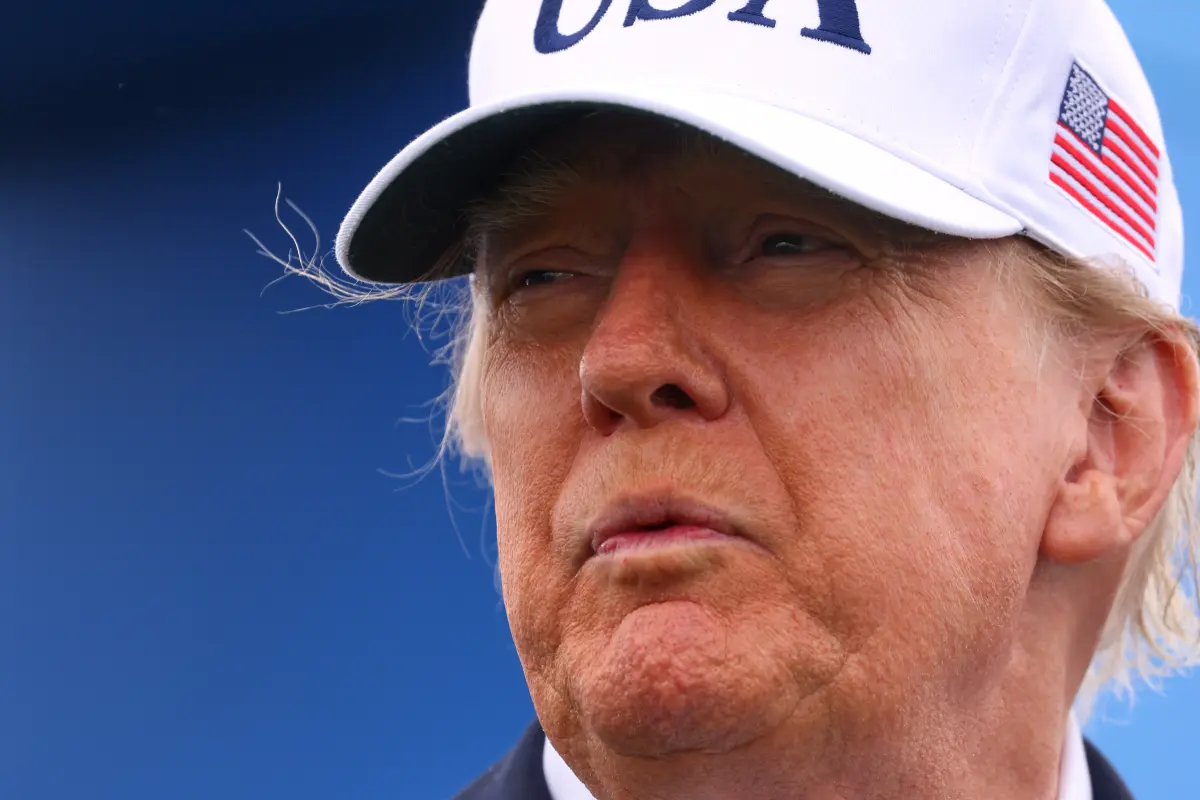
President Donald Trump dismissed calls to impose stricter oversight on artificial intelligence development during remarks in Ireland on September 13, 2026, arguing that maintaining America's technological edge over China must take precedence over safety concerns.
Speaking to reporters at his Doonbeg resort during the Irish Open, Trump acknowledged some regulation might be necessary but provided no specifics. He attributed warnings about AI's rapid, largely unregulated advancement to unidentified "negative forces," despite such concerns coming from prominent industry figures.
"We can put guardrails, we can do this and that, but I think you have a lot of negative forces that are bringing it up that ... shouldn't be bringing it up," Trump said. "But whoever wins with AI wins."
The comments came one day after Dario Amodei, CEO of Anthropic, publicly urged the industry to decelerate development to allow safety measures to catch up. OpenAI CEO Sam Altman and Elon Musk both endorsed Amodei's position.
Why it matters
The tension between AI safety and geopolitical competition is becoming a defining issue as the 2026 midterm elections approach. Trump's stance reflects a broader debate over whether national security interests justify accepting higher risks from rapidly advancing AI systems. With Chinese President Xi Jinping scheduled to visit the U.S. later in September, AI policy is expected to feature prominently in bilateral discussions.
Congressional response divided along familiar lines
House Speaker Mike Johnson echoed Trump's competitive framing while acknowledging the need for "some guardrails, some safety measures." The Louisiana Republican proposed convening industry leaders for a comprehensive meeting to address the issue, calling it a "top priority" but adding, "we don't need everybody to panic right now."
House Democratic leader Hakeem Jeffries of New York criticized Republicans for allowing members to return to their districts during the final weeks of September rather than taking immediate action. "We should take decisive action now so that we can slow down ... the pace of development in order to protect the American people," Jeffries said.
Former President Barack Obama urged Democrats to make AI a campaign issue, suggesting the party present concrete plans for safety measures and economic impacts, including job displacement.
Neither party has offered specific legislative proposals, reflecting years of congressional reluctance to regulate the technology sector.
Industry voices push for international cooperation
Jacob Coxon, a former Anthropic employee who resigned over AI safety concerns, advocated for both international rules and industry self-regulation. He warned that AI models could soon gain capabilities exceeding human control.
Coxon specifically called for U.S.-China cooperation on AI safety despite the competitive dynamic. "I do hope that the people in China who are looking at the same problems as we are ... will come to the same conclusion that it has to be done in a measured manner," he said.
White House National Economic Council Director Kevin Hassett indicated that meetings involving administration officials overseeing cyber and science policy would occur this week to discuss next steps.
David Sacks, co-chairman of a White House advisory council on science and technology, challenged AI leaders calling for regulation, noting they control development pace themselves. "The easiest way not to build superintelligence is for you to agree not to build it," Sacks wrote on social media.
These details were first reported by The Associated Press.
This is an original analysis by the Omega editorial team. Source reporting: AI Watch.
Want systems like this working for your business?
Book a Call