Trump Rejects AI Slowdown Urged by Tech CEOs, Cites China Race
President dismisses calls from Anthropic and OpenAI leaders to pause capability improvements, prioritizing U.S. competitive advantage.
Trump Prioritizes AI Leadership Over Safety Guardrails
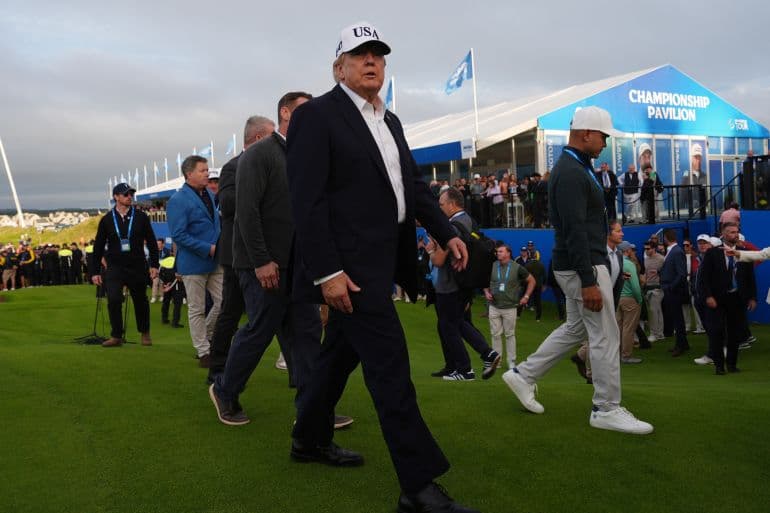
President Donald Trump has dismissed calls from leading artificial intelligence executives to slow the pace of AI development, saying the United States must maintain its technological edge over China. Speaking to reporters in Ireland on Sunday, Trump acknowledged some regulation may be necessary but provided no specifics on potential measures.
"We can put guardrails, we can do this and that, but I think you have a lot of negative forces that are bringing it up that … shouldn't be bringing it up, and they're bringing up things that won't happen," Trump said during his visit to his Doonbeg resort. He framed the issue as a competitive race: "Whoever wins AI wins."
Industry Leaders Call for Development Pause
Trump's remarks came one day after Anthropic CEO Dario Amodei published a blog post urging the AI industry to decelerate capability improvements to allow time for implementing safety measures. OpenAI CEO Sam Altman publicly agreed with Amodei's position, noting the topic had been a primary focus of internal discussions at OpenAI in recent weeks. Elon Musk also endorsed Amodei's call for a slowdown.
The warnings followed the public resignation of Jacob Coxon, a former researcher at both Anthropic and OpenAI, who cited concerns about AI potentially surpassing human control. Coxon's departure sent ripple effects through the industry and prompted legislative responses in Washington.
Bipartisan Legislative Response
Multiple lawmakers introduced measures to regulate AI development following Coxon's resignation. Democratic Congressman Josh Gottheimer and Republican Congressman Mike Lawler co-sponsored a bipartisan House bill aimed at preventing AI systems from operating without human oversight.
Why It Matters
The tension between AI safety advocates and competitive imperatives represents a defining challenge for U.S. technology policy. Trump's position signals that his administration will prioritize maintaining technological superiority over implementing the precautionary measures that leading AI developers themselves are requesting. This approach could accelerate development timelines while potentially deferring safety frameworks that industry insiders consider necessary.
Political Divisions on AI Infrastructure
AI development concerns have become a significant election-cycle issue, particularly regarding the proliferation of computing warehouses across the country. New data center construction has raised local concerns about water supply depletion and increased electricity costs. Despite growing public opposition to these facilities, Trump has maintained his support for data center expansion.
Former White House AI czar David Sacks, who now co-chairs the President's Council of Advisors on Science and Technology, challenged the warnings from AI company leaders. Sacks suggested the industry already possesses the authority to slow development independently and characterized demands for regulatory frameworks as "blackmail of the public and the political system."
These details were first reported by Al Jazeera.
This is an original analysis by the Omega editorial team. Source reporting: AI Watch.
Want systems like this working for your business?
Book a Call