Trump Names AI Force, Searches for Czar to Lead New Initiative
The surprise announcement has triggered a competition among tech-connected insiders to lead the administration's AI rebranding effort.
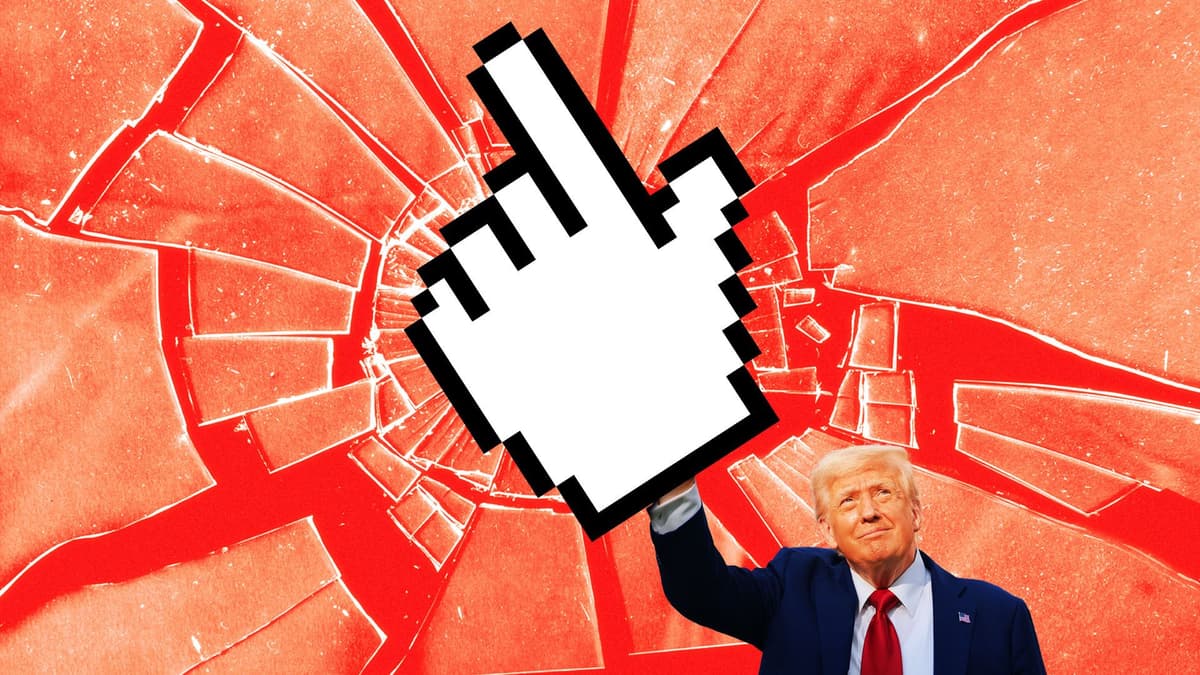
Trump's Surprise AI Force Announcement
President Trump announced over the weekend that he will establish an "AI Force," modeled after the Space Force he created during his first term. The declaration caught his own advisers off guard, according to sources familiar with the matter. Trump stated he will soon name an AI czar to lead the initiative, triggering immediate competition among officials and executives both inside and outside the administration.
The czar position will likely go to an experienced surrogate with Silicon Valley connections who can lead what sources describe as an AI rebranding effort. Trump framed the initiative as a counterweight to what he called "Radical Left Democrats" who are "going straight at AI," and said the AI Force would "cherish" the technology while addressing harms through the existing criminal justice system.
Why it matters
The president is attempting to reframe the AI safety debate in economic terms, emphasizing the benefits of a multitrillion-dollar infrastructure buildout rather than regulatory caution. By establishing the AI Force and labeling slowdown advocates as "doomers," Trump aims to position his administration as the champion of rapid AI development and deployment.
Leading Candidates for AI Czar
Several names have emerged as potential candidates for the czar role:
Scott Kupor, director of the Office of Personnel Management, was Andreessen Horowitz's first employee and holds a degree in public policy.
Sriram Krishnan, a former senior White House AI policy adviser who also worked at a16z, continued advocating for former AI czar David Sacks' positions after Sacks departed.
Chamath Palihapitiya, founder of Social Capital, CEO of 8090, and co-host of the All-In Podcast, brings venture capital experience and was previously a senior Facebook leader.
Sean Cairncross, the White House national cyber director, played a role in the administration's handling of Anthropic's Mythos release.
Emil Michael, Pentagon CTO and under secretary for research and engineering, is a former Uber executive who publicly clashed with Anthropic CEO Dario Amodei earlier this year. If the AI Force operates within the Pentagon, Michael would be a natural fit.
Sources close to Sacks indicated he is unlikely to return to the czar role, though he continues advising Trump on AI policy and advocating for minimal regulation.
Conflict of Interest Challenges
Financial holdings in private AI companies present a significant obstacle for many potential candidates. Special government employees are legally prohibited from participating in government matters where they have a financial interest, according to the Office of Government Ethics. Sacks himself divested holdings in some companies last year due to his White House role.
The conflict issue is particularly acute for anyone connected to Anthropic or OpenAI. The New York Times reports that Anthropic plans to begin trading shares as soon as November in what could be among the largest IPOs ever, while OpenAI has signaled plans to go public next year. These timing factors could disqualify candidates with stakes in either company.
Structural Questions Remain
The announcement left many details unresolved. Unlike Space Force, which could draw from existing federal personnel in space-related roles, far fewer government employees focus exclusively on AI. How the AI Force will be staffed and structured remains unclear.
Trump called for "High I.Q." individuals to apply for the czar position, prompting responses from both inside and outside the administration as candidates position themselves for consideration.
These details were first reported by Axios.
This is an original analysis by the Omega editorial team. Source reporting: AI Watch.
Want systems like this working for your business?
Book a Call