Trump and Sanders Push Public Equity Stakes in AI Companies
Populist leaders from opposite ends of the political spectrum converge on government ownership as grassroots resistance to AI infrastructure grows.
An unexpected political alignment is emerging around artificial intelligence: leaders from President Trump to Sen. Bernie Sanders are advocating for government equity stakes in AI companies, arguing that ordinary Americans should share in the industry's anticipated profits.
The convergence comes as grassroots opposition to AI infrastructure intensifies nationwide, college students express deep anxiety about employment prospects, and Washington races to establish the first comprehensive federal AI regulations.
An unlikely meeting
OpenAI CEO Sam Altman recently met privately with Sanders in the Vermont senator's office, shortly after Sanders proposed a 50% public ownership stake in AI giants. According to people familiar with the conversation, Altman told Sanders he supports the concept of public equity in AI companies, though he couldn't endorse the 50% threshold.
The nearly hour-long discussion, requested by Altman, reflects the growing tension between AI powerhouses and policymakers as Americans face the costs of AI expansion without clear direct benefits.
Speaking to reporters on Air Force One, Trump described exploring "a partnership where the American people can benefit from the success of AI," noting that executives from leading AI companies would visit the White House to discuss the concept. When reporters pointed out Sanders had proposed similar ideas, Trump acknowledged the economic views of his voters and Sanders supporters "aren't that far apart."
Trump's administration has already embraced government investment in private companies, securing a 10% stake in Intel and considering a Spirit Airlines takeover before the carrier's closure.
Why it matters
This bipartisan convergence on public AI ownership represents a fundamental shift in how political leaders view the technology sector's relationship with citizens. As AI companies consume massive resources while concentrating wealth, the push for public equity stakes could reshape corporate governance models and establish precedent for government participation in transformative technologies. The alignment of populist voices across the political spectrum suggests traditional partisan divisions may not apply to AI policy.
Mounting grassroots resistance
Public concerns about AI extend well beyond Washington policy debates. Data center projects nationwide face opposition from residents worried about electricity demand, water consumption, and environmental impacts. States including Ohio and Virginia are reconsidering tax incentives once offered to attract these facilities.
"We need to pass legislation right now that says there's not going to be any further data center development until they agree to pay for their own electricity, build their own grids and pay for their own water supply," said Sen. Josh Hawley, a Republican Big Tech skeptic.
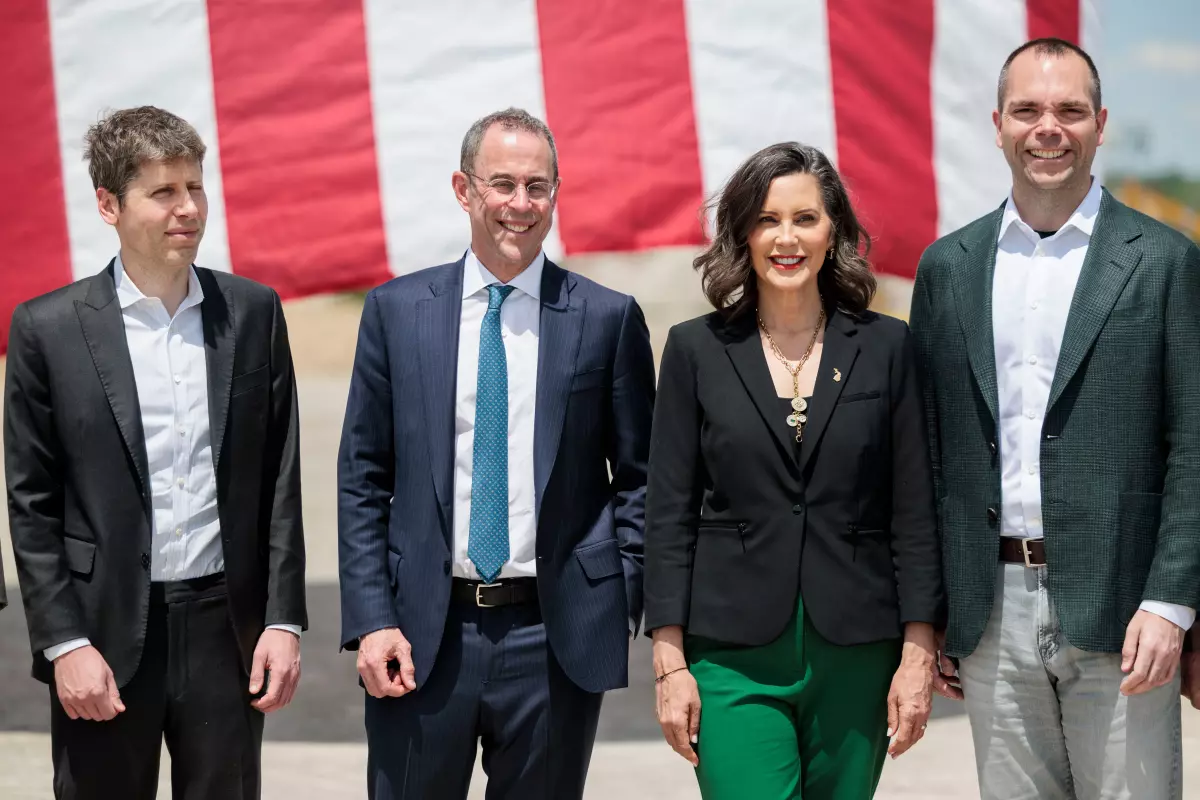
In Michigan, Gov. Gretchen Whitmer's appearance with Altman at a 1.65 million-square-foot data center site drew criticism from activists and Rep. Rashida Tlaib, who called the project "disgusting." Sen. Elissa Slotkin noted the "very controversial topic" is "coming from the ground up."
On college campuses, approximately 70% of students view AI as a threat to their job prospects, according to a 2025 Harvard Kennedy School poll. Commencement speakers discussing artificial intelligence have faced interruptions and boos.
Washington's regulatory push
Congress released a bipartisan framework this week establishing the first broad federal approach to AI regulation while temporarily preempting many state laws. The Trump administration signed an executive order creating a review process for national security risks from advanced AI systems before public release.
Sanders' team emphasized no agreement was reached on key points, including the 50% ownership threshold or opposition to AI industry election spending. "Unfortunately, Sam Altman did not commit to any of those," said Sanders spokesperson Jeremy Slevin.
Altman described the conversation as "great," acknowledging they "obviously don't agree on everything."
These details were first reported by the Associated Press.
This is an original analysis by the Omega editorial team. Source reporting: AI Watch.
Want systems like this working for your business?
Book a Call
