Trump AI Memo Shifts National Security Policy Toward Speed
NSPM-11 prioritizes rapid adoption and contractor control while deferring key questions about oversight and weapons autonomy.
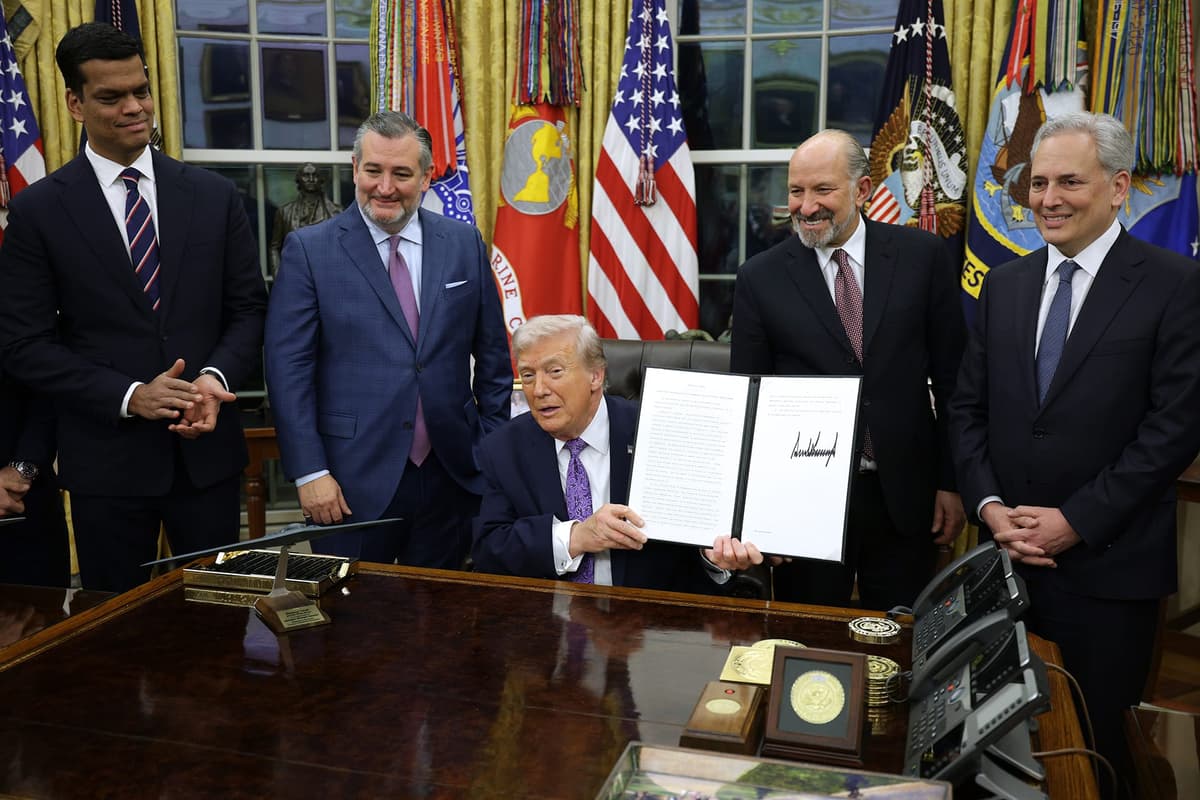
President Donald Trump's National Security Presidential Memorandum 11, signed June 5, marks a strategic pivot in how the U.S. government approaches artificial intelligence for defense and intelligence operations. The directive accelerates AI adoption across national security agencies while revoking oversight requirements established under the Biden administration.
The memo addresses a fundamental challenge: federal agencies now depend on AI infrastructure they don't own or control. Major cloud providers built the computing power, and private labs developed the frontier models. The government has become a customer of technology it cannot replicate, according to analysis from the Council on Foreign Relations.
The Anthropic dispute drives new contract rules
NSPM-11 requires agencies to terminate contracts with AI companies that repeatedly restrict government use of their technology. This provision directly responds to an ongoing legal battle between the Pentagon and Anthropic, an AI firm that refused to remove contractual limits barring its models from use in lethal autonomous weapons and domestic mass surveillance.
The Defense Department designated Anthropic a supply-chain risk and shifted to other vendors after the company declined to permit use for "all lawful purposes." The new memo prohibits commercial entities from disabling, degrading, or materially modifying deployed systems without government approval—effectively banning "kill switches" in contracted AI systems.
Accountability anchored in military command
The directive establishes a human accountability framework running from the president through military commanders to individual warfighters. Commanders bear responsibility for ensuring AI systems perform reliably, remain secure, and operate within their intent. This approach moves oversight authority away from external regulators and into the constitutional chain of command.
Agencies must build independent evaluation infrastructure, including standardized testing methods, dedicated test ranges, and the technical talent to verify AI systems meet security and performance standards before deployment.
Weapons policy update deferred
NSPM-11 orders the Defense Department to revise its directive on autonomous weapons systems within 90 days. The current policy, Directive 3000.09, has faced scrutiny given rapid technological advances. The memo draws an immediate line against unlawful domestic surveillance but defers the broader question of weapons autonomy rules.
Why it matters
The memo reflects a government attempting to manage dependence on private AI capabilities it cannot build internally. By embedding assurance requirements into contracts and anchoring accountability in military command, the administration treats speed and safeguards as joint requirements rather than competing priorities. However, the approach leaves unresolved who holds ultimate authority to define lawful AI use—the executive branch, courts, Congress, or the companies themselves. The next three years of government procurement decisions will likely determine which firms operate AI systems at scale for national security purposes for a generation.
Continuity beneath the rhetoric
Despite characterizing Biden's AI policy as burdensome, NSPM-11 shows substantial continuity with the previous administration's emphasis on human accountability and responsible use. The primary shifts involve moving testing in-house rather than through civilian standards bodies and making assurance a contractual requirement rather than a voluntary commitment.
CFR Senior Fellows Vinh Nguyen and Michael Horowitz note that implementation credibility remains the central question. Congressional oversight will be essential to ensure the accountability framework functions as written, particularly given concerns about executive power constraints.
These details were first reported by the Council on Foreign Relations.
This is an original analysis by the Omega editorial team. Source reporting: AI Watch.
Want systems like this working for your business?
Book a Call
