Thoma Bravo's Orlando Bravo Declares 'SaaSpocalypse' Over
Private equity giant managing $200B says AI now provides an 'enormous tailwind' for software companies, with half of new revenue coming from AI-driven products.
Software companies have weathered the AI storm
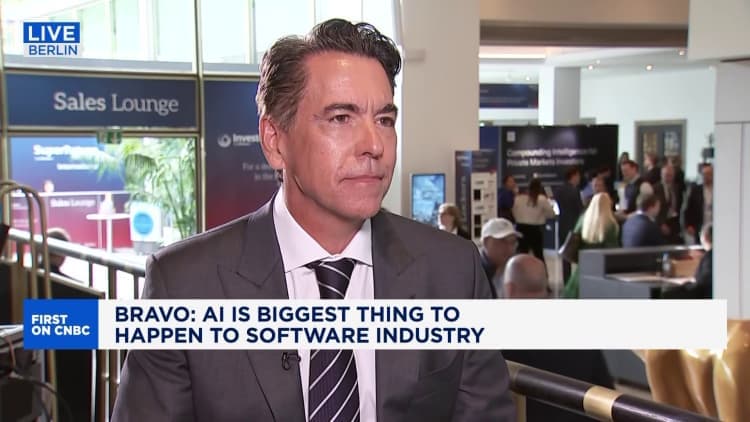
The panic that gripped software markets earlier this year has subsided, according to one of the industry's most influential investors. Orlando Bravo, founder and managing partner of Thoma Bravo, told CNBC that the so-called "SaaSpocalypse" has ended and artificial intelligence now represents a major growth driver for software firms.
Bravo made the remarks at the SuperReturn International conference in Berlin, where he discussed the performance of his firm's portfolio companies. Thoma Bravo, which manages nearly $200 billion in assets and ranks among the world's largest private equity investors focused on software and technology services, oversees companies that collectively generate approximately $35 billion in annual revenue.
Why it matters
The February sell-off in software stocks reflected genuine uncertainty about whether AI agents would displace traditional SaaS products. Bravo's assessment matters because Thoma Bravo holds stakes across dozens of enterprise software companies, giving the firm visibility into how businesses are actually deploying and paying for AI capabilities. His claim that roughly half of new revenue now comes from AI-related products suggests the sector has successfully pivoted rather than been disrupted.
AI integration drives new revenue streams
According to Bravo, approximately 50% of new revenue across Thoma Bravo's portfolio now comes from AI and agentic solutions. He argued that investors underestimated software companies' capacity to adapt, noting that these firms "continue to evolve with infrastructure" rather than remaining static.
The private equity leader predicted that software companies and AI will converge into "new agentic solutions" for corporate customers within the next few years. He characterized AI as providing software companies with the ability to automate aspects of human judgment and business processes, enabling them to reach "a completely new level."
Market recovery validates the thesis
The numbers support Bravo's optimistic outlook. Since the February downturn, software stocks have mounted a significant recovery. The iShares Expanded Tech-Software Sector ETF posted a 21% gain in May—its strongest monthly performance since October 2001—and has risen more than 9% over a three-month period.
Bravo acknowledged that the market remains in an adjustment phase as investors and companies work through questions surrounding governance, cybersecurity, and return on investment from newer AI agent tools. "It is a period of discovery now, which creates pressure on the whole system," he said.
The Thoma Bravo founder also highlighted semiconductors as continuing to offer attractive entry points for investors in high-growth technology sectors.
These details were first reported by CNBC, based on Bravo's conversation with correspondent Annette Weisbach in Berlin.
This is an original analysis by the Omega editorial team. Source reporting: AI Watch.
Want systems like this working for your business?
Book a Call