Texas Halts State Funding for Flock AI Surveillance Cameras
Governor Abbott orders agencies to stop funding license plate readers as cities cancel contracts amid privacy backlash.
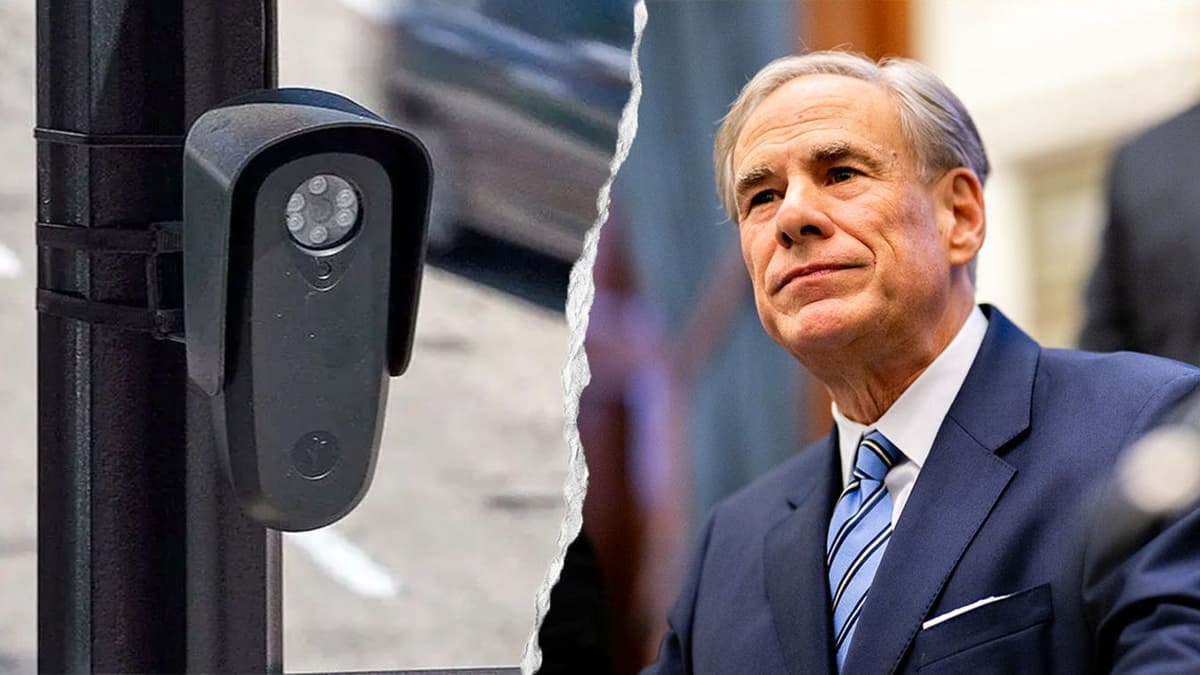
Texas Governor Greg Abbott has directed state agencies to halt funding for Flock Safety's AI-powered license plate reader cameras, marking a significant policy shift as privacy concerns surrounding the surveillance technology intensify across the state.
Abbott spokesperson Andrew Mahaleris confirmed the directive Thursday, noting that while state agency funding will be cut off, most Flock camera deployments in Texas rely on city-level contracts and federal funding. "Almost all Flock cameras in Texas are used by cities, and those cities are increasingly canceling their contracts with Flock," Mahaleris said.
How the technology works
Flock Safety operates one of the most widely deployed automated license plate reader (ALPR) networks in Texas. The company's cameras photograph passing vehicles and use artificial intelligence to identify vehicle characteristics including make, model, color, and distinctive features such as bumper stickers or body damage. Law enforcement agencies can then search this data across participating camera networks to locate suspects, stolen vehicles, or cars connected to crimes.
Since 2023, the Motor Vehicle Crime Prevention Authority—a Texas state agency—has helped install more than 3,000 Flock cameras statewide. The funding came from a 2023 law that added $1 to vehicle insurance policies to combat catalytic converter theft, though the legislature had not specifically discussed using these funds for surveillance cameras, according to the Texas Tribune.
Cities abandon contracts
The governor's action follows a wave of municipal withdrawals from Flock contracts. Earlier this week, Pflugerville City Council voted unanimously to terminate its agreement with Flock, eliminating all 28 camera readers and disabling system access. Hood County Commissioners Court similarly voted to end its relationship with the company and directed that three cameras be disconnected and covered until removal.
Abbott told a Friday radio interview that cities and counties have been canceling contracts under pressure from residents concerned about privacy and data sharing.
Why it matters
The Texas reversal signals growing political risk for surveillance technology companies operating in conservative states where privacy concerns cross traditional partisan lines. With more than 120,000 cameras across 49 states and 20 billion vehicle scans monthly, Flock Safety has built what critics call an unprecedented national surveillance infrastructure. The company's business model now faces scrutiny not just from privacy advocates but from Republican officials in states that have historically supported law enforcement technology investments.
Federal scrutiny expands
Beyond Texas, Senator Josh Hawley (R-Mo.) is investigating Flock Safety's data practices. "Flock has assembled an unprecedented national surveillance network," Hawley said, adding that he's examining who has access to data collected on hundreds of millions of vehicles.
Flock Safety spokesperson Paris Lewbel defended the technology as "an important public safety tool" that helps law enforcement "solve serious crimes, find missing people, recover stolen vehicles, and support safer communities." The company said it supports "thoughtful legislation and strong privacy, transparency, and accountability guardrails."
Texas Agriculture Commissioner Sid Miller, a Republican, urged Abbott earlier this month in a Houston Chronicle op-ed to halt new surveillance technology purchases.
These developments were first reported by Fox News Digital.
This is an original analysis by the Omega editorial team. Source reporting: AI Watch.
Want systems like this working for your business?
Book a Call
