Tech Giants' Data Center Power Pledge Lacks Enforcement Teeth
Seven major AI companies promised to cover grid costs, but legal experts say the voluntary commitment has no binding mechanism.
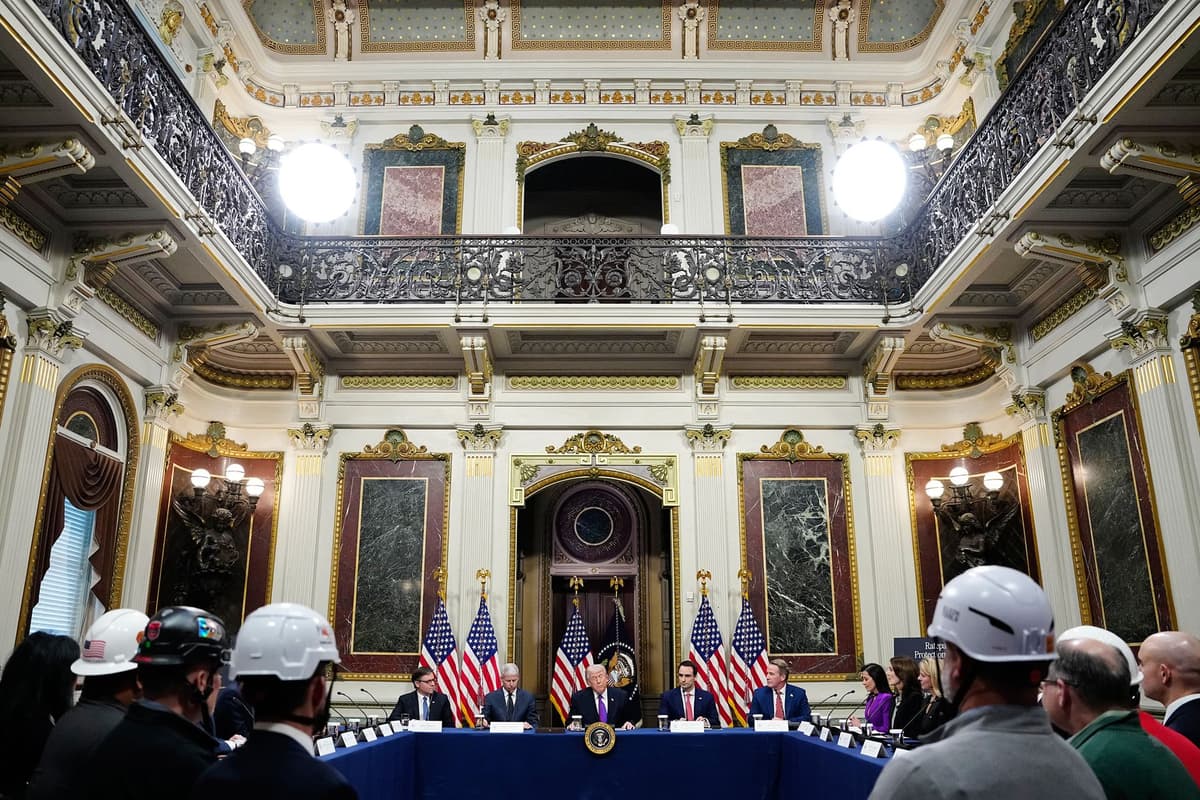
Seven of America's largest technology companies signed a voluntary agreement in March promising to shoulder the infrastructure costs of their data center expansion—but legal scholars say the commitment carries no enforcement mechanism and may amount to little more than a public relations gesture.
Amazon, Google, Meta, Microsoft, OpenAI, Oracle, and xAI gathered at the White House to sign the "Ratepayer Protection Pledge," committing to cover expenses for new power plants and electrical grid upgrades rather than passing those costs to utility customers. President Donald Trump characterized the agreement as something that would reduce Americans' power bills "very, very substantially," while also acknowledging it provided "some PR help" for companies facing local resistance to data center construction.
The Legal Reality
The pledge's fundamental weakness lies in its voluntary nature. Despite Trump initially describing the commitment as mandatory before the official signing, the president lacks legal authority to compel companies to pay for electrical grid modifications. Ari Peskoe, who directs Harvard Law School's electricity-law initiative, explained that while the White House has a bully pulpit, actual enforcement would need to come from state and utility regulators. Trump administration officials confirmed this limitation in their own statements.
The administration is now reportedly seeking signatures from utility companies themselves, leading Peskoe to speculate that officials may be hoping utilities will take more substantive action at state and federal regulatory commissions where decisions actually get made.
Public Opposition Runs Deeper
Recent polling reveals that concerns about data centers extend far beyond electricity costs. A Gallup survey found 70% of Americans oppose data center construction, but only 15% of opponents cite power bills as their primary concern. Half point to broader resource consumption issues. The Brookings Institution described the opposition as "overwhelming" and notably bipartisan, with separate surveys showing 80% of Americans concerned or very concerned about AI development.
Why It Matters
The gap between voluntary corporate commitments and enforceable policy reveals a recurring pattern in technology regulation: companies making public promises that lack teeth while racing to build infrastructure that will be difficult to reverse once in place. For business leaders planning AI investments, the pledge signals political pressure around data center expansion but offers no guarantee of stable regulatory treatment. The bipartisan public opposition suggests that communities may increasingly challenge data center projects through local zoning and permitting processes, regardless of federal-level agreements.
Historical Echoes
Historians have drawn parallels between today's data center expansion and previous American land rushes. The White House meeting took place in the Indian Treaty Room, named for agreements the U.S. government routinely violated with Indigenous nations. Historian John Reeves, whose forthcoming book examines the theft of the Black Hills, notes that 19th-century Americans rationalized treaty violations as economic progress that couldn't be stopped, while dismissing resistance as sentimental. Reeves also points to American capitalism's recurring drift toward monopoly—whether 19th-century resource extraction or the handful of companies now controlling most AI infrastructure.
These details were first reported by AI Watch.
This is an original analysis by the Omega editorial team. Source reporting: AI Watch.
Want systems like this working for your business?
Book a Call