Sunrun pilots distributed AI compute in solar-powered homes
The residential solar company will pay homeowners to host inference servers powered by rooftop panels and batteries.
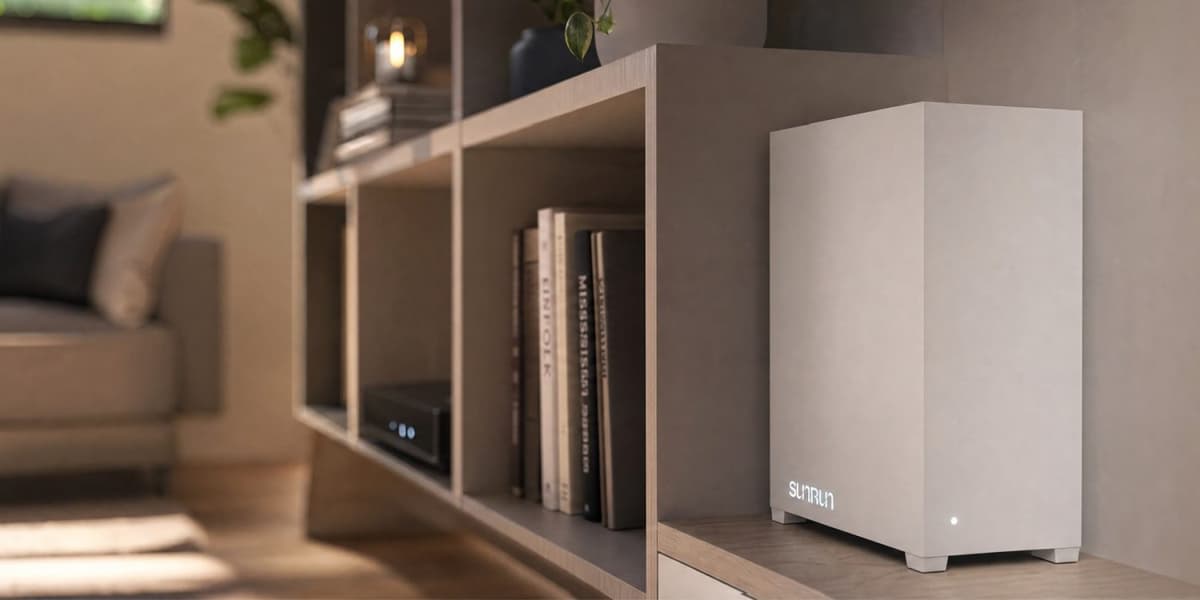
Sunrun is testing a novel approach to AI infrastructure by installing compute servers directly in homes that already have its solar panels and battery storage systems. The residential solar company announced a pilot program that compensates homeowners for hosting AI hardware while selling the computing capacity to enterprise clients.
The initiative represents a strategic expansion for Sunrun beyond its core business of residential renewable energy and virtual power plant services. With more than 1.1 million existing customers, the company sees an opportunity to repurpose its installed base as distributed computing infrastructure rather than waiting years for traditional data centers to come online.
Targeting inference, not training
Sunrun's approach focuses specifically on AI inference workloads—the stage where trained models generate responses to user queries. This is a critical distinction. Unlike AI model training, which demands enormous concentrations of graphics processing units in centralized facilities, inference tasks can be distributed across many smaller locations. Proximity to end users can actually improve performance by reducing latency.
The company says it has completed a proof of concept demonstrating both customer interest and revenue potential. It is now expanding testing by deploying compute nodes in participating homes under varying operating conditions and electricity rate structures to evaluate performance and user experience.
Why it matters
AI companies face mounting pressure to secure adequate electricity supply and computing capacity, but building new data centers involves years of permitting, construction, and utility interconnection delays. Sunrun's model could provide a faster path to scaled computing capacity while addressing grid congestion concerns. Because the compute nodes operate behind customer meters and pair with home batteries, they can continue functioning during some power outages without straining already-congested transmission infrastructure. This distributed approach may offer a template for how residential energy systems can help meet AI's rapidly escalating power demands.
Business model and next steps
Participating homeowners receive compensation for hosting the equipment, creating an additional revenue stream beyond existing benefits from rooftop solar, battery storage, and virtual power plant programs. Sunrun's existing service network could support large-scale deployment without building entirely new infrastructure from scratch.
The pilot runs separately from Sunrun's recently announced partnership with Renew Home and Tesla to aggregate more than 16 gigawatts of flexible home energy capacity for utilities and hyperscalers. Together, these initiatives signal growing interest in residential energy systems as part of the solution to AI's electricity challenge.
Sunrun plans to run the pilot for several months before deciding on broader expansion. The company reports it is already in discussions with enterprise compute customers, utilities, and homebuilders about what a larger rollout might entail.
These details were first reported by Electrek.
This is an original analysis by the Omega editorial team. Source reporting: AI Watch.
Want systems like this working for your business?
Book a Call