Startups Pay Home Users to Run AI Inference on Spare Hardware
Distributed computing platforms aim to route AI workloads through gaming PCs and home servers instead of massive data centers.
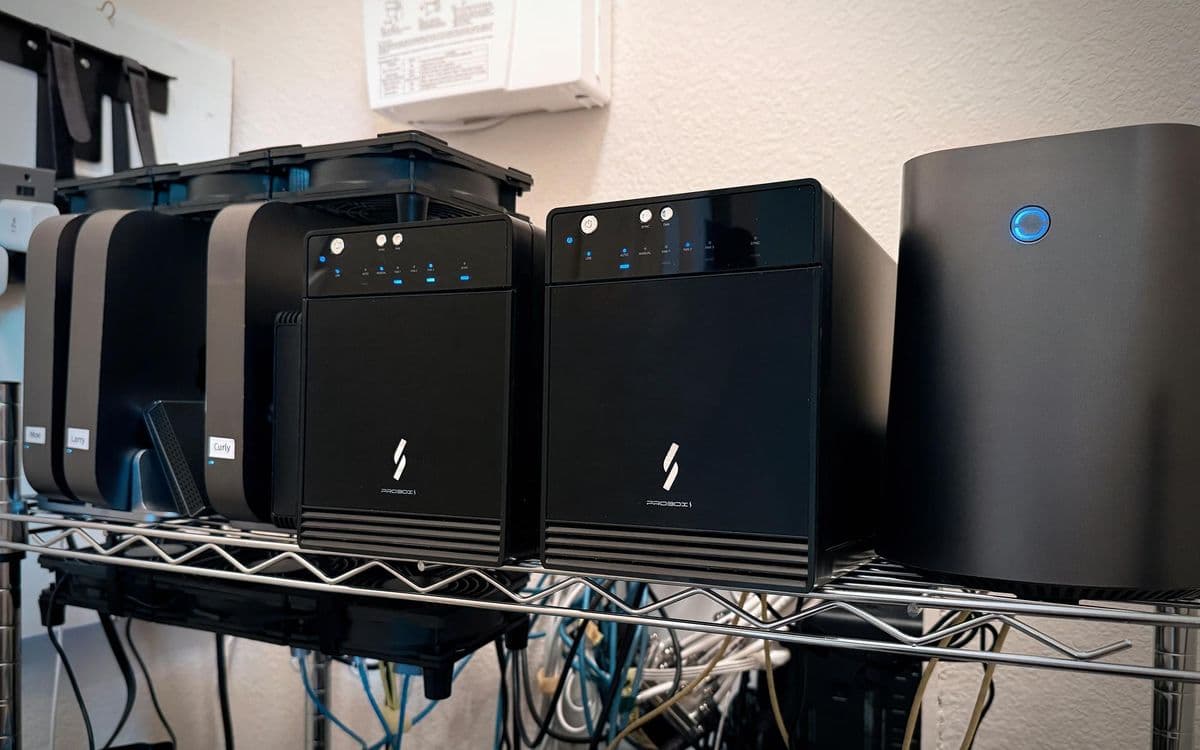
A new wave of startups is building networks that run AI inference on spare computing power scattered across homes and small businesses, compensating device owners for their participation.
Far Labs, based in Abu Dhabi, plans to launch its Far AI platform in coming weeks, while Austin-based Evolving Edge is currently in open beta. Similar platforms from Bless Network, Salad, and Gradient have emerged over the past year. All aim to create what Far Labs CEO Ilman Shazhaev describes as "Uber or Airbnb, but for AI inference computing tasks."
The model targets owners of gaming computers, home servers, and underutilized laptops who can install software that runs inference jobs during idle periods. Users set their own schedules for when their machines are available, and the platforms handle workload distribution.
How distributed inference works
The technical challenge lies in coordinating varied hardware with different capabilities and network connections. For smaller, task-specific models, a single consumer device often suffices. When larger models are required, the platforms split inference tasks across multiple machines.
Evolving Edge uses the open-source Ray framework for workload splitting. Far Labs developed proprietary software that divides models into segments distributed across devices, with an orchestrator combining results. Both companies claim they can run inference significantly cheaper than traditional data centers because they avoid capital expenditure on new infrastructure.
"There are numerous companies, once they reach a certain scale, suddenly paying for tokens on a state-of-the-art frontier model [that] no longer makes sense for their needs," says Evolving Edge CEO John Federico, according to IEEE Spectrum, which first reported these details. "Instead, they are fine-tuning open-source models for specific tasks."
Security and privacy protections
Both platforms address security concerns through isolation and access controls. Evolving Edge open-sourced its scheduling software for transparency. Far Labs implements "least privilege" principles, running inference as isolated workloads with encrypted communication and explicit resource limits.
Hosts can monitor resource usage, pause operations, and remove software at any time. Sensitive enterprise workloads can be restricted to controlled hardware rather than consumer devices.
Why it matters
The distributed approach challenges the assumption that AI inference requires massive, centralized data centers—infrastructure that often strains local electricity grids, water supplies, and community resources without returning proportional benefits. If these platforms achieve scale, they could reduce both the cost and environmental impact of AI deployment while creating a new income stream for millions of device owners. The model also promises greater resilience: losing hundreds of nodes in a network of hundreds of thousands would have minimal impact, unlike outages at centralized facilities.
Far Labs claims latency under 100 milliseconds on its platform, potentially enabling new real-time applications like in-game AI video generation that current pricing makes prohibitive.
These details were first reported by IEEE Spectrum.
This is an original analysis by the Omega editorial team. Source reporting: AI Watch.
Want systems like this working for your business?
Book a Call