Startup Seeks to Launch First AI Compute Futures Market
Silicon Data partners with CME Group to create hedging instruments for GPU rental costs as AI infrastructure demand surges.
A new commodity class for AI infrastructure
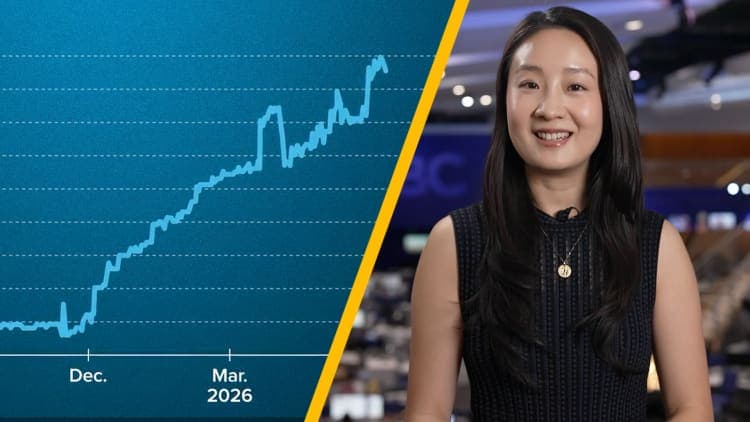
A startup tracking cloud computing prices is working to establish the world's first futures market for artificial intelligence compute power. Silicon Data has partnered with CME Group to develop contracts that would allow companies to hedge against fluctuations in GPU rental costs, pending regulatory approval.
The proposed market addresses a growing challenge for AI companies: unpredictable infrastructure expenses. Most organizations don't own the high-end graphics processing units required for AI workloads. Instead, they rent capacity from cloud providers and specialized GPU marketplaces, where prices can vary significantly.
Why it matters
As AI becomes central to business operations, compute costs represent an increasingly material expense line. A functioning futures market would give companies financial tools to manage that uncertainty—similar to how airlines hedge jet fuel or manufacturers lock in metal prices. The speed of investor interest signals that AI infrastructure may be transitioning from a technology input to a tradable asset class.
Building the benchmark
Silicon Data has constructed GPU price indexes that track hourly rental rates for specific chips across providers. These benchmarks are designed to serve as settlement references for futures contracts, much like West Texas Intermediate crude oil prices underpin energy derivatives.
The company's data has already gained traction in corporate finance. SpaceX referenced Silicon Data's GPU rental-rate information in its public offering prospectus, according to CNBC.
Standardization presents a technical hurdle. More than 50 different configurations exist for Nvidia's H100 chip alone, with prices varying by processor specifications, memory, networking capabilities, utilization rates, and data center location. Silicon Data normalizes these variations to create a base H100 benchmark before calculating index values.
Market structure and participants
Founder and CEO Carmen Li envisions a market that could eventually exceed oil futures in size, arguing that energy demand for AI will ultimately surpass all other uses combined.
The market would require both natural hedgers and speculators. Companies concerned about rising compute costs would buy contracts for price protection, while providers with excess capacity could hedge against price declines. Speculators without direct GPU needs would provide liquidity and aid price discovery.
Seoyoung Kim, a finance professor at Santa Clara University, noted the current environment of high uncertainty. "A lot of people don't know how much computing power they'll need in the next year, and a lot of suppliers of that computing power right now don't know how many GPUs and to what capacity they should order," Kim told CNBC.
Investor appetite emerges
Within days of the CME Group announcement, asset managers including ProShares and Rex Shares filed proposals for exchange-traded funds tied to the proposed contracts. The filings include both leveraged and inverse products, suggesting sophisticated investor interest in compute price exposure.
The futures contracts and related ETFs remain contingent on approval from the Commodity Futures Trading Commission, which will likely scrutinize contract specifications, settlement procedures, and benchmark methodology.
These details were first reported by CNBC.
This is an original analysis by the Omega editorial team. Source reporting: AI Watch.
Want systems like this working for your business?
Book a Call