ST Logistics Retrains 40 Workers as Automated Shuttles Transform Warehouse Operations
Singapore logistics firm invests $10M in AI-powered storage system that moves 70 pallets per hour while redesigning jobs instead of eliminating them.
From Forklift Driver to System Manager
ST Logistics has completed a major automation upgrade at its Clementi warehouse that fundamentally changes how workers interact with inventory—but the Singapore-based company made workforce retraining central to the transformation rather than an afterthought.
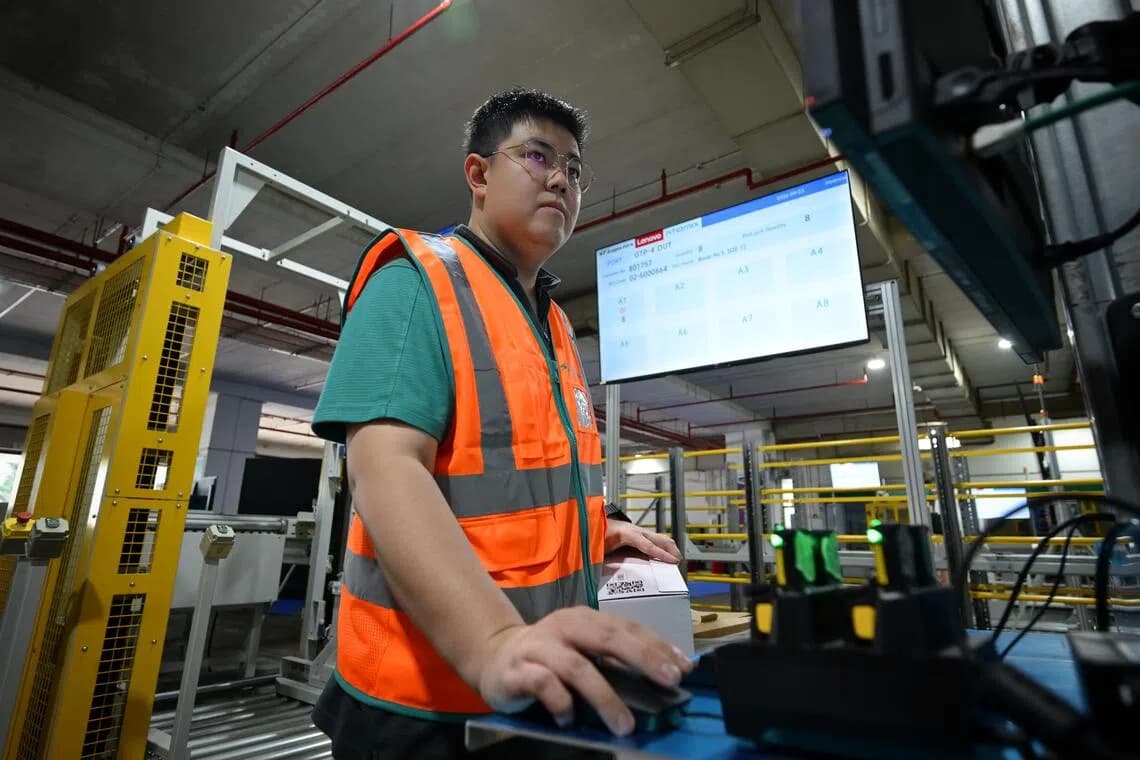
The facility, which stores uniforms and equipment for the Singapore Police Force and Singapore Civil Defence Force, now operates with 14 autonomous shuttles moving through a 28-meter-tall storage system. Workers like Frederick Wong, who spent nine years driving forklifts to retrieve goods, now monitor software dashboards and troubleshoot automated systems from fixed workstations.
Wong's new responsibilities include diagnosing why shuttles stop, clearing false sensor alerts, and escalating mechanical issues to technicians—a skill set he acquired through approximately one month of company-supported training.
Why It Matters
As warehouse automation accelerates globally, ST Logistics demonstrates a model where technology investment matches worker development investment. The company's approach—supported by NTUC grants covering up to 70% of training costs—shows how logistics operations can increase efficiency without treating headcount reduction as the primary goal. For business leaders evaluating automation ROI, this case illustrates that job redesign can be a competitive differentiator in tight labor markets.
Technical Specifications and Performance Gains
The new system replaced three automated cranes that moved between seven aisles. The shuttle-based architecture eliminates the need for crane pathways, increasing storage capacity by more than 20% within the same physical footprint—now holding up to 10,600 pallets.
Throughput jumped dramatically: the facility now moves more than 70 pallets per hour, up from approximately 10 under the previous system. Artificial intelligence optimizes storage placement based on demand patterns, positioning frequently needed items closer to retrieval points and recalculating routes dynamically as priorities shift.
ST Logistics invested at least $10 million in the system, which took about a year to construct and became operational in August. The company partnered with Lenovo, which had deployed similar technology in its Chinese warehouse operations a decade earlier, on both hardware and the coordination software that manages shuttle traffic and pallet tracking.
Workforce Strategy at Scale
ST Logistics identified approximately 100 employees for training as automation expands, with 40 completing programs so far. The company worked with the Supply Chain Employees' Union to map which roles would be redesigned and what new competencies workers would require.
Chief executive Loganathan Ramasamy framed the strategy explicitly: "We don't see automation as a shortcut to jobless growth, doing the same work with fewer people. That is why our investment in AI and robotics has always come with an equal investment in our people."
The company is now evaluating whether to deploy the shuttle system at additional warehouse locations.
These details were first reported by The Straits Times.
This is an original analysis by the Omega editorial team. Source reporting: Automation Watch.
Want systems like this working for your business?
Book a Call