Spokane Officials Twice Fooled by AI-Generated Images
Police and city staff unknowingly published fabricated photos, exposing gaps in verification processes as generative AI becomes more accessible.
Two AI Mishaps in One Month
Spolane city government experienced two separate incidents in July where officials unknowingly published AI-generated images, revealing how easily fabricated content can slip through institutional safeguards.
The first case involved the Spokane Police Department, which issued a news release about an officer rescuing an injured dachshund during a domestic violence arrest. The department distributed a photo showing an undercover officer holding the dog, which already had its leg in a cast. Upon closer inspection, the image contained obvious fabrications—including what appeared to be a flintlock pistol in the officer's holster and fictional product brands visible in the background.
Detectives had originally created the image as a joke, according to SPD public information officer Tricia Leming. A supervisor mistook it for authentic documentation and passed it along to communications staff, who then distributed it to media outlets. The Spokesman-Review published a cropped version before learning the entire image was computer-generated.
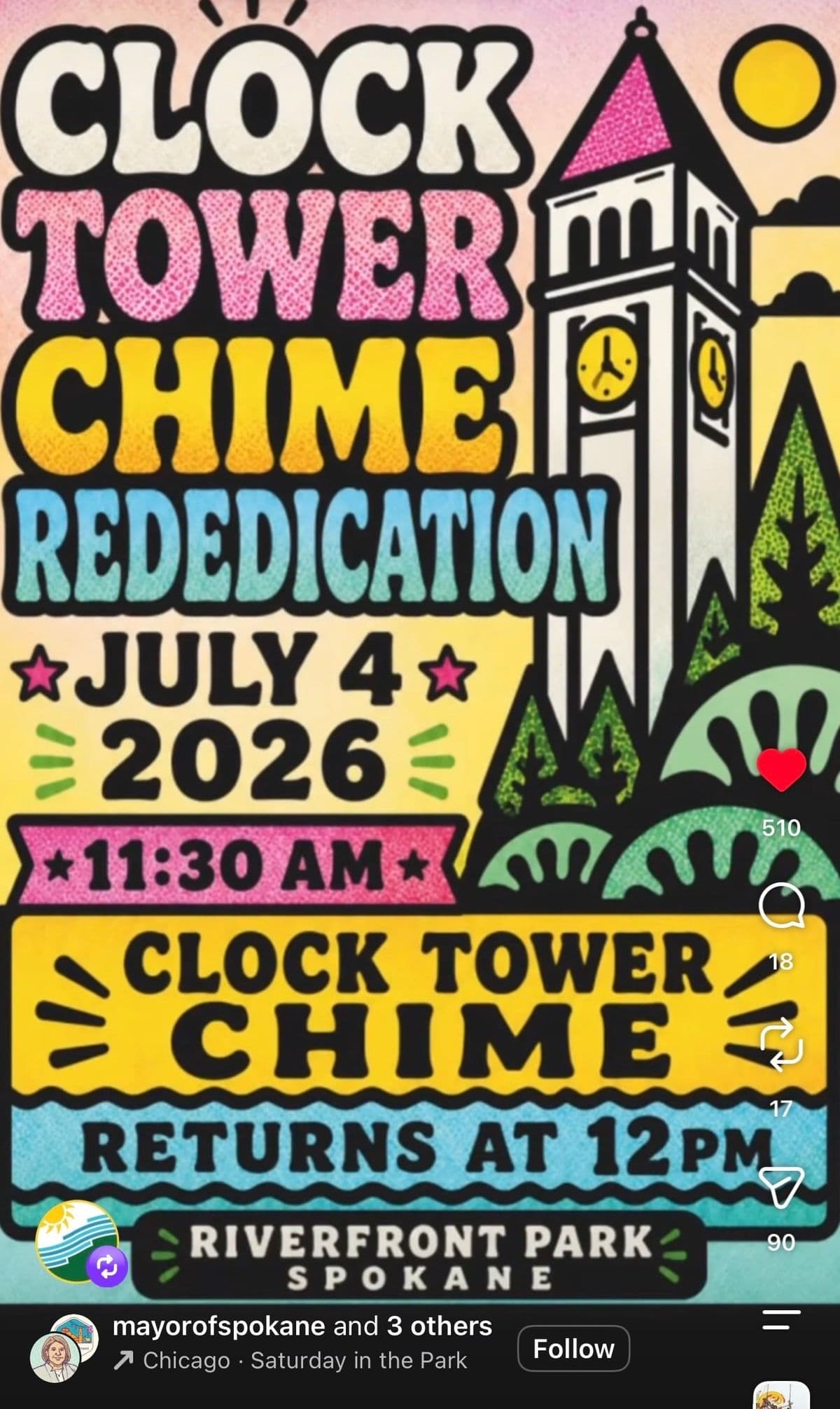
The second incident occurred when Mayor Lisa Brown's office promoted a ceremony to restore the Great Northern Clocktower's chime. Staff distributed a flyer that artist Matthew Clinard immediately recognized as plagiarizing his popular sticker design. The stylized clouds, trees, and color scheme matched his work exactly.
Artist Confronts Unintentional Theft
Clinard, who sells the original sticker online and in Spokane stores, posted about the plagiarism on social media. City officials quickly removed the flyer and apologized, explaining that a parks department employee had used AI to generate the image without disclosing its origin—a violation of existing city policy requiring such disclosure.
According to city spokesperson Erin Hut, the employee claimed to have only requested "a 70s vibe" that was "colorful and retro-feeling." The AI system apparently trained on Clinard's existing artwork to produce the result.
"All these AI-generative AI models are just scouring the internet looking at everybody's work, and nobody signed up to say, 'yeah use my work to train these things,'" Clinard told the Spokesman-Review. "It's such a huge issue, it's widespread theft on such a large scale that nobody can really do anything about it."
Why it matters
These incidents demonstrate that generative AI has reached a sophistication level where even institutional actors with review processes can be fooled. Neither case involved intentional deception, yet both resulted in public distribution of fabricated content. For government agencies that depend on public trust, the inability to distinguish real from AI-generated material poses operational and ethical risks that existing policies have not adequately addressed.
Policy Response Under Development
Both departments acknowledged the need for stronger verification protocols. Leming said the police department is reviewing internal processes and encouraged other organizations to do the same. The mayor's cabinet has begun discussing reforms to the city's AI policy, with Hut noting that "using generative AI to create an image is likely not going to be a use-case for us."
The city plans to implement professional development training to help employees identify AI-generated content and understand ethical boundaries for its use.
These details were first reported by the Spokesman-Review.
This is an original analysis by the Omega editorial team. Source reporting: AI Watch.
Want systems like this working for your business?
Book a Call
