Space Force Awards Slingshot $69M for AI Training Simulations
Colorado firm will deploy autonomous virtual adversaries to prepare operators for satellite defense missions in contested orbital environments.
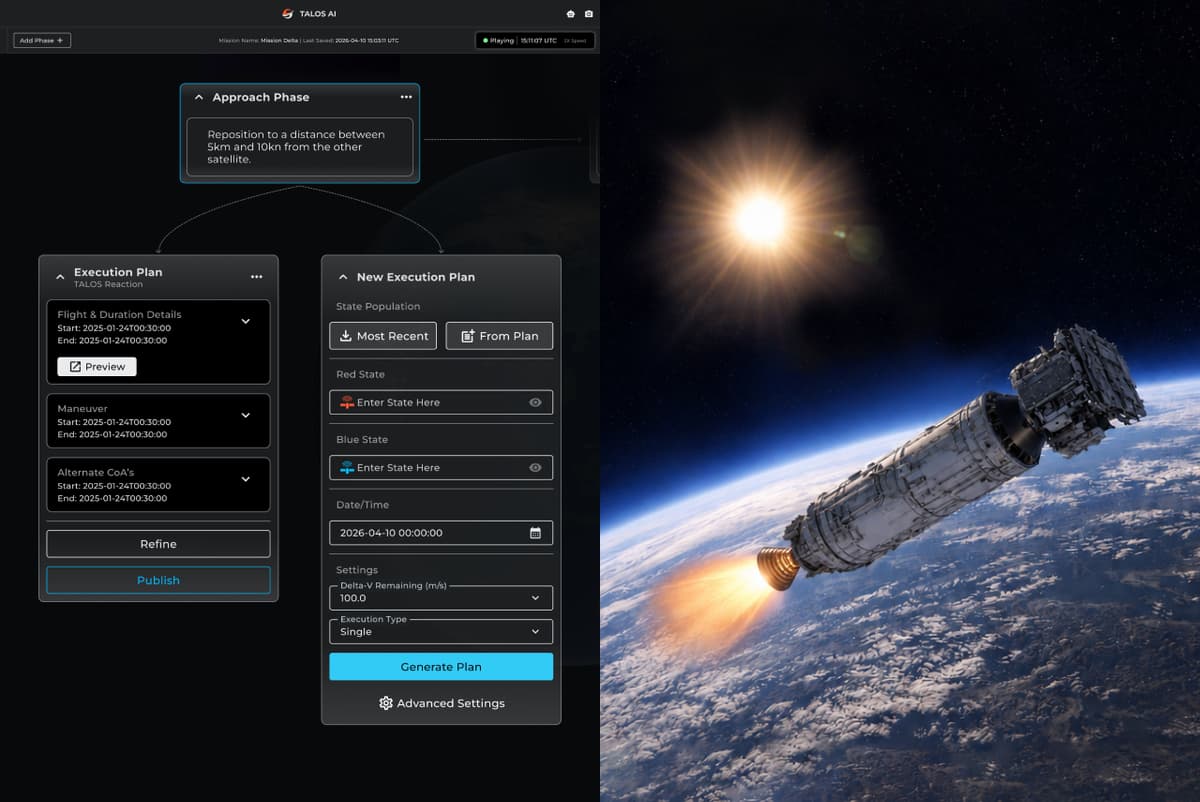
Space Force invests in AI-driven orbital combat training
The U.S. Space Force has awarded Slingshot Aerospace a $69.2 million contract to build artificial intelligence-powered training systems that simulate adversary actions in orbit, allowing military operators to rehearse satellite defense missions without risking operational spacecraft.
The 4½-year Small Business Innovation Research Phase 3 contract supports the Space Force's Operational Test and Training Infrastructure program, which aims to provide units with more realistic preparation tools for increasingly complex space operations. Slingshot announced the award on July 15.
Windsor, Colorado-based Slingshot specializes in satellite tracking and orbital data analytics. Under this contract, the company will deliver training environments where Space Force personnel can practice protecting U.S. space systems, evaluate response options, and make decisions under conditions designed to mirror actual conflict scenarios.
Why it matters
Space Force faces a unique training problem: most potential conflict scenarios in orbit cannot be safely reproduced with real satellites. Operators must learn to identify threatening maneuvers, assess intent, and respond without escalating confrontations or disrupting other missions—all without the benefit of live practice. AI-enabled digital environments offer a solution that can adapt as adversary tactics evolve, rather than forcing trainers to rely on predetermined scripts that fail to capture the unpredictability of actual operations.
TALOS brings autonomous opposition to exercises
The program centers on TALOS—Thinking Agent for Logical Operations and Strategy—an AI system that functions as an autonomous virtual opponent during training exercises. Unlike conventional simulation tools that follow fixed sequences, TALOS is designed to model realistic spacecraft behaviors and adjust its actions based on how operators respond.
The system can simulate how an adversary spacecraft might maneuver, interfere with communications, or approach other vehicles in orbit. According to Slingshot, TALOS "models realistic spacecraft behaviors, generates strategic response options, processes vast amounts of complex data, and supports mission rehearsal across continuously evolving space scenarios."
This adaptive approach forces trainees to adjust their decisions as scenarios develop, preparing them for the unpredictability of actual space operations where satellites can change course, jam signals, or conduct close approaches to other spacecraft.
From research prototype to operational tool
TALOS was initially developed through an earlier SBIR contract. The technology reflects broader Pentagon interest in using artificial intelligence not just for data analysis, but to improve how military personnel train for fast-moving operational scenarios.
Digital training environments also offer practical advantages beyond safety. They can be updated as new threats, tactics, and spacecraft capabilities emerge, allowing the Space Force to keep pace with evolving challenges in the space domain without building entirely new training infrastructure.
The details were first reported by SpaceNews.
This is an original analysis by the Omega editorial team. Source reporting: AI Watch.
Want systems like this working for your business?
Book a Call