South Korea faces 25-30 GW power surge from AI data centers
Chipmaker expansions and new AI infrastructure will drive unprecedented electricity demand alongside EV and heating transitions.
AI infrastructure drives unprecedented power demand
South Korea is bracing for a dramatic surge in electricity consumption as artificial intelligence infrastructure and semiconductor manufacturing expansions converge with broader electrification trends, according to the country's top energy official.
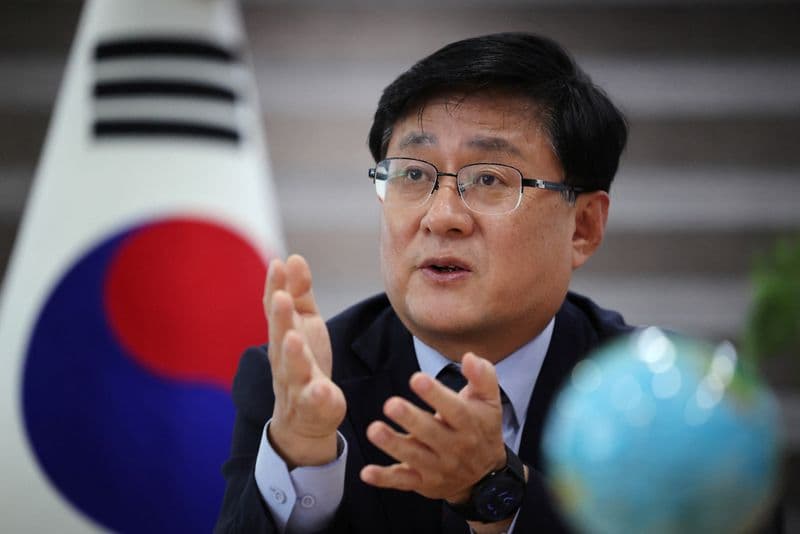
The nation's AI-driven power requirements alone will add between 25 and 30 gigawatts to the grid in the coming years, Minister of Climate, Energy and Environment Kim Sung-whan said in a recent interview. That figure represents demand from new AI data centers combined with production expansions planned by major chipmakers Samsung Electronics and SK Hynix.
Multiple electrification pressures converge
The AI and semiconductor surge represents only part of South Korea's energy challenge. The country must simultaneously accommodate rising electricity demand from two additional large-scale transitions: the shift from gasoline vehicles to electric cars and the conversion of heating systems from natural gas to electric power.
This convergence of demand drivers creates a complex planning scenario for grid operators and policymakers. Each trend alone would require significant infrastructure investment; together, they represent a fundamental reshaping of the country's power generation and distribution requirements.
Semiconductor manufacturing amplifies AI impact
South Korea's position as a global semiconductor hub intensifies its AI-related power needs. The country hosts major production facilities for both Samsung Electronics and SK Hynix, two companies at the forefront of manufacturing advanced chips for AI applications. Their planned capacity expansions will require substantial additional electricity for both fabrication processes and the data centers that support chip design and testing operations.
Why it matters
South Korea's power demand projection offers a concrete data point for understanding AI's infrastructure footprint at national scale. While much attention focuses on individual data center power consumption, the 25-30 GW figure—equivalent to roughly 25-30 large nuclear power plants—illustrates how AI deployment creates cascading energy requirements across chip manufacturing, data centers, and supporting infrastructure. Countries pursuing AI leadership or hosting major semiconductor operations face similar planning challenges, making South Korea's experience a bellwether for grid modernization needs globally.
Grid planning under pressure
The energy ministry's acknowledgment of these converging demands signals the urgency of infrastructure planning. Power generation capacity typically requires years to develop, whether through renewable energy installations, nuclear facilities, or other sources. The timeline for AI data center construction and chip fab expansions often moves faster than grid infrastructure can adapt.
South Korea's situation reflects broader patterns emerging across technology-intensive economies, where AI adoption and semiconductor manufacturing create power demand that outpaces traditional forecasting models.
These details were first reported by Reuters in an interview with Minister Kim Sung-whan conducted in September 2026.
This is an original analysis by the Omega editorial team. Source reporting: AI Watch.
Want systems like this working for your business?
Book a Call