South Korea Eyes Nuclear Expansion as AI Drives 30 GW Power Surge
Chipmaker expansions and data center construction will force the nation to reconsider its energy mix by 2040.
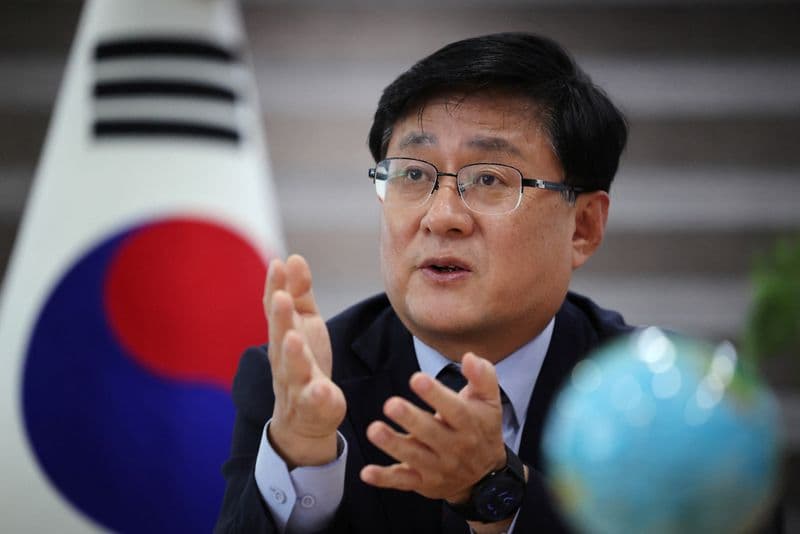
South Korea is preparing for a massive spike in electricity demand driven by artificial intelligence infrastructure and semiconductor manufacturing, with the nation's energy minister signaling that nuclear power will play a central role in meeting those needs.
AI-related demand alone will add 25 to 30 gigawatts to South Korea's power requirements, Climate, Energy and Environment Minister Kim Sung-whan told Reuters in an interview. That figure encompasses planned expansions by Samsung Electronics and SK Hynix, plus new data centers that U.S. technology companies including Nvidia have expressed interest in building.
Why it matters
The scale of power demand created by AI workloads is forcing energy policy decisions with decades-long consequences. South Korea's situation illustrates a global challenge: nations betting on AI leadership must secure reliable baseload power quickly, often before renewable capacity can scale. The nuclear question is no longer theoretical for countries competing in the chip and AI infrastructure race.
Accelerated timelines compound pressure
The urgency stems partly from compressed construction schedules. Projects originally slated for completion around 2045 have been pulled forward to the early 2030s, Kim said. Samsung and SK Hynix are building new facilities in the country's southwest as part of an 800 trillion won ($590 billion) industrial initiative announced by the government this year.
Beyond AI, South Korea must also account for rising electricity consumption from electric vehicle adoption and the transition from gas to electric heating systems.
Nuclear expansion under review
The government will release an updated long-term energy roadmap next month, extending planning through 2040. A key question is how many additional nuclear reactors the country will commit to building. Kim declined to specify a number but described nuclear energy as "an essential element" of the nation's generation mix.
For context, producing 25 to 30 gigawatts from nuclear sources would require roughly 20 reactors based on current South Korean reactor designs. The country currently operates 26 reactors, which supply just under one-third of its electricity.
Public opinion divided on safety
A government poll found 79% of 2,000 respondents support including new nuclear plants in the roadmap. However, opposition exists in potential host communities. In May, a civic group in Ulsan collected more than 10,000 signatures opposing additional reactors on safety grounds, according to Reuters.
Kim acknowledged nuclear power carries safety risks but said reliance on it is unavoidable given current renewable capacity. Renewables account for 11% of South Korea's power supply, while coal provides 29% and natural gas 27%.
The minister said the planned chip manufacturing cluster in the southwest likely won't require a new nuclear plant, as six reactors already operate in that region alongside solar and wind installations. Instead, demand centers like Seoul may need additional solar capacity or liquefied natural gas plants.
South Korea operates 60 coal-fired power plants and aims to phase them out by 2040, though Kim noted that 20 will still be within their design lifespan at that point and could serve as emergency backup capacity.
These details were first reported by Reuters.
This is an original analysis by the Omega editorial team. Source reporting: AI Watch.
Want systems like this working for your business?
Book a Call