Shield AI Wins Air Force Production Contract for CCA Autonomy
The deal reflects the service's software-first strategy for Collaborative Combat Aircraft, separating mission autonomy from airframe development.
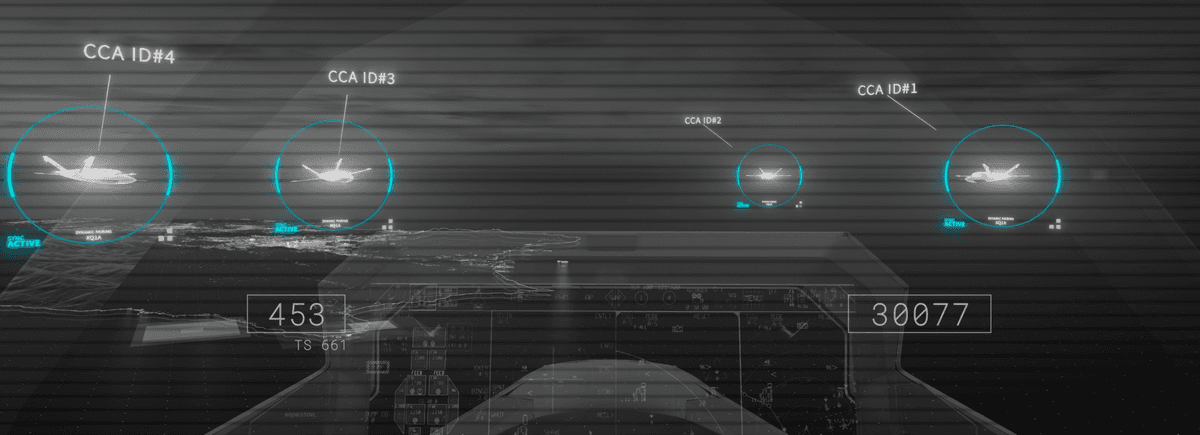
Shield AI has secured a production contract from the U.S. Air Force to deploy its Hivemind mission autonomy software for the Collaborative Combat Aircraft program, the company announced June 17, 2026.
The award marks a significant milestone in the Air Force's effort to field autonomous unmanned combat aircraft that can operate alongside piloted fighters. According to Shield AI, the contract validates the service's decision to treat mission autonomy as a standalone capability rather than tying it to specific airframes.
Modular architecture enables faster upgrades
The production contract leverages the Autonomy Government Reference Architecture (A-GRA), a framework that allows the Air Force to update and iterate autonomy software independently of the aircraft platforms that carry it. This separation means software improvements can be deployed across multiple aircraft types without requiring airframe redesigns or lengthy integration cycles.
"Mission autonomy is a foundational capability for future airpower," said Christian Gutierrez, senior vice president of Hivemind at Shield AI. "The Air Force's approach enables faster innovation, rapid capability deployment, and greater operational advantage for the warfighter."
The modular approach also preserves competition among autonomy providers and reduces program risk by avoiding vendor lock-in to a single aircraft platform. Shield AI's Hivemind software can now be integrated across the broader CCA ecosystem rather than being confined to one airframe design.
Focus on collaborative combat behaviors
Under the production award, Shield AI will implement collaborative combat autonomy behaviors that enable multiple autonomous aircraft to operate together under human supervision. The goal is to reduce operator workload and enable coordinated operations at scale—a critical requirement as the Air Force envisions CCA aircraft operating in teams with crewed fighters.
Hivemind differs from traditional autopilot systems by going beyond following preplanned routes. The software can reroute around dynamic obstacles, execute collaborative tactics with other systems and piloted aircraft, respond to unexpected battlefield conditions, and complete missions as part of a human-machine team.
Parallel development efforts continue
The production contract is separate from Shield AI's ongoing development work for the CCA program. Earlier in 2026, the company was selected as a mission autonomy provider following a competitive evaluation supporting Technology Maturation and Risk Reduction efforts. Hivemind is currently flying aboard Anduril's YFQ-44A aircraft as part of those development activities.
Shield AI, founded in 2015, develops autonomy software and unmanned aircraft including the V-BAT and X-BAT platforms. The company operates offices and facilities across the United States, Europe, the Middle East, and Asia-Pacific.
Why it matters
The Air Force's software-first approach to CCA autonomy represents a fundamental shift in how the service acquires and fields advanced capabilities. By decoupling mission autonomy from airframe development, the Air Force can accelerate innovation cycles, reduce integration costs, and maintain flexibility to adopt better technologies as they emerge. This modular architecture could become a template for other autonomous systems programs across the Department of Defense.
Details of the contract award were first reported by Shield AI in a press release.
This is an original analysis by the Omega editorial team. Source reporting: AI Watch.
Want systems like this working for your business?
Book a Call