SenseTime Reports First Profit as Generative AI Drives Revenue
The Chinese AI pioneer's focus on enterprise productivity tools and recurring revenue stands apart from loss-making competitors.
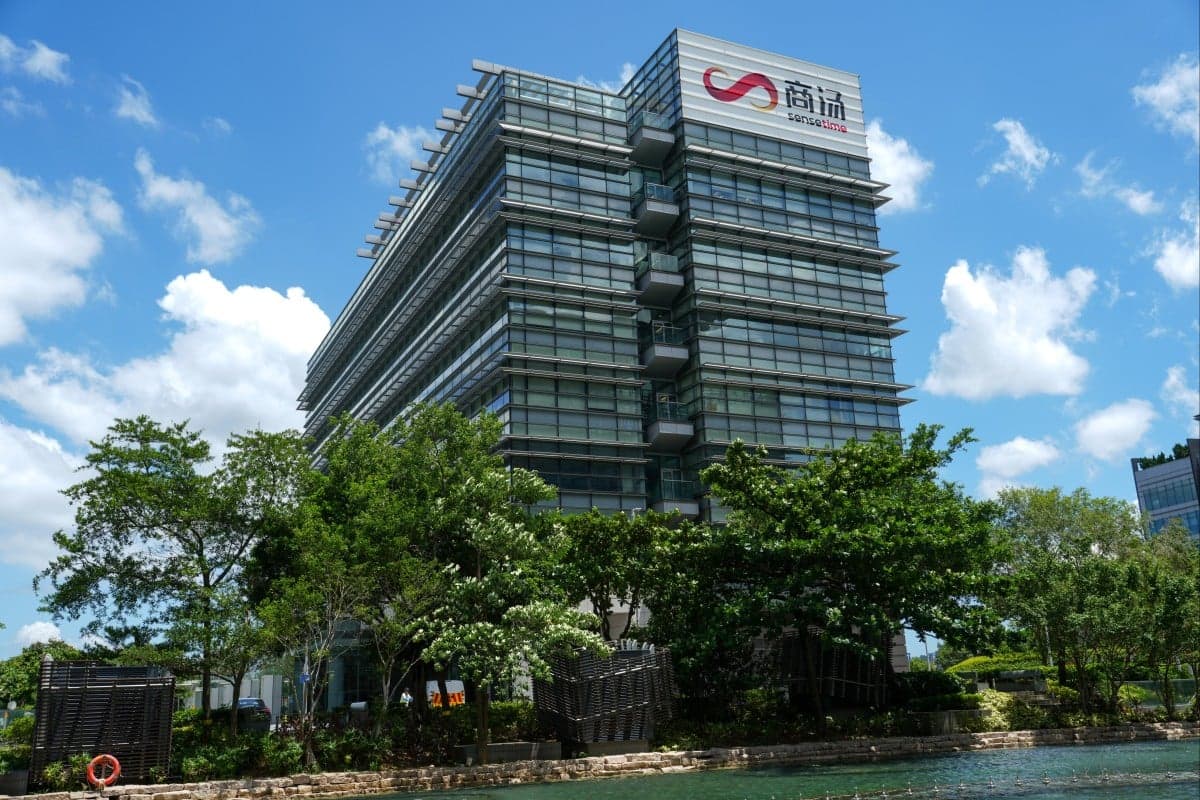
SenseTime achieves profitability milestone
Chinese AI company SenseTime has reported its first half-year profit since listing on the Hong Kong Stock Exchange in 2021, marking a significant departure from the financial trajectory of its domestic competitors. The company posted net income of 617.3 million yuan ($92 million) for the first half of 2026, alongside revenue growth of 23.4 percent to 2.91 billion yuan.
According to the South China Morning Post, which first reported the results, CEO Xu Li and CFO Wang Zheng attributed the turnaround to a strategic emphasis on practical enterprise applications rather than pursuing ever-larger AI models. The company has built what executives describe as independent commercial loops around its core capabilities: AI models, a token factory, and an agent-harness system.
Generative AI becomes primary revenue driver
Generative AI emerged as SenseTime's dominant business segment, contributing 2.33 billion yuan—nearly 80 percent of total sales. This represents a fundamental shift in the company's revenue composition and business model.
For the first time, SenseTime disclosed recurring revenue figures, which reached 1.14 billion yuan, up 124.4 percent year-over-year. This recurring revenue now accounts for nearly 40 percent of total sales, indicating the company has successfully transitioned clients to subscription-based relationships rather than one-time project engagements.
The company's approach centers on helping clients complete specific enterprise tasks and serving solo entrepreneurs, rather than competing primarily on model parameters or benchmark performance.
Contrast with Chinese AI competitors
SenseTime's profitability stands in stark relief against other prominent Chinese AI companies. MiniMax and Zhipu AI (also known as Z.ai) both reported triple-digit revenue growth for the same period but remained deeply unprofitable. MiniMax recorded a net loss of $358 million, while Zhipu AI lost 2.07 billion yuan ($308 million).
"Among pure-play AI companies, we are one of the very few whose overall business trend is clearly moving in the direction of profitability," CFO Wang Zheng stated.
The divergent financial outcomes suggest different strategic choices within China's AI sector. While some companies prioritize rapid scaling and market share expansion—often at the expense of near-term profitability—SenseTime has opted for a more measured approach focused on sustainable unit economics.
Why it matters
SenseTime's results demonstrate that profitability in enterprise AI is achievable without chasing the largest possible models or burning capital to subsidize growth. For business leaders evaluating AI investments, the company's emphasis on recurring revenue and task completion over raw model size offers a potential template for sustainable commercialization. The contrast with loss-making competitors also raises questions about which business models will prove viable as the AI market matures and investor patience for unprofitable growth potentially wanes.
These details were first reported by the South China Morning Post.
This is an original analysis by the Omega editorial team. Source reporting: AI Watch.
Want systems like this working for your business?
Book a Call