Senate Panel Mandates Human Control Over AI Weapons Systems
Amendment to defense bill would codify Pentagon policy requiring human oversight in autonomous weapons use, even as Trump pushes rapid AI deployment.
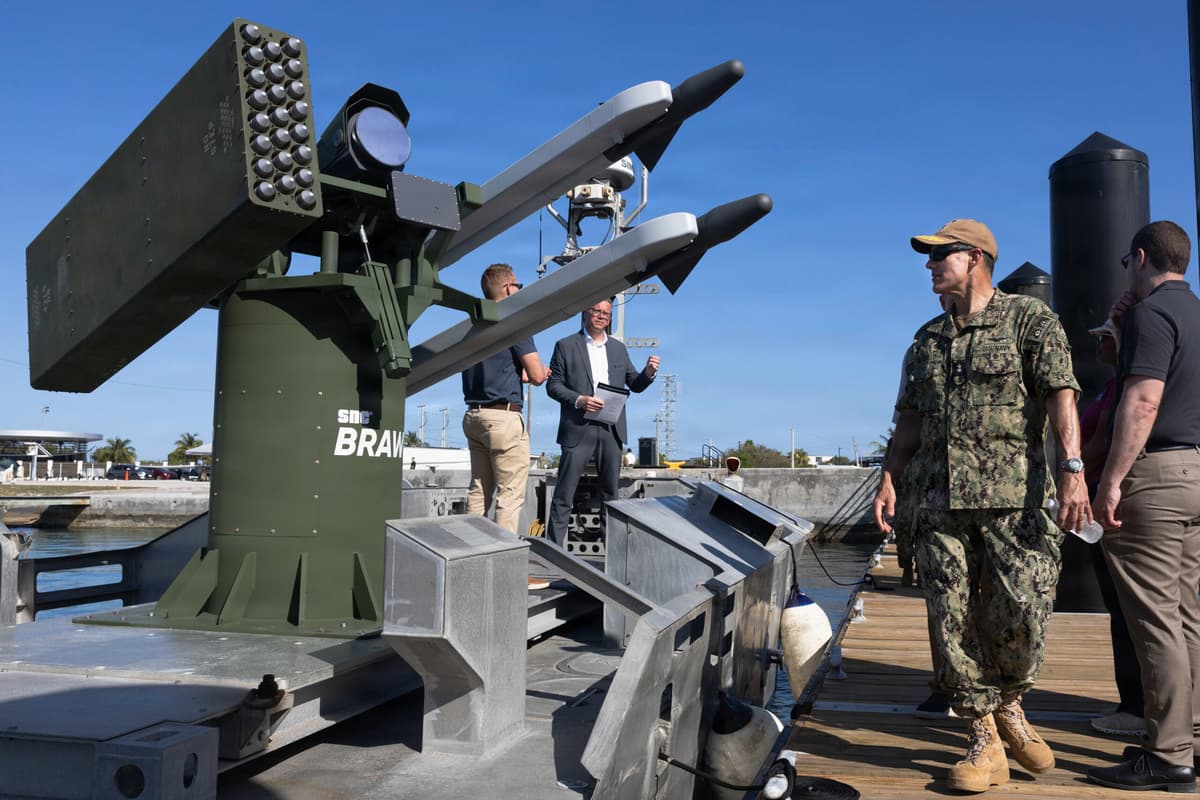
The Senate Armed Services Committee has approved legislation that would require human oversight for all autonomous weapons systems, establishing a legal firewall against fully automated military strikes as artificial intelligence becomes increasingly central to U.S. combat operations.
The amendment, introduced by Arizona Senator Mark Kelly and approved June 12 on an 18-9 vote, would codify existing Defense Department policy known as Directive 3000.09. That 2023 policy mandates human involvement in decisions to use lethal force, even when AI systems identify and track targets.
Why it matters
The legislative move arrives at a critical juncture. President Trump issued a memorandum on June 5 directing the Pentagon to "eliminate unnecessary barriers to rapid deployment" of AI and to revise Directive 3000.09 within 90 days. Kelly's amendment would block any revision that removes human decision-makers from what military planners call the "kill chain" — the sequence from target identification to weapon release. The tension reflects a fundamental question facing modern militaries: whether speed and efficiency should override human judgment in life-and-death decisions.
AI Already Embedded in Combat Operations
Artificial intelligence tools have moved from experimental to operational across multiple theaters. In January, Anthropic's Claude AI assisted in the capture of Venezuelan President Nicolás Maduro. The same system was deployed on the opening day of Operation Epic Fury in Iran, according to Small Wars Journal, which first reported the Senate committee action.
A more controversial incident involved the Maven Smart System, an AI targeting platform developed by Palantir Technologies in 2017. The system was implicated in a missile strike near an Iranian military base that killed 175 people, mostly young girls, when it identified a school as a legitimate target. Technology scholar Kevin Baker later determined that Maven relied on outdated intelligence showing the school as part of an Islamic Revolutionary Guard Corps compound — a designation that hadn't been accurate since 2016.
"People failed to update a database, and other people built a system fast enough to make that failure lethal," Baker wrote in The Guardian.
Maven compresses the targeting process to just four clicks from identification to destruction, according to reporting by The New Yorker.
Accountability Remains Undefined
Experts supporting the Kelly amendment emphasize that codifying human oversight addresses legal and ethical exposure. "There's a perception shared among the military and the public that there ought to be human oversight of these capabilities," said Paul Lushenko, a lecturer at George Washington University and expert at RegulatingAI.
But the amendment leaves critical questions unanswered. Trump's June memorandum calls for "rigorous oversight" without specifying who conducts it or what standards apply. Zaza Tsotniashvili, a professor at Caucasus International University in Tbilisi, Georgia, noted that "DoD directives can be reinterpreted, waived or quietly revised by the executive branch without congressional approval."
Arizona Senator Ruben Gallego sent a letter to Defense Secretary Pete Hegseth on June 15 demanding clarity on how any revised directive would protect U.S. forces and civilians from autonomous weapons risks.
Kelly himself voted against the overall defense authorization bill despite his amendment's inclusion, citing the $1.15 trillion cost and what he described as insufficient congressional oversight of military operations, particularly Trump's decision to engage Iran without legislative approval.
Details of the Senate Armed Services Committee action and the AI systems involved were first reported by Small Wars Journal.
This is an original analysis by the Omega editorial team. Source reporting: AI Watch.
Want systems like this working for your business?
Book a Call