Rocket Close cuts contact center volume 30% with agentic AI
Detroit title agency built Supercharger using AWS Strands Agents and Model Context Protocol to automate research-heavy mortgage workflows.
Rocket Close cuts contact center volume 30% with agentic AI
Rocket Close, the Detroit-based title agency within Rocket Companies, has reduced incoming contact center calls and emails by 30 percent using an agentic AI system that automates research-intensive mortgage title operations.
The company built Supercharger in collaboration with AWS to address a fundamental bottleneck: title examiners were spending hours navigating fragmented systems, state-specific guides, and county requirements to verify property data. Each title examination required manual searches across multiple databases to understand local rules around probate, tax IDs, and recording requirements.
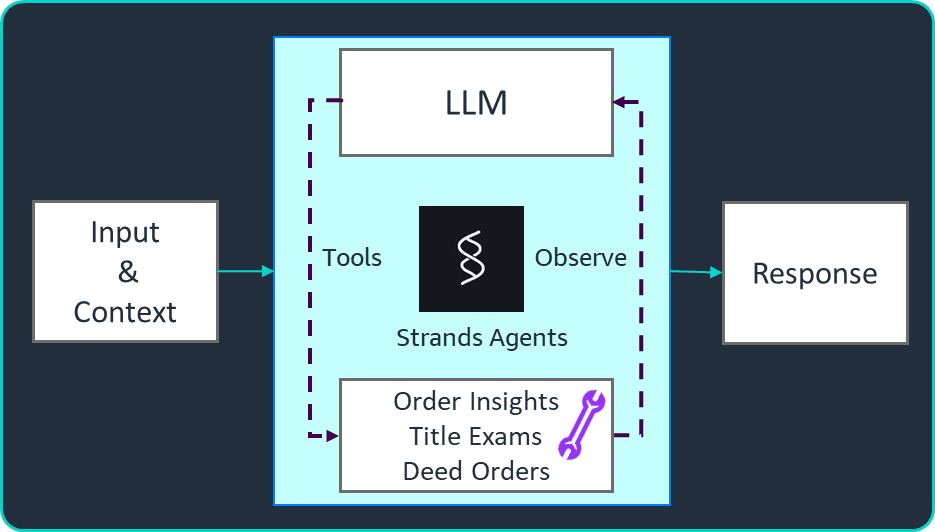
Supercharger centralizes that knowledge and automates research tasks using AWS Strands Agents, an open source SDK that orchestrates AI agents through Amazon Bedrock and Anthropic's Claude large language model. The system combines six interconnected capabilities: conversational analytics, state-level title examination assistance, API-based integration with existing databases, guardrails for response accuracy, comprehensive audit logging, and unified access to multiple data sources.
Why it matters
Title operations represent a critical chokepoint in mortgage processing, where manual research delays closings and limits throughput. Rocket Close's approach demonstrates how agentic AI can tackle domain-specific, knowledge-intensive workflows that require synthesizing information from disparate sources rather than simply answering isolated questions. The 30 percent reduction in contact center volume translates directly to faster closings and improved client experience in a high-stakes transaction.
Architecture built for flexibility
The technical foundation relies on Model Context Protocol tools, where each data source is exposed as a distinct tool the Strands agent can invoke dynamically. When an operations team member asks a question, the system validates identity, invokes the agent workflow, queries knowledge bases for relevant policies, selects appropriate tools, retrieves order information through MCP tool execution, synthesizes context, and streams the response back through WebSocket.
This architecture delivers three advantages: new data sources can be added without restructuring the core system, logic for each data source is encapsulated and testable, and the agent selects tools based on query requirements rather than following rigid workflows.
Security combines Amazon Bedrock Guardrails with row-level data entitlements to prevent unauthorized access to customer data, while full audit trails meet compliance requirements.
Operational gains beyond efficiency
Beyond the contact center metrics, Supercharger improved state exam accuracy by delivering real-time order insights within existing workflows, reducing cognitive load and research time. Client satisfaction increased through automation of routine tasks and AI-assisted communication drafting. Operational consistency improved with standardized, AI-guided state-level exam assistance.
The team achieved 3x latency improvements by refining architecture and prompting techniques to reduce LLM calls. They learned that efficient data retrieval—using MCP tools to fetch necessary order information in a single call before LLM synthesis—proved more effective than multiple database queries.
Key lessons from implementation
Rocket Close discovered that effective LLM prompting focuses on describing what the agent should accomplish rather than prescribing how, allowing the agent to orchestrate dynamically. Descriptive tool naming and clear documentation serve as natural language interfaces for agent reasoning. WebSocket-based streaming improved perceived performance by providing immediate user feedback.
The team also found that maintaining separation of concerns between Strands Agents and MCP tools created a flexible foundation capable of evolving with changing requirements. Offloading security enforcement to session attributes rather than embedding it in business logic provided cleaner access control.
According to Bryan Bedard, Vice President of Data Science at Rocket Close, the solution "transforms how work gets done" by integrating question-answering capability with external chat interfaces.
Future phases will expand Supercharger for bankers to address loan-specific questions and create templates to guide domain teams in building agentic solutions for other business problems.
These details were first reported by AWS in a blog post on the AWS Machine Learning Blog.
This is an original analysis by the Omega editorial team. Source reporting: AI Watch.
Want systems like this working for your business?
Book a Call
