RadNet's DeepHealth Wins FDA Nod for AI Breast Ultrasound
The cleared platform automates lesion detection and BI-RADS characterization across 700,000 annual exams, with reimbursement pathway already in place.
FDA clears AI ultrasound platform for national rollout
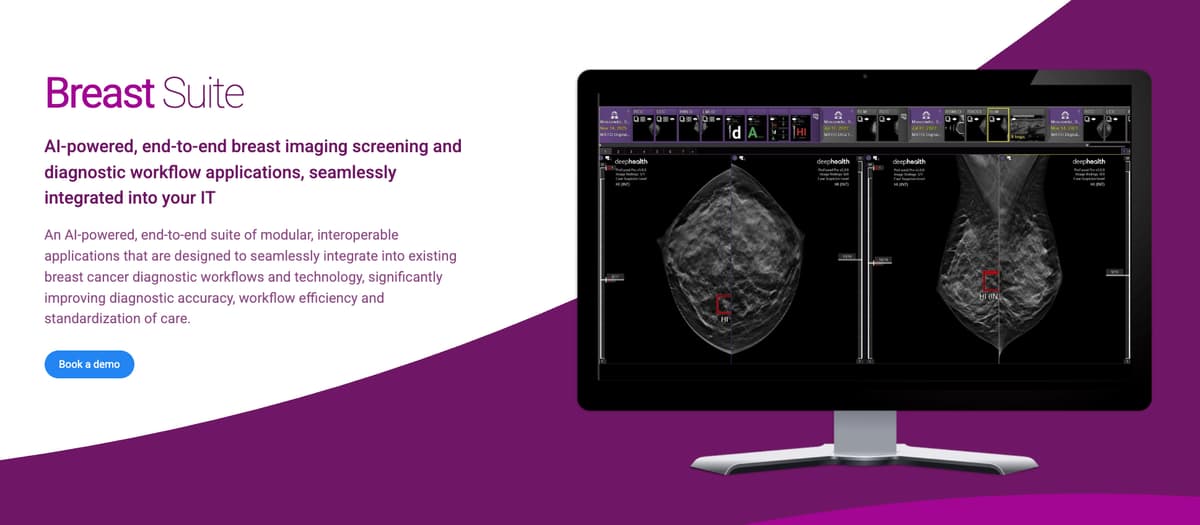
DeepHealth, a RadNet subsidiary, has secured FDA 510(k) clearance for an artificial intelligence platform that automates breast ultrasound interpretation—from lesion detection through BI-RADS characterization to draft report generation. RadNet intends to deploy the software across its outpatient imaging network by year-end, touching more than 700,000 breast ultrasound studies annually.
The clearance addresses a longstanding challenge in breast imaging: operator-dependent acquisition and inconsistent reads. Nearly 40 percent of women undergo breast ultrasound at some point, often as supplemental screening when mammography reveals dense tissue. Variable technique and subjective interpretation have historically led to diagnostic delays and reader fatigue.
Clinical validation and workflow gains
A multi-reader, multi-case study involving 16 U.S. board-certified radiologists showed the platform localizes lesions with better than 98 percent accuracy. Sensitivity for cancer detection rose 8 percentage points, while radiologist interpretation time dropped 37 percent. The system analyzes acoustic features—shape, margin, echo pattern, posterior characteristics—against American College of Radiology BI-RADS criteria, then populates measurements into draft reports for physician review.
For sonographers, the automation eliminates manual data entry. For radiologists, it standardizes reads across high-volume centers where workflow variability has been the norm.
Reimbursement pathway already established
Beyond clinical performance, the software carries a clear economic model. U.S. providers can pursue reimbursement under an existing Category III CPT code for quantitative ultrasound tissue characterization, giving health systems a financial framework as they scale AI-assisted workflows.
Expanding the modular breast suite
The ultrasound platform joins DeepHealth's existing mammography detection, density scoring, arterial calcification analytics, and risk prediction tools inside a single cloud-native environment the company calls DeepHealth OS. The modular architecture lets imaging centers adopt capabilities incrementally rather than replacing entire PACS workflows.
Why it matters
Breast ultrasound sits at the intersection of clinical necessity and operational friction. High exam volumes, dense-tissue prevalence, and subjective interpretation create bottlenecks that delay diagnosis and strain radiologist capacity. An FDA-cleared AI tool with demonstrated sensitivity gains, validated time savings, and an established reimbursement code gives large networks a scalable path to standardize care while addressing workforce constraints. RadNet's 700,000-exam deployment will serve as a real-world test of whether AI can move from pilot to production in one of imaging's highest-stakes workflows.
"Breast ultrasound is an essential component of the breast care pathway, with approximately 40% of women undergoing the exam at some point in their lives," said Dr. Jason McKellop, Medical Director of Women's Imaging for RadNet California.
Details of the clearance and deployment timeline were first reported by HIT Consultant.
This is an original analysis by the Omega editorial team. Source reporting: Automation Watch.
Want systems like this working for your business?
Book a Call