Qualcomm Unveils Data Center CPU, Secures Meta Deal for 2028
The smartphone chipmaker targets hyperscale computing with Dragonfly C1000, emphasizing power efficiency for agentic AI workloads.
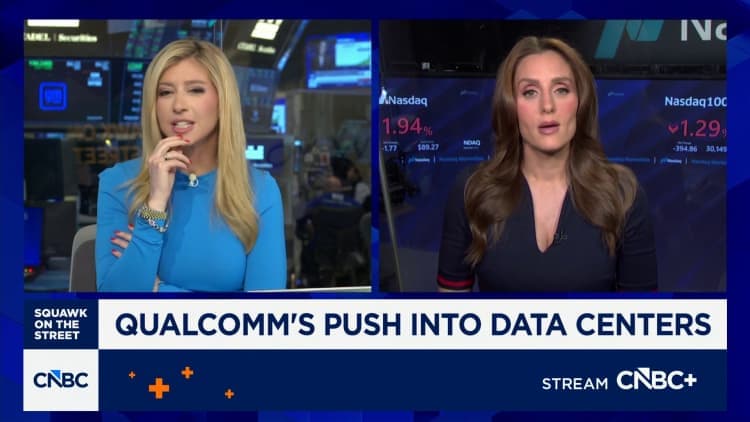
Qualcomm announced a new data center central processing unit on Wednesday, marking a significant expansion beyond its core smartphone business into enterprise computing infrastructure. The chip, called Dragonfly C1000, will enter production in 2028 with Meta as a confirmed customer.
The announcement came during an investor presentation where CEO Cristiano Amon outlined the company's broader data center strategy. Qualcomm revealed it has developed a roadmap of multiple products targeting the rapidly expanding data center market, including specialized AI chips and interconnect solutions that link multiple processors together.
Why it matters
Qualcomm's entry into data center CPUs reflects a fundamental shift in how AI infrastructure is evolving. As autonomous AI agents become more prevalent, computing workloads are expected to shift from graphics processors back toward CPUs. For hyperscalers like Meta building massive facilities, power consumption has become a critical constraint—an area where Qualcomm claims its mobile chip heritage gives it a competitive advantage. The move also signals Qualcomm's urgency to diversify beyond smartphones, a market that peaked in unit shipments seven years ago.
Designed for agentic AI
Qualcomm positioned the Dragonfly C1000 specifically for agentic AI applications—systems that operate autonomously rather than responding to direct prompts. The company emphasized that the chip prioritizes computational performance while minimizing power consumption, a design philosophy carried over from its smartphone and PC processor work.
CFO Akash Palkhiwala told CNBC that Qualcomm already maintains relationships with nearly every major hyperscaler through its existing product lines. "This is not a new relationship," Palkhiwala said. "It's the benefit of what we've delivered to them already on the edge, combined with the scale and the expertise and the confidence in Qualcomm."
Palkhiwala also noted that CPU supply constraints are creating opportunities for new entrants. "There really isn't enough supply, and multiple players are needed," he said.
Strategic diversification
Smartphones still account for two-thirds of Qualcomm's product revenue, based on figures from the quarter ending in March. However, the company is actively pursuing faster-growing markets including automotive, robotics, and now data center infrastructure.
Qualcomm disclosed it has secured two deals to produce custom silicon for hyperscale customers, though it did not name the second customer beyond Meta.
The company also announced it acquired Modular, a startup that develops software enabling AI applications to run across different chip architectures. Qualcomm described Modular's technology as comparable to Nvidia's CUDA platform, which has become a standard in AI development.
When asked whether Qualcomm was entering the data center market too late, Amon pushed back. "When people ask about if it's late to enter the data center, you should think about scale and execution, or engineering capabilities, or operations and supply chain," he said.
Qualcomm shares declined in Wednesday trading following the announcements. The details were first reported by CNBC.
This is an original analysis by the Omega editorial team. Source reporting: AI Watch.
Want systems like this working for your business?
Book a Call