Qualcomm Launches AI Data Center Chips, Wins Meta and Microsoft
The smartphone chipmaker unveils four product lines targeting Nvidia's dominance, backed by major cloud customer commitments.
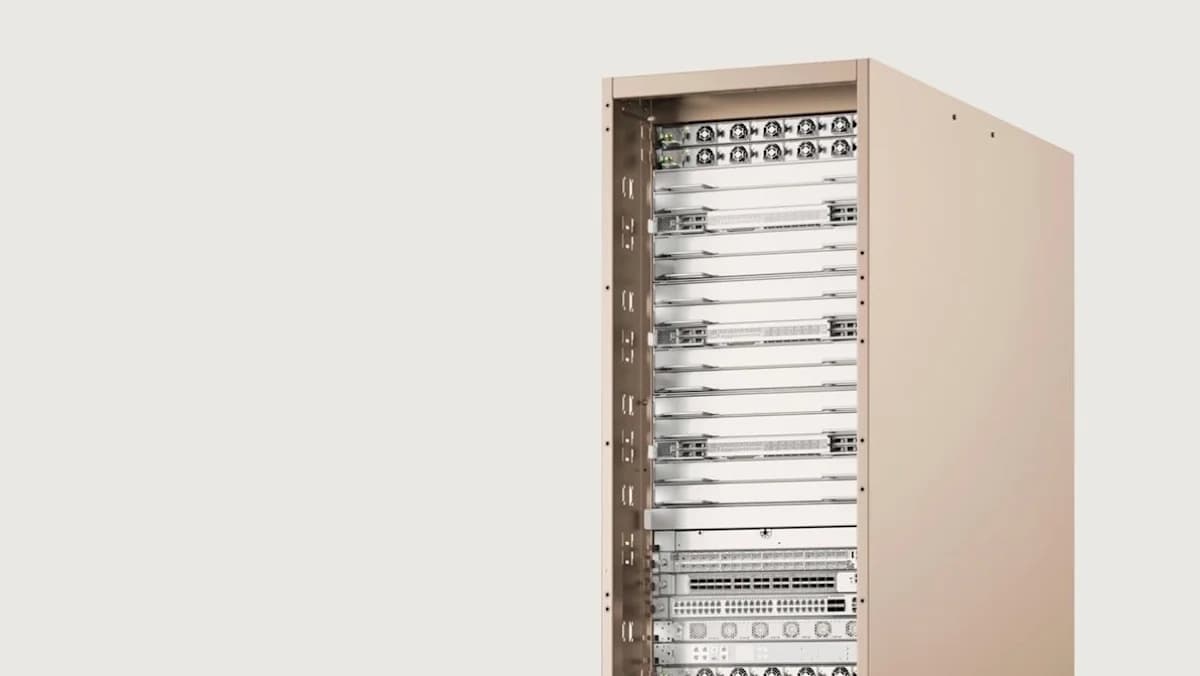
Qualcomm is mounting a comprehensive challenge to Nvidia's AI data center dominance with a portfolio of new chips, memory technology, and software tools designed to capture a share of the booming infrastructure market.
The company announced four product lines rolling out over the next 24 months, including the Dragonfly C1000 CPU and AI300 accelerator chip for AI inferencing. Meta has committed to a multigeneration agreement to deploy the C1000 in its next-generation services, while Microsoft has also signed on as a customer, according to details first reported by AI Watch.
Why it matters
Qualcomm's aggressive data center push represents a strategic pivot away from smartphone dependence and positions the company to compete for the massive capital expenditures cloud providers are directing toward AI infrastructure. Securing Meta and Microsoft as anchor customers provides crucial validation and revenue visibility as Qualcomm attempts to crack a market where Nvidia holds an estimated 80-90% share of AI accelerator sales.
Full-stack infrastructure play
Tony Pialis, executive vice president and general manager of Qualcomm's data center business, described the initiative as "a full turnkey agentic AI infrastructure that we've built from the ground up." The approach bundles processors, accelerators, memory, and software into integrated systems rather than selling standalone components.
The AI300 chip and accompanying rack server target AI inferencing workloads—the process of running trained models to generate predictions or responses. Qualcomm expects commercial sampling of the AI300 to begin in 2028, following its previously announced AI200 and AI250 chips from October.
Breaking Nvidia's software moat
Qualcomm's recent acquisition of AI software company Modular addresses what many consider Nvidia's most durable competitive advantage: its CUDA software platform. CUDA has become the de facto standard for developing AI applications on GPUs, creating powerful lock-in effects as developers build expertise and codebases around the ecosystem.
Qualcomm said Modular's technology will enable customers to run software originally written for CUDA on Qualcomm's hardware. "This is how we open up the industry and deliver greater value by building bridges rather than building moats around our solutions," Pialis said.
New memory technology
The company also introduced HBC (high-bandwidth compute), a memory technology designed to compete with the high-bandwidth memory (HBM) that has become critical for AI workloads. Qualcomm claims HBC will deliver lower total cost of ownership and improved energy efficiency compared to existing HBM solutions.
Broader transformation strategy
The data center expansion fits within Qualcomm's larger effort to diversify beyond smartphones, which have historically driven the majority of its revenue. The company is simultaneously pushing into automotive chips and competing with Intel and AMD in the PC processor market. Qualcomm stock has risen 24% over the past 12 months and 13% year to date.
Despite the momentum, Qualcomm faces formidable obstacles in displacing Nvidia, which invested early in AI acceleration and has built deep relationships with every major cloud provider and AI lab. The market leader's head start in both hardware performance and software ecosystem development will be difficult to overcome.
These details were first reported by AI Watch.
This is an original analysis by the Omega editorial team. Source reporting: AI Watch.
Want systems like this working for your business?
Book a Call