Purdue Wins $19M NSF Grant for AI-Powered Cloud Lab Network
The ICoN-PCL platform will connect remote researchers to physical labs, simulations, and autonomous tools for semiconductor and advanced materials development.
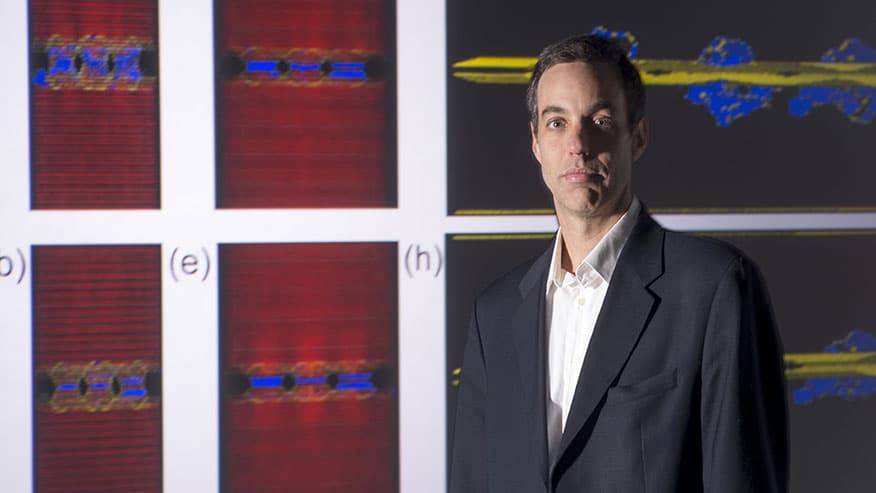
Purdue University will lead a $19 million initiative to create a cloud-based laboratory platform that gives researchers nationwide remote access to physical equipment, AI-driven tools, and simulation capabilities for advanced materials and semiconductor development.
The Intelligent Codesign Cloud Lab for Non-Equilibrium and Low-Dimensional Materials (ICoN-PCL) received funding from the U.S. National Science Foundation Directorate for Technology, Innovation and Partnerships as part of its Test Bed: Toward a Network of Programmable Cloud Laboratories program. The platform aims to compress the timeline from materials discovery to real-world manufacturing, addressing a persistent bottleneck where promising materials can languish for decades before industrial implementation.
Breaking down research silos
Alejandro Strachan, a Reilly Professor of Materials Engineering at Purdue who will direct the project, emphasized that materials discovery, manufacturing, and device fabrication have traditionally operated as isolated domains. ICoN-PCL seeks to unify these stages through AI-enabled codesign, where materials and their manufacturing processes evolve together rather than sequentially.
The platform will integrate resources from Purdue's Birck Nanotechnology Center and Manufacturing and Materials Research Laboratories, along with Drexel University's Metadata Research Center. Remote users will gain access to advanced fabrication and characterization equipment that might otherwise be unavailable to their institutions.
Core capabilities
ICoN-PCL will offer several interconnected tools:
- A multiagent AI assistant called ICoN Research Assistant to help design experiments and navigate millions of potential material and process combinations
- Digital twins that simulate experiments and predict outcomes before physical execution
- Automated workflows capable of designing, running, and optimizing fabrication processes with minimal human intervention
- Integration with existing platforms like nanoHUB, a computational nanotechnology database that Strachan co-directs
The platform will initially focus on two application areas: developing next-generation electronics using two-dimensional materials thinner than 10,000th of a human hair, and creating materials capable of withstanding extreme conditions in energy and aerospace systems. For 2D materials, manufacturers currently struggle with reliable production at scale and understanding how microscopic defects affect performance.
Why it matters
The decades-long gap between materials discovery and industrial adoption represents a significant drag on technological competitiveness. By automating experimentation, eliminating redundant research, and enabling simultaneous optimization of materials and manufacturing processes, ICoN-PCL could substantially accelerate innovation cycles in sectors critical to national security and economic leadership, including semiconductors, aerospace, defense, and advanced energy systems. The platform's cloud-based architecture also democratizes access to cutting-edge equipment, potentially expanding the pool of researchers capable of contributing to these fields.
Beyond research applications, ICoN-PCL will serve as a training environment for AI, materials science, manufacturing, and autonomous experimentation, helping develop workforce capabilities in strategic technology areas. Users from academia, industry, and government will be able to collaborate and share data regardless of geographic location.
The initiative is part of Purdue Computes, a broader university strategy to advance research and education in computing, semiconductors, physical AI, and quantum science.
Details of the award were announced by Purdue University.
This is an original analysis by the Omega editorial team. Source reporting: AI Watch.
Want systems like this working for your business?
Book a Call