Power Grids and AI Infrastructure Now Shape Each Other's Limits
As data center electricity demand surges, grid operators and tech companies face a new reality where energy and compute decisions can no longer be made separately.
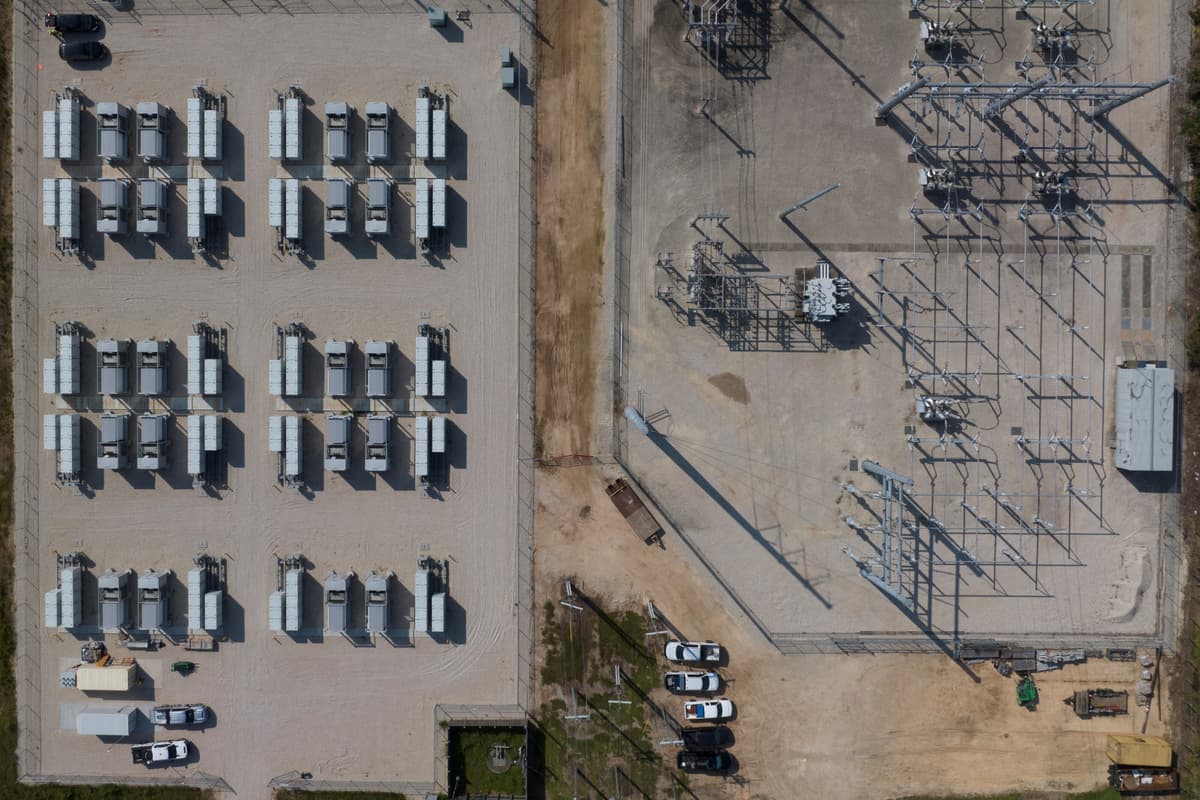
The relationship between artificial intelligence and electrical infrastructure has fundamentally changed. AI systems now depend on power grids that weren't designed for their scale, while those same grids are being transformed by AI-driven optimization. Grid operators, cloud providers, and energy regulators are confronting a reality where these two critical systems can no longer evolve independently.
The International Energy Agency projects that data center electricity consumption could roughly double by 2030, according to analysis from the World Economic Forum. The challenge isn't just volume—it's timing. New transmission lines require years to permit and construct, while AI workloads can scale up in months. This mismatch between infrastructure timelines and computational growth is creating structural tension across the energy sector.
Why it matters
When two foundational infrastructures become interdependent this quickly, decisions that were once made in isolation—power purchase agreements, grid expansion, AI procurement—now carry cascading consequences. Technology companies that treat energy as an afterthought create fragility. Grid operators who plan without modeling AI-driven demand patterns are planning for a system that no longer exists.
AI moves into grid operations
The boundary between energy consumer and energy manager is disappearing. Industrial facilities and commercial buildings are running continuous optimization algorithms, making autonomous decisions about when to generate, store, consume, or sell electricity.
Chinese company Envision demonstrates this shift with its AI Power System for industrial parks. "Industrial facilities that were once passive users of electricity are becoming autonomous energy managers, continuously balancing on-site solar, battery storage and grid interaction without compromising production," said Lei Zhang, Envision's Founder and CEO.
When industrial users become active grid participants, the demand side gains intelligence that historically resided only on the supply side. Millions of buildings, batteries, and industrial sites can now absorb variability and respond to price signals in real time.
Power infrastructure as AI bottleneck
AI data centers require electricity that is highly reliable, increasingly clean, and available on timelines that don't align with conventional grid expansion cycles. The problem isn't only scale—it's the speed at which this demand materializes.
Battery provider Hithium is addressing this gap by pairing long-duration storage at energy sources with lithium-sodium systems at load points. This approach delivers grid-scale reliability with millisecond response times on deployment timelines of one to two years, rather than five to ten. "AI is scaling faster than power infrastructure can be built," said Dr. Nazar Yi, Hithium Board Member and Vice President. "Fast-response storage combined with long-duration flexibility provides the reliability that AI data centre operators require."
China's 15th Five-Year Plan (2026–2030) reflects this convergence, calling for closer coordination between computing, power, and renewable energy infrastructure.
AI as resilience mechanism
As grids incorporate more variable renewable energy and face increasing extreme weather and cyber risks, stability increasingly depends on response speed rather than reserve capacity alone. AI-enabled systems can detect anomalies, reroute flows, and coordinate storage in milliseconds—timescales where human operators cannot compete.
"In the AI era, resilience is no longer defined by backup power alone," Dr. Yi noted. "It is the ability of energy storage systems to sense, respond and adapt in real time."
These three dynamics—AI in grid operations, power as an AI constraint, and AI as a resilience tool—are already converging. Storage systems designed for data center reliability also buffer renewable-heavy grids. Industrial energy management assets become components of virtual power plants. Resilience intelligence protecting individual facilities contributes to grid-level stability.
The World Economic Forum's Innovation Playbook for Future Power Systems examines these shifts in detail, documenting how intelligence is becoming infrastructure rather than simply a tool applied to it.
This is an original analysis by the Omega editorial team. Source reporting: AI Watch.
Want systems like this working for your business?
Book a Call
