Pipeline Giants Spend $11.5B on Gas Assets for AI, LNG Boom
ONEOK, Williams, and Western Midstream are consolidating the natural gas midstream sector as demand from data centers and export terminals reshapes the market.
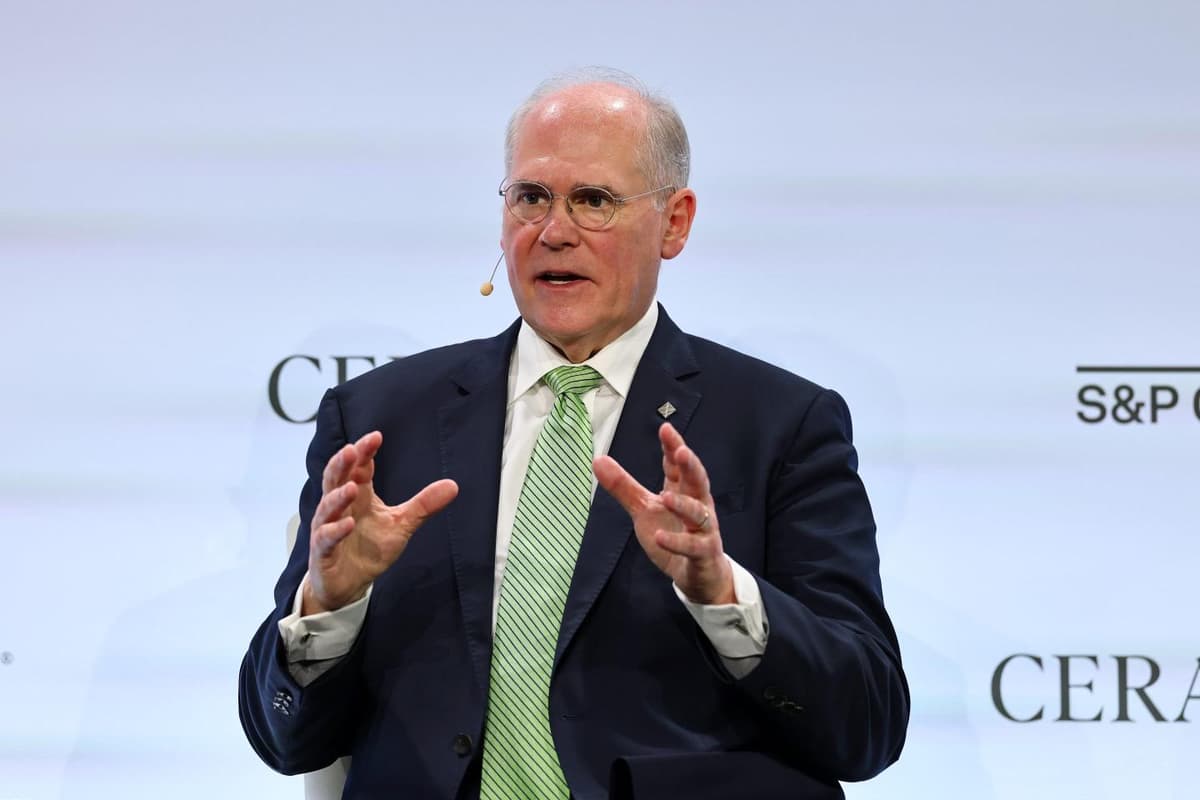
Consolidation wave hits natural gas infrastructure
America's largest pipeline operators are racing to acquire smaller competitors in a consolidation spree driven by twin demand drivers: artificial intelligence data centers and liquefied natural gas exports. The buying binge has topped $11 billion in recent months as companies position for what federal projections show could be a 35% increase in U.S. natural gas production by 2050.
ONEOK announced this week it will acquire Brazos Midstream's Permian Basin assets for $4.42 billion, according to details first reported by Fortune. The deal follows Williams' $5.5 billion purchase of Momentum Midstream in Texas and Louisiana, and Western Midstream's $1.6 billion acquisition of Brazos' Delaware Basin facilities in May.
The Brazos transaction gives ONEOK 700 miles of gathering lines and 1.2 billion cubic feet per day of gas processing capacity in the Permian's Midland Basin. Apollo Global Management is investing $9 billion in ONEOK to fund the acquisition and reduce debt—$4 billion for the Brazos purchase and $5 billion for deleveraging.
Why it matters
The infrastructure buildout reflects a fundamental shift in natural gas demand patterns. Data center developers are concentrating projects in Texas and Louisiana to access abundant gas supplies and favorable regulatory environments. Meanwhile, the Gulf Coast continues adding LNG export capacity. U.S. natural gas production has more than doubled since 2006 to roughly 110 billion cubic feet per day, and Department of Energy projections show output could reach 150 billion cubic feet daily by 2050. Companies that control gathering, processing, and transport infrastructure stand to profit at every stage as gas moves from wellhead to end user.
Positioning for sustained growth
ONEOK CEO Pierce Norton told Fortune the company expects drilling activity to increase as demand rises, likely pushing prices higher. He said he maintains ongoing conversations with multiple data center developers, with Texas emerging as a focal point.
"There seems to really be a focus on Texas right now," Norton said in the interview conducted before the Brazos announcement.
The company is building the 450-mile Eiger Express Pipeline with partners to transport gas from the Permian to Houston, scheduled for 2028 completion. Customer demand prompted capacity expansion from the initial 2.5 billion cubic feet per day to more than 3.5 billion cubic feet daily.
Several long-haul pipelines are under development to address bottlenecks that previously caused negative regional spot prices in West Texas. Norton said the pricing problem will resolve as new pipeline capacity comes online.
Strategic integration
London Spivey, an energy analyst at East Daley Analytics, told Fortune that ONEOK is securing favorable value while expanding its Permian footprint. The integrated approach allows the company to control gas from wellhead through processing and transport to final customers.
"They pull it out of the ground, they bring it to their plant, they process it, they're able to put it on one of their pipelines and transport it to that end demand, whether it's data centers or feeding LNG," Spivey said.
The consolidation trend reflects public companies systematically acquiring private operators to build scale in key producing regions. ONEOK has been particularly aggressive, buying Magellan Midstream for $18.8 billion in 2023, then acquiring both EnLink Midstream and Medallion Midstream in 2024 before the latest Brazos transaction.
The Haynesville Shale in Louisiana and East Texas, along with the Permian Basin, are positioned to drive production growth. As the Permian matures, wells will produce higher ratios of natural gas relative to oil, increasing gas volumes even if oil output plateaus.
These details were first reported by Fortune.
This is an original analysis by the Omega editorial team. Source reporting: AI Watch.
Want systems like this working for your business?
Book a Call
