Pentagon Nearly Done Migrating Classified AI Off Anthropic
Defense Department officials say 90% of military systems have moved to OpenAI, xAI, and other providers following contract dispute and supply chain designation.
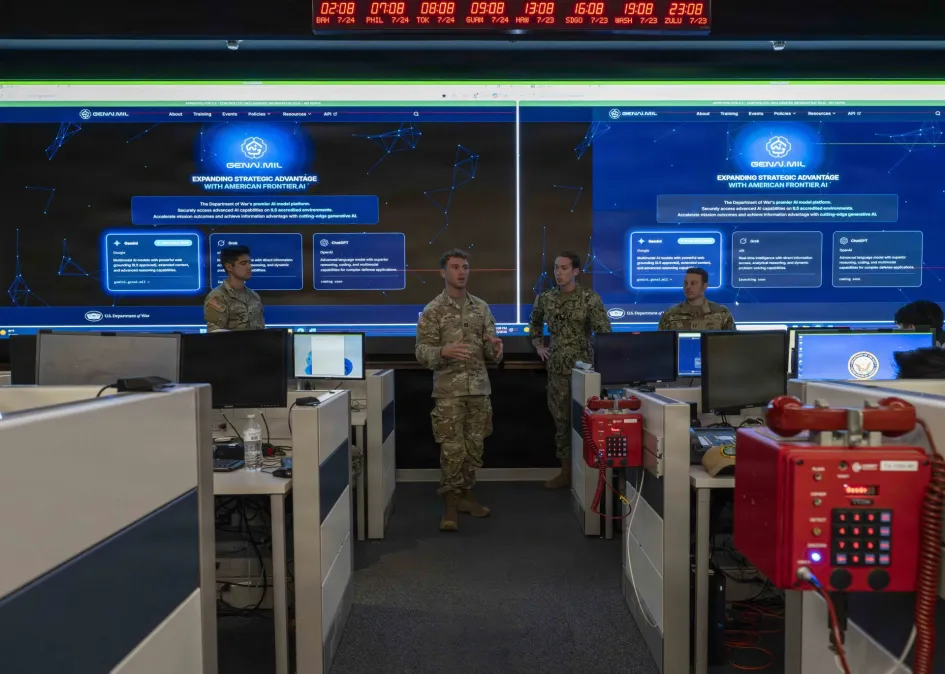
The Pentagon expects to complete its exit from Anthropic's AI models across all classified military systems by the end of September, with roughly 90% of the migration already finished, according to Under Secretary of Defense for Research and Engineering Emil Michael.
Speaking at the National Defense Industrial Association's Emerging Technologies for Defense Conference, Michael confirmed that critical intelligence platforms including Maven Smart Systems and Palantir-integrated tools transitioned away from Anthropic months ago. The department now relies on a multi-vendor approach using models from OpenAI, xAI, and other frontier AI providers.
Why it matters
This rapid migration demonstrates both the Pentagon's ability to swap AI infrastructure at scale and the operational risk of single-vendor dependence in mission-critical systems. The shift affects how military and intelligence personnel access generative AI across both classified networks and unclassified tools like the new GenAI.mil platform, with different security protocols and deployment methods for each environment.
The breakdown with Anthropic
The migration follows a public contract dispute that erupted after Anthropic's capabilities had already become deeply embedded in Defense Department systems. Anthropic sought contractual restrictions preventing its models from being used for mass surveillance of U.S. citizens or fully autonomous lethal weapons. The Pentagon rejected those terms, insisting defense software must remain available for all lawful purposes without constraints.
In response, the Defense Department designated Anthropic as a national security supply chain risk under two separate legal frameworks. The dispute is now playing out in federal court, with cases in both the Northern District of California and the D.C. Circuit Court. Michael indicated the department expects a ruling from the D.C. Circuit within the next two months.
Warfighter feedback on alternatives
Military users working with the replacement models have reported positive experiences, according to Michael. Operators using Palantir's Maven system said they prefer newer versions of OpenAI's ChatGPT over Anthropic's offerings. They found xAI's Grok notably faster than both alternatives, with each model offering distinct advantages depending on mission requirements.
Michael emphasized that avoiding single-vendor lock-in was critical regardless of the Anthropic dispute. "What if that model were [Google's] Gemini or some other model that hadn't kept up with the frontier?" he said. "We would be putting our warfighters in a disposition that was suboptimal."
Implementation gaps remain
Despite progress, Defense Department officials speaking anonymously at the conference acknowledged significant limitations in current AI deployment. While one official now requires staff to run work products through AI before review, another noted stark productivity differences between commercial AI tools and government systems.
"I pay for Claude, and in 20 minutes I can get the amount of work done that would take me four hours on government systems," one official said, pointing to the lack of API access, agent-building capabilities, and email integration in GenAI.mil as current constraints on productivity.
These details were first reported by DefenseScoop.
This is an original analysis by the Omega editorial team. Source reporting: AI Watch.
Want systems like this working for your business?
Book a Call