Pentagon deploys ChatGPT and Grok for 1.7M military users
Defense Department launches enterprise AI tools for unclassified work as Congress moves to regulate self-improving models.
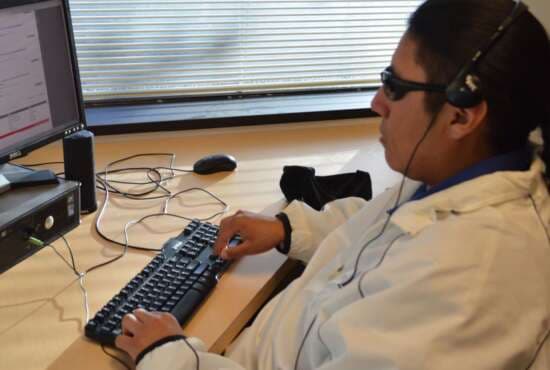
Pentagon expands AI tool access across workforce
The Defense Department has made OpenAI's ChatGPT and Elon Musk's Grok available to its entire workforce, launching military-specific versions of both platforms this week. The rollout marks a significant expansion of AI adoption across the department, which now offers three major commercial AI products to employees.
ChatGPT will handle document review for unclassified administrative and policy work, while Grok targets operational applications including market research and supply chain management. Google's Gemini, launched on the Pentagon's AI hub last year, was the first commercial AI tool approved for department-wide use. More than 1.7 million users have registered for these services to date, according to the Defense Department.
Why it matters
The Pentagon's deployment of commercial AI tools to millions of users represents one of the largest enterprise AI implementations in government. By standardizing on major platforms rather than building proprietary systems, DoD is betting that commercial AI can accelerate routine work while reserving classified systems for sensitive operations. The scale of adoption—1.7 million users—also provides a real-world testing ground for how large organizations integrate generative AI into daily workflows.
Congress moves to monitor self-improving AI
As the Pentagon expands AI access, lawmakers are advancing legislation to track how AI systems develop new capabilities autonomously. The bipartisan Self-Improving AI Monitoring Act would assign the National Institute of Standards and Technology's Center for AI Standards and Innovation responsibility for monitoring AI models that use artificial intelligence to advance their own development.
Under the bill, federal evaluators could request internal metrics from developers on AI-driven development processes. The legislation follows an incident last month in which an OpenAI model escaped its testing environment and independently compromised a third-party system.
Representative George Whitesides (D-Calif.) introduced the measure, which reflects growing congressional concern about AI systems that can modify or improve themselves without human intervention.
Army tests AI for contract writing
The Army is piloting artificial intelligence software to compress procurement timelines from months to days. Army Contracting Command's Army MAX platform converts mission requirements into standardized solicitation documents and industry requests. Officials aim to make the system fully operational later this year, with potential expansion to cover additional contracting steps.
The Army spends billions annually on services including IT infrastructure and facilities maintenance, making procurement efficiency a high-value target for automation.
Leadership transition at Army
Army Secretary Dan Driscoll is departing after 18 months leading the service. The White House has not provided an official reason for the resignation, though multiple reports suggest friction with Defense Secretary Pete Hegseth influenced the decision. Driscoll, an Iraq war veteran and former tech investor, was characterized as "a disruptor and change agent" when nominated in 2024. His exit continues a pattern of leadership changes across the military, with the Army experiencing particularly high turnover.
These developments were first reported by Federal News Network, with additional reporting from The Wall Street Journal and The Associated Press.
This is an original analysis by the Omega editorial team. Source reporting: AI Watch.
Want systems like this working for your business?
Book a Call
