Pentagon Awards $80.5M for AI Drone Defense at Air Force Bases
AeroVironment will deploy Titan-MS counter-UAS systems under a broader $500 million contract to protect installations from small drone threats.
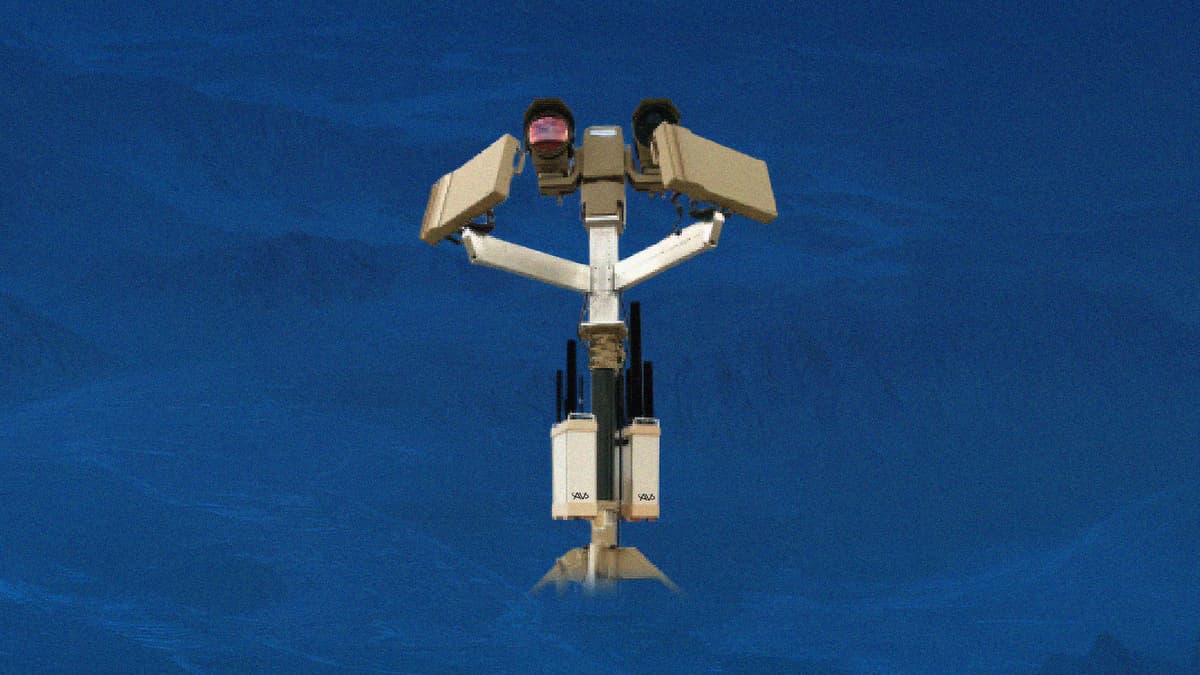
Pentagon taps AeroVironment for base drone defense
AeroVironment has secured an $80.5 million task order to deliver AI-enabled counter-drone technologies designed to protect Air Force installations from small unmanned aerial system threats, the company announced Monday.
The award represents the first task order under a larger $500 million indefinite-delivery, indefinite-quantity contract the Army awarded to AeroVironment last week. The effort falls under the Pentagon's Domestic Shield initiative, managed by Joint Interagency Task Force 401, an Army-led organization established last year to coordinate counter-drone technology deployments across U.S. military installations and other critical sites.
Layered defense for nuclear command
The task order will support Air Force Global Strike Command, which operates the nation's bomber fleet and intercontinental ballistic missiles. AeroVironment will provide its Titan-MS system alongside complementary technologies including Titan 4 platforms, electro-optical/infrared camera payloads, and counter-drone radar systems.
Titan-MS is described as an AI-powered, multi-sensor fusion platform that detects, identifies, tracks, defeats and reports on unmanned system threats. The system integrates artificial intelligence and machine learning algorithms from multiple sensors to counter both radio frequency-controlled and autonomous drones.
The need is urgent. Earlier this year, Barksdale Air Force Base in Louisiana—a Global Strike Command installation—experienced multiple unauthorized drone incursions that varied in duration and number of aircraft, according to a command statement issued in March.
Why it matters
Small commercial drones have evolved from hobbyist tools into persistent security threats at military installations worldwide. Air Force Global Strike Command facilities house some of America's most sensitive strategic assets, making them high-value targets for surveillance or disruption. The Pentagon's willingness to commit half a billion dollars to counter-UAS capabilities signals that drone defense has become a critical infrastructure priority, not an emerging concern. Interoperability across the $500 million contract—allowing systems to work together whether fixed or mobile—suggests the military is moving beyond point solutions toward integrated air defense networks for the homeland.
Scalable, interoperable approach
Under the broader $500 million contract, AeroVironment is expected to supply a range of scalable counter-UAS capabilities that can be tailored for fixed-site or mobile deployment. A key requirement is full interoperability, which the Army identified as crucial for effective layered drone defense.
The new task order will procure detect-and-defeat options suited for complex operational environments, according to an Army news release published Sunday.
"JIATF-401 is continuously working to bolster the Services' abilities to protect warfighters and individual installations," said Col. Jason Idleman, chief of the task force's multi-domain operations division. "This investment provides operators with the tools to detect, track, and defend against illicit drones. Providing top-tier technology to our warfighters enables them to effectively respond to these rapidly evolving threats."
Defense Scoop first reported the contract award and details of the deployment.
This is an original analysis by the Omega editorial team. Source reporting: AI Watch.
Want systems like this working for your business?
Book a Call