Pennsylvania Town Rejects Massive AI Data Center After Heated Meeting
Upper Merion Township residents packed a school auditorium to oppose a 4.5-million-square-foot facility that would consume up to 900 megawatts of power.
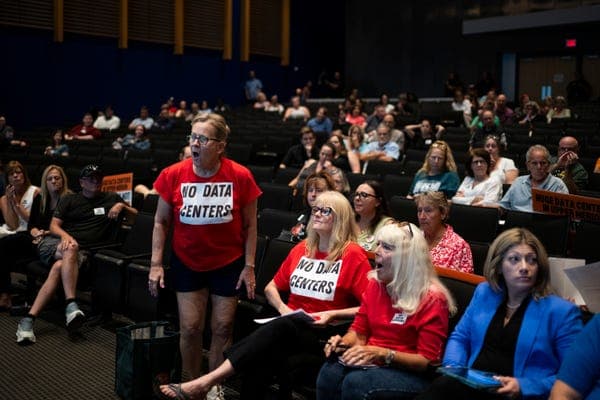
A suburban Philadelphia community has become the latest battleground in the growing resistance to hyperscale data centers, as Upper Merion Township residents overwhelmingly opposed a proposed AI facility that would rank among the largest in the Northeast.
The planning commission voted not to recommend approval for the first three sites of a sprawling campus proposed by real estate developer Brian O'Neill's MLV Ventures. The project would span over 4.5 million square feet across five locations and require between 500 and 900 megawatts of electricity.
A community united
Wednesday's four-hour meeting drew hundreds of residents to a middle school auditorium, where the typically mundane proceedings of local planning discussions transformed into a raucous public forum. Planning commission chair Matt Popek opened with a warning against disruptions, though the crowd repeatedly erupted in applause, boos, and chants throughout the evening.
"This is an entire community united against hyperscale data centers," one commenter told the room after asking opponents to stand. The packed auditorium responded with a roar.
Courtney Smith, a member of Upper Merion Against Data Centers, a local activist group, said the development has unified residents across demographic lines. The group's central question: whether community voices carry weight in decisions that will reshape their town.
The transparency problem
Much of the meeting's tension centered on what residents and officials characterized as a lack of detailed information from the developers. The planning commission had expected O'Neill's team to arrive with comprehensive project breakdowns following a May meeting, but key details remained elusive.
The developers said they had submitted a PowerPoint presentation outlining project specifics, but the planning commission declined to display it because it arrived just 10 minutes before the meeting began. This missing presentation became a recurring point of frustration.
When asked about noise levels, O'Neill said he couldn't recall specifics without the slides, estimating from memory that the facility would emit around 50 decibels—comparable to "a quiet suburb." The response drew groans from the audience. Residents near proposed sites have expressed particular concern about the persistent hum that large data centers can generate.
Why it matters
Upper Merion Township reflects a pattern playing out nationwide as AI companies race to build the infrastructure needed for their products. Communities from rural areas to suburbs are pushing back against facilities that promise jobs and tax revenue but also bring concerns about power consumption, environmental impact, and quality of life. The tension highlights a fundamental question about how America will build the physical backbone of its AI economy—and whether local communities will have meaningful input in that process.
The planning commission will consider the remaining two proposed sites in August. Business Insider first reported details of the contentious meeting.
This is an original analysis by the Omega editorial team. Source reporting: AI Watch.
Want systems like this working for your business?
Book a Call
