Pediatrician Calls for AI Designed for Child Development, Not Engagement
A Boston Children's Hospital physician argues that interactive AI could fill the gap between screen time guidance and what exhausted parents can realistically manage.
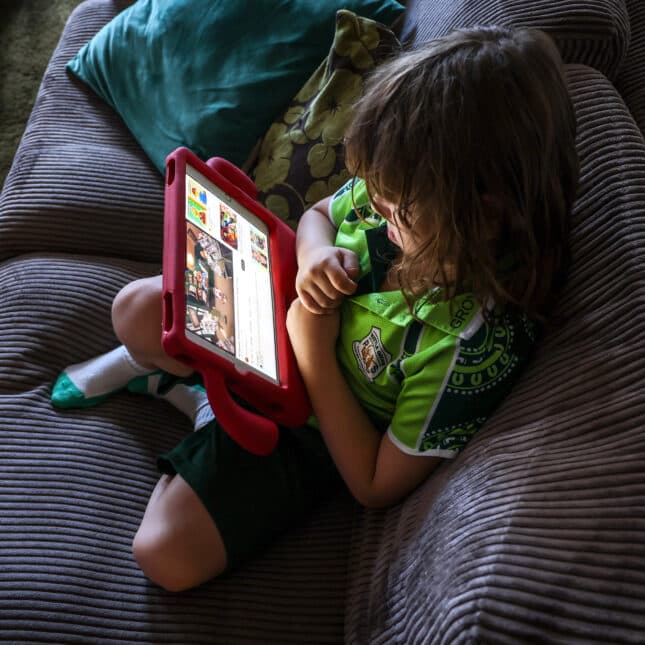
A pediatrician at Boston Children's Hospital is proposing a fundamental shift in how the medical community approaches children's screen time: instead of counseling avoidance, physicians should demand—and help design—AI tools built specifically for child development.
Dr. Dua Hassan, who researches AI applications in pediatric cardiology, argues in STAT News that current guidance creates an unbridgeable gap between what pediatricians recommend and what families can actually do. The standard advice—limit screens, prioritize real-world interaction—is evidence-based but often unlivable for exhausted parents managing work, childcare, and daily survival.
The real problem with screens
Hassan points to research showing that early passive screen exposure correlates with language delays, attention problems, and social difficulties. A JAMA Pediatrics study found higher screen time in early childhood associated with poorer developmental screening scores by age 2.
But the critical factor isn't screens themselves—it's passivity. Child development relies on "serve and return" interactions: a child babbles, an adult responds; a toddler points, someone names the object. When children consume content that requires no response, prediction, or interaction, this developmental engine stalls.
Co-viewing solves this problem. When parents watch alongside children, pausing to narrate and ask questions, developmental outcomes improve dramatically. But parents cannot sustain this during meal preparation, after ten-hour workdays, or while solo parenting through the pre-bedtime gauntlet.
Why AI could be different
Hassan draws a parallel to "Sesame Street," which transformed television from a feared medium into a developmental tool by building content around specific learning goals and testing it with real children. The show narrowed school-readiness gaps for low-income children in ways policy interventions had failed to achieve.
The difference now: technology can respond. Well-designed AI could wait for answers, ask predictive questions, and model emotional language—simulating serve-and-return interactions when parents lack the energy. Not perfectly, Hassan acknowledges, but vastly better than autoplay queues currently occupying millions of children.
The problem is that most AI products for children optimize for engagement and screen time, not language acquisition or emotional growth. The business model remains unchanged whether the user is 30 or 3 years old.
The prescription
Hassan calls for AI designed with the same rigor as pediatric interventions: built around developmental milestones like vocabulary and turn-taking, adapted to individual children's pace, and tested through randomized controlled trials measuring real outcomes—not engagement metrics.
She notes the American Academy of Pediatrics has detailed screen time guidance but almost nothing on AI for children, despite the technology's rapid integration into daily life. Pharmaceutical companies cannot release drugs for children without pediatric trials; technology companies should face equivalent standards.
Why it matters
Children are already using AI, and the window to shape these tools before they shape development is closing rapidly. Hassan's proposal represents a pragmatic middle path: acknowledging that screens are unavoidable while demanding technology companies build products that serve children's developmental needs rather than maximizing time on screen. The question isn't whether children will interact with AI, but whether pediatricians will help determine what that interaction looks like.
The details were first reported by Dua Hassan in STAT News.
This is an original analysis by the Omega editorial team. Source reporting: AI Watch.
Want systems like this working for your business?
Book a Call