Oregon Data Center Tax Breaks Spark Lawsuit, Public Backlash
Hillsboro residents and advocates challenge $84 million in incentives as AI infrastructure demands intensify nationwide.
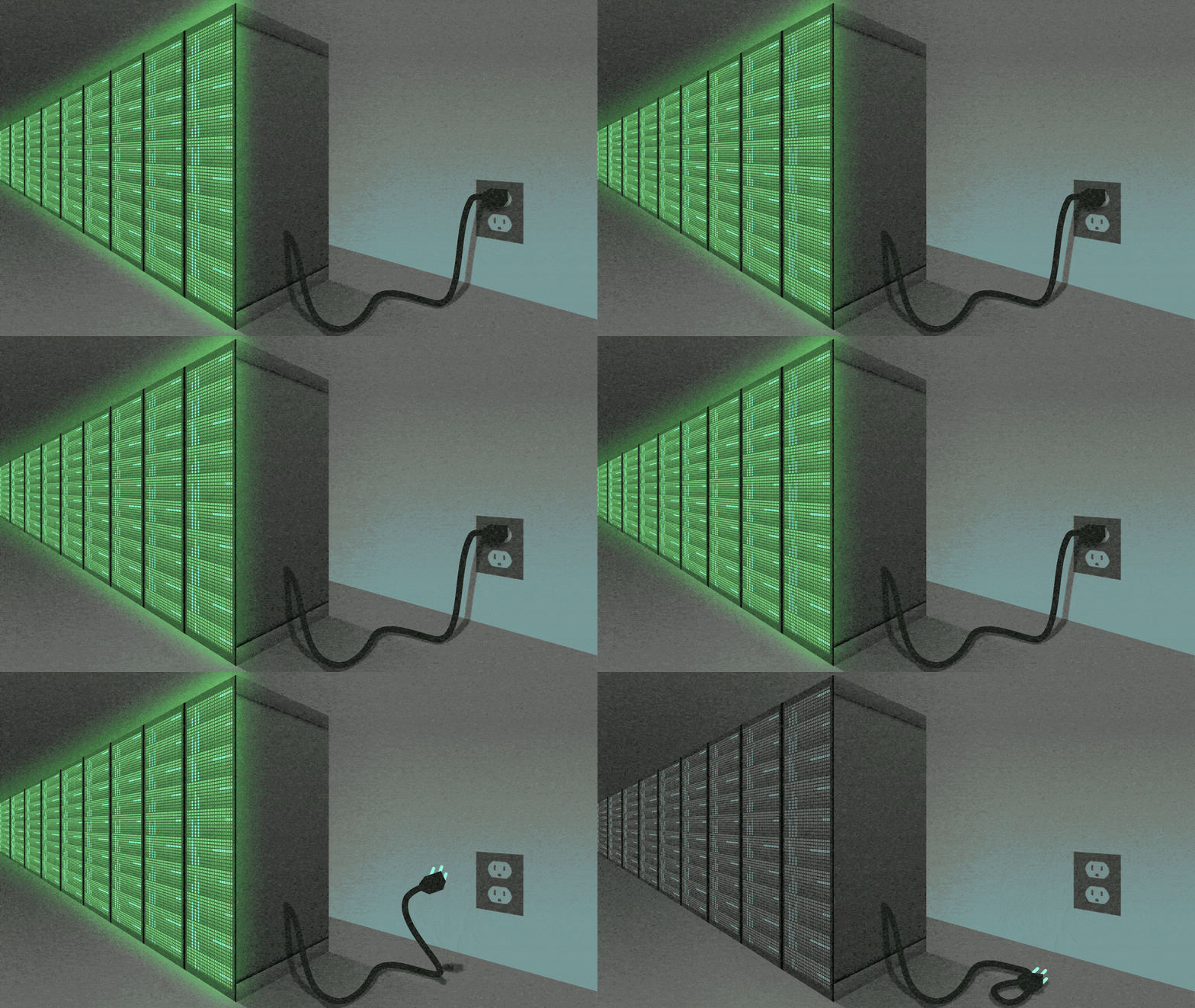
A coalition of land-use advocates has filed suit against the city of Hillsboro, Oregon and Washington County, challenging tax incentives granted to data center operators amid mounting public concern over the infrastructure demands of artificial intelligence expansion.
The lawsuit centers on Hillsboro's concentration of server farms — 21 facilities either completed or under construction across roughly 470 acres — and alleges the city improperly approved tax breaks for companies that rushed applications before a June moratorium took effect, according to reporting by the Oregonian.
Why it matters
The legal challenge reflects a broader shift in how communities are responding to AI infrastructure. What began as local disputes over tax policy and utility capacity is evolving into organized resistance to the pace and terms of technology deployment, with implications for how the AI industry secures resources and public support.
The financial dispute
Plaintiffs argue that data center developers will receive $84 million in tax breaks during 2026 alone, diverting funds from public education and local services. "Cash-rich data center developers have been reaping tens of millions of dollars in tax incentives every year," the lawsuit states. "This has left public education funding and local tax revenue flat or worse."
Neither Hillsboro nor Washington County responded to requests for comment from the Oregonian.
Weeks of public tension
The lawsuit follows a series of heated Hillsboro City Council meetings where residents voiced concerns about tax policy, energy consumption, and environmental impact. Similar concerns emerged when Axios Portland surveyed readers about AI adoption, with water use and electricity demand cited as primary hesitations.
National sentiment remains split
While opposition is intensifying in pockets like Hillsboro, national polling suggests Americans haven't reached consensus on data center development. A May survey of 6,872 registered voters by Milltown Partners, a consulting firm working with AI companies, found nearly half support a temporary pause on new construction — but not an outright ban.
The divided response indicates public wariness about expansion speed and community impact rather than categorical rejection of the technology itself.
Proxy for AI anxiety
Data center disputes are increasingly serving as flashpoints for broader unease about artificial intelligence's trajectory. "This isn't happening in a vacuum," Milltown Partners researcher Tom Brookes noted. "The AI transformation is arriving at a time when Americans already feel angry, insecure and pessimistic."
The convergence of infrastructure demands, tax policy debates, and questions about who benefits from AI deployment suggests these local battles may preview larger conflicts as the technology scales.
These details were first reported by the Oregonian and Axios Portland.
This is an original analysis by the Omega editorial team. Source reporting: AI Watch.
Want systems like this working for your business?
Book a Call