Oracle Stock Posts Worst Week Since 2001 Amid AI Debt Concerns
The database giant has shed 55% of its market value since September as investors question whether massive infrastructure spending will generate returns.
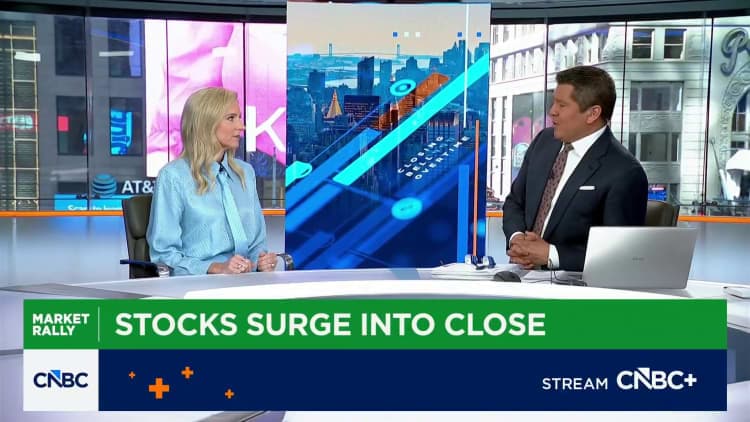
Oracle closed out its worst trading week in a quarter-century, with shares falling 19% over five consecutive days of losses. The decline marks the company's steepest weekly drop since August 2001, when the dot-com crash was in full swing.
The database and cloud infrastructure company has now lost approximately 55% of its market value since reaching a $900 billion peak in September 2025. The sustained selloff reflects mounting investor anxiety about Oracle's financial strategy as it races to build AI infrastructure at unprecedented scale.
The debt dilemma
Oracle's balance sheet tells the story of an aggressive pivot. The company carried roughly $130 billion in debt as of May 2026, with capital expenditures surging 162% to nearly $56 billion in fiscal year 2026. The company posted negative free cash flow of almost $24 billion for the year.
The spending spree continues. Oracle announced plans to raise $40 billion through debt and equity financing in fiscal 2027, following $43 billion in debt sales and $5 billion in equity issuance the previous year. This includes a previously disclosed $20 billion share sale.
The capital is funding a data center buildout primarily aimed at serving OpenAI and other AI customers. Oracle is expanding facilities in Michigan, New Mexico, and Texas through 2027, competing directly with Amazon, Microsoft, and Google in cloud infrastructure—but without the ability to offer a complete technology stack like its larger rivals.
Why it matters
Oracle's situation illustrates the high-stakes gamble facing traditional enterprise software companies in the AI era. The company is betting billions that demand for AI compute infrastructure will justify massive debt loads and lower margins, even as the same AI technology threatens to disrupt its legacy database and applications business. If the AI infrastructure market consolidates around a few winners or demand fails to meet projections, Oracle's leveraged position could become a serious liability.
Analyst optimism meets market skepticism
Despite the stock's collapse, Wall Street analysts remain largely bullish. According to FactSet data, 71% of analysts rate Oracle a buy—the highest percentage in 15 years. Evercore analysts noted that "financing/leverage and the pace of equity issuance" would remain the central investor debate, even as demand signals stay strong.
The company disclosed in its annual report that headcount declined 13% to 141,000 employees in fiscal 2026, with notable reductions in sales and marketing. Co-founder Larry Ellison, typically a fixture on earnings calls, was absent from this month's discussion, leaving dual CEOs Clay Magouyrk and Mike Sicilia and newly appointed CFO Hilary Maxson to field questions.
"As we pursue these opportunities, we'll remain focused on disciplined capital allocation, maintaining a strong balance sheet, and preserving our investment-grade credit rating," Maxson said on the call.
The stock decline has also affected Ellison personally. He has fallen behind Google co-founders Larry Page and Sergey Brin, Amazon's Jeff Bezos, and Michael Dell on global wealth rankings, though he remains worth over $200 billion.
These details were first reported by CNBC.
This is an original analysis by the Omega editorial team. Source reporting: AI Watch.
Want systems like this working for your business?
Book a Call