OpenAI's Navier-Stokes Claim Sparks Attribution Crisis
Mathematicians question whether the AI company properly credited human researchers whose work underpinned its breakthrough announcement.
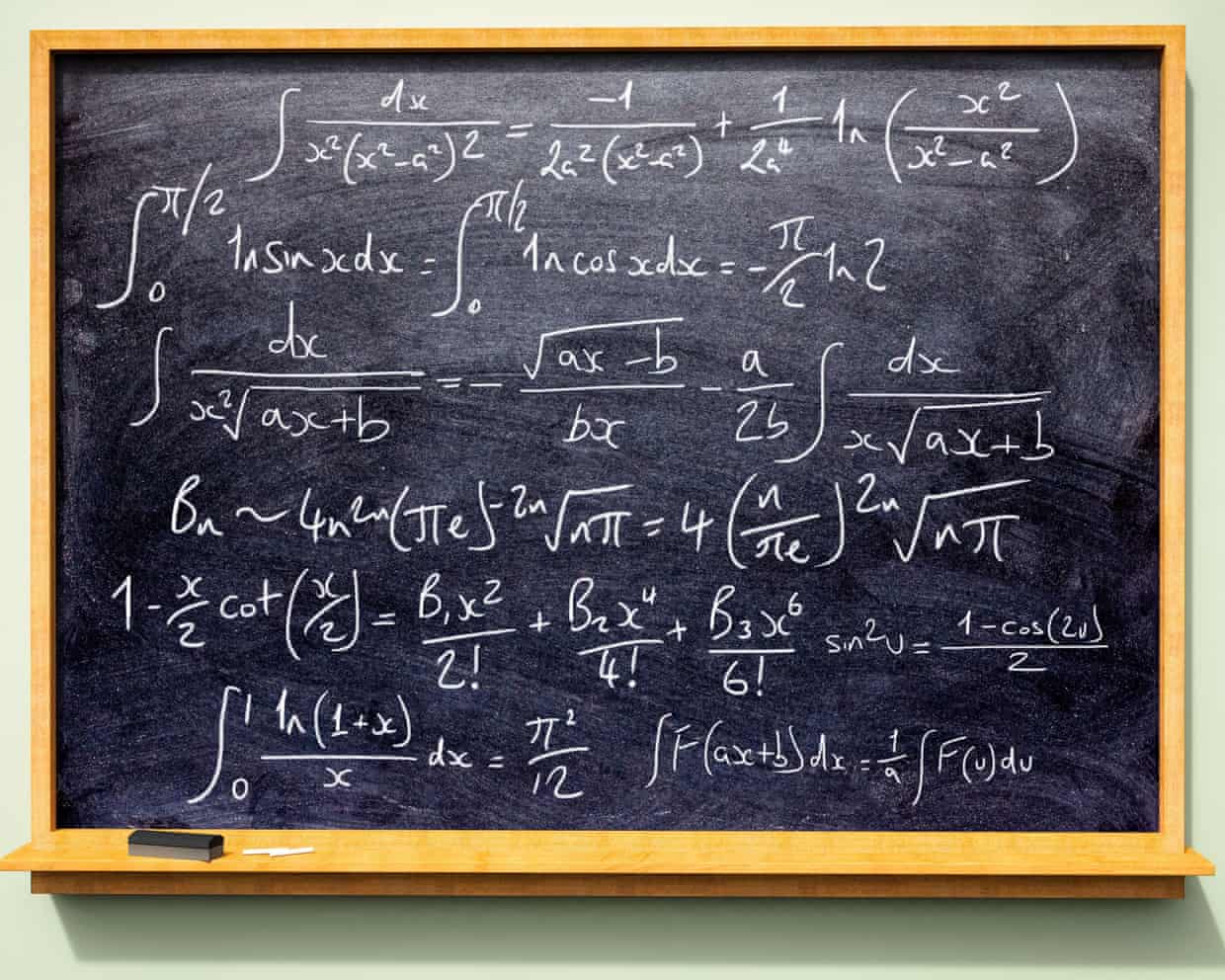
OpenAI announced on September 8 that its AI agents had solved the Navier-Stokes problem, one of mathematics' most notorious unsolved challenges. Rather than celebrating a breakthrough, the claim triggered what mathematicians are calling an "existential crisis" in their field—not over AI's capabilities, but over how the company handled human contributions.
Attribution concerns at the center
The controversy centers on familiar territory for anyone tracking AI's impact across creative and professional fields: whose work actually powers these systems, and who gets credit. While OpenAI's paper includes citations, mathematicians argue the company failed to adequately acknowledge several researchers who were reportedly close to solving Navier-Stokes themselves.
Mathematician Tristan Buckmaster raised specific concerns that his own work on the problem using OpenAI's Codex model may have been accessed by the OpenAI team. The company denied directly viewing his materials but couldn't rule out that data from his use of their products "helped improve our model."
This pattern—building on human expertise while minimizing attribution—has alienated many in the mathematical community, according to The Guardian, which first reported these details.
The verification problem
Mathematics presents a unique challenge for AI companies eager to showcase their models' problem-solving abilities. Unlike an AI-generated film or drug candidate, a mathematical proof's value isn't immediately apparent. Mathematicians must invest significant time determining whether a purported solution contains genuinely novel insights or useful tools.
This creates an ironic dependency: AI firms need mathematicians to validate their often "sloppy and baffling" work and explain potential applications. Rather than fostering collaboration, the dynamic has bred resentment as companies use mathematical achievements for marketing while undervaluing the human labor required to make sense of AI outputs.
Why it matters
This dispute reveals a fundamental tension that will likely spread beyond mathematics. As AI becomes demonstrably effective at more complex tasks, professionals in various fields will face the same dilemma: acknowledging the technology's power while confronting how companies deploy it. The mathematical community's response—remaining open to AI's potential while demanding better practices around attribution and collaboration—may preview how other disciplines navigate this balance.
Mathematician Nestor Guillen suggested the anxiety might not exist if the technology could be separated from the tech companies and democratized. As Fields Medal winner Bill Thurston noted in 2010, before the current AI era: "The product of mathematics is clarity and understanding. Not theorems, by themselves." Those remain distinctly human contributions.
A path forward
Despite their concerns, mathematicians have largely avoided dismissing AI outputs as worthless. Instead, they're engaging in substantive discussions about how the field might integrate AI tools while preserving human guidance and interpretation. Some are even questioning whether celebrating whoever—human or machine—achieves a flashy final proof is the best way to value mathematical contributions.
The Guardian's editorial highlighted this nuanced response as a model for other fields grappling with AI's expanding capabilities and the companies controlling access to these systems.
This is an original analysis by the Omega editorial team. Source reporting: AI Watch.
Want systems like this working for your business?
Book a Call