OpenAI Shuts Down Atlas Browser, Shifts AI Features to Chrome
The company is abandoning its standalone browser experiment in favor of embedding agentic capabilities where users already work.
OpenAI abandons standalone browser strategy
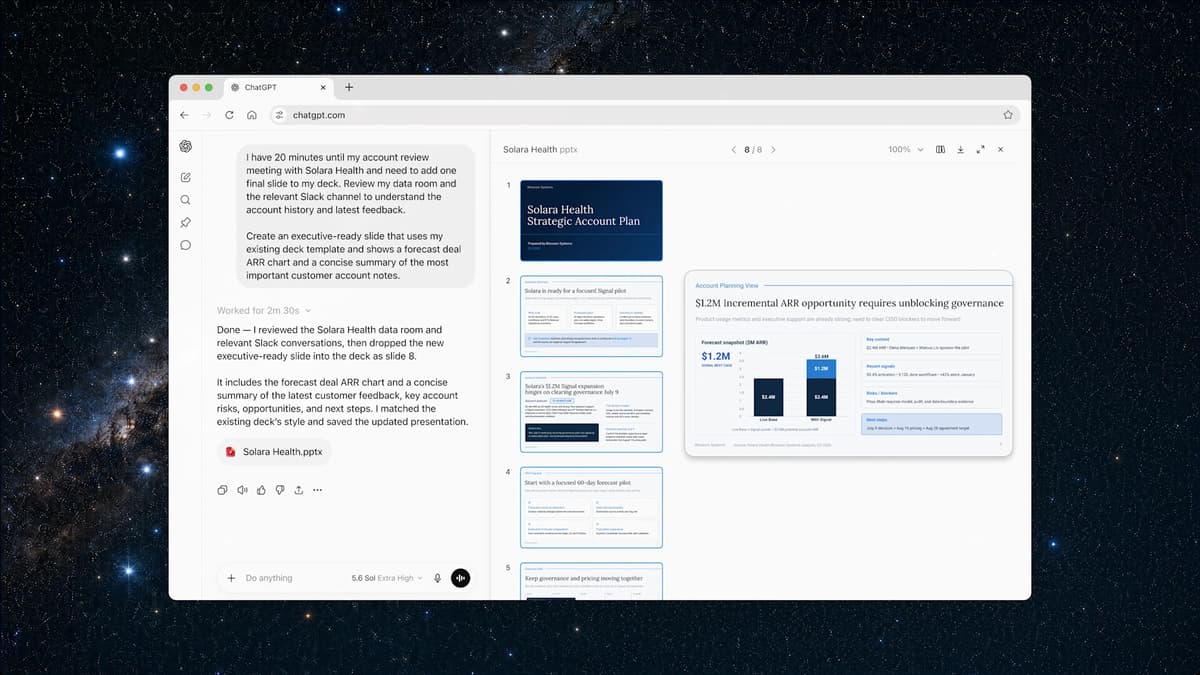
OpenAI is discontinuing Atlas, the AI-powered browser it launched in October 2024, and redistributing its capabilities across platforms where users already spend their time. The company will launch a ChatGPT extension for Google Chrome and enhance its desktop application with more robust browsing features, according to TechCrunch.
The decision follows a broader strategic shift at OpenAI. CEO of applications Fidji Simo recently directed teams to reduce "side quests," a directive that also led to shutting down the Sora AI video generation tool. Rather than maintaining a separate browser, OpenAI concluded that AI-assisted browsing works better as a feature embedded in existing workflows.
Chrome extension targets Google's home turf
The new ChatGPT Chrome extension will access the context of pages users are viewing, enabling them to ask questions about content, generate summaries, or initiate longer tasks directly from their browser. This positions OpenAI in direct competition with Google's Gemini Side Panel, which offers similar functionality within Chrome.
Meanwhile, OpenAI's desktop app is gaining a more capable browser that allows users to navigate websites, authenticate into accounts, download files, and interact with pages without switching applications. A separate cloud-based browser running on OpenAI's servers will handle tasks autonomously on behalf of users.
Why it matters
This strategic pivot reflects a maturing understanding of how AI fits into daily workflows. Rather than asking users to adopt entirely new software, OpenAI is meeting them where they already work—a pragmatic approach that could accelerate AI adoption in professional settings. The move also signals that the race to build AI-native browsers may have been premature; established platforms with AI augmentation may prove more valuable than AI-first alternatives.
OpenAI's decision comes amid a broader industry push to integrate AI into web browsing. Over the past year, Perplexity launched Comet, The Browser Company introduced Dia, and both Google and Microsoft updated Chrome and Edge with AI capabilities. OpenAI's retreat from a standalone browser suggests the company sees more strategic value in becoming an essential layer across multiple platforms rather than controlling a single destination.
Together, the Chrome extension and enhanced desktop app create what OpenAI describes as a continuous workspace spanning multiple environments and enabling AI agents to operate seamlessly across them.
These details were first reported by TechCrunch.
This is an original analysis by the Omega editorial team. Source reporting: AI Watch.
Want systems like this working for your business?
Book a Call