OpenAI Launches Health Feature for ChatGPT Medical Records
New capability lets users upload lab results and connect fitness data, raising questions about AI accuracy and privacy in healthcare.
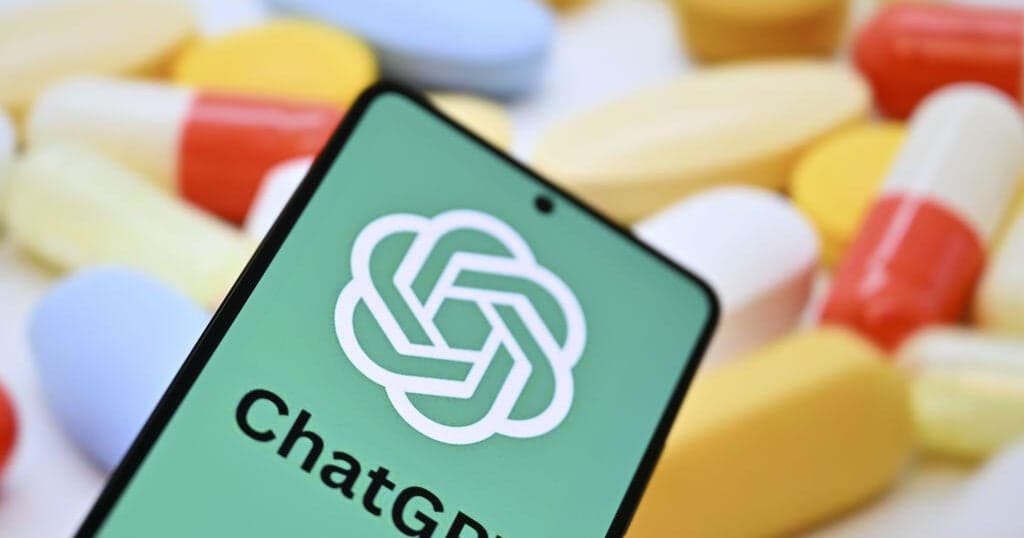
OpenAI has introduced Health in ChatGPT, a dedicated feature that allows users to upload medical records, lab results, and medication lists while connecting Apple Health data for fitness tracking. The company reports that 300 million people already consult ChatGPT weekly with health-related questions, according to details first reported by CBS News.
The new feature can compare lab results over time, summarize changes between appointments, and explore connections between sleep patterns, activity levels, and daily routines. OpenAI states that physicians worldwide helped develop realistic health scenarios and test the feature before release.
Why it matters
This launch highlights a fundamental tension in modern healthcare: millions of Americans face barriers to medical access and turn to AI for guidance, yet large language models remain prone to dangerous errors. The feature arrives as lawsuits allege ChatGPT's medical advice has contributed to serious harm, underscoring the urgent need for clear guardrails around AI health applications.
Expert concerns about accuracy and risk
Tanzeem Choudhury, chief of health innovation at Cornell Tech, told CBS News that the widespread use of AI for health advice reflects systemic problems. "Our healthcare is broken," Choudhury said. "I think that's why we are seeing so many people asking for advice."
Choudhury, who has worked at the intersection of AI and health for over 15 years, emphasized that users must understand the risks of sharing personal data with large language models. AI systems can hallucinate and provide misleading or dangerous medical advice.
Recent incidents underscore these dangers. A Florida man filed a lawsuit this week alleging ChatGPT's medical advice nearly caused his death after he experienced a pulmonary embolism. Months earlier, a California teenager died after ChatGPT indicated it was safe to consume a fatal combination of substances. An OpenAI spokesperson stated that "ChatGPT is not a doctor and should never be used as a substitute for medical care, diagnosis or treatment."
Privacy and data protection questions
Vishal Misra, a Columbia University computer science professor and vice dean of computing and AI, noted that sharing health information with a chatbot carries the same privacy risks as sharing it with any third party. "You are sharing something very personal," Misra told CBS News.
OpenAI says Health in ChatGPT includes additional encryption protections and will verify user intent before taking actions through connected plugins. The company states that records shared with ChatGPT will not be used to train its models or target advertisements.
However, Choudhury pointed out uncertainty around whether such privacy policies remain perpetual and how data might be used long-term. The Federal Trade Commission has previously warned consumers about risks when AI companies quietly change their terms of service.
Balancing benefits and caution
Despite the risks, some experts see potential value when the technology is used carefully. Misra, who has used ChatGPT to track some of his own health data, said AI analysis can help users monitor health information over time and potentially identify connections a physician might miss.
Both experts emphasized that ChatGPT should never replace professional medical judgment. "Whatever it says, take it to an actual human physician," Misra said. "Do not act. The only action that you should take is to consult your physician."
The details were first reported by CBS News.
This is an original analysis by the Omega editorial team. Source reporting: AI Watch.
Want systems like this working for your business?
Book a Call