OpenAI Cuts Off Cursor After SpaceX Acquisition
The move escalates tensions between Sam Altman and Elon Musk as AI coding tools become a strategic battleground.
OpenAI severs ties with SpaceX-owned coding tool
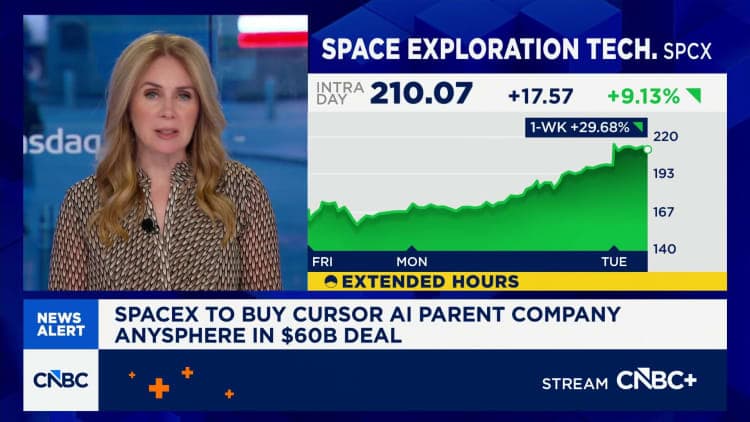
OpenAI announced Friday it will terminate developer access to its models through Cursor, the AI coding assistant acquired by Elon Musk's SpaceX for $60 billion earlier this month. The company set November 12, 2026 as the cutoff date and said it will not provide future models to the platform.
The decision represents a significant escalation in the ongoing conflict between OpenAI CEO Sam Altman and Musk, who co-founded the AI company in 2015 before departing its board in 2018.
In its announcement, OpenAI stated it "cannot be confident that SpaceX will use our technology within our terms of service, based on our experience with Elon Musk's companies violating contracts." The company did not elaborate on specific contract violations.
Limited immediate impact on Cursor users
Cursor CEO Michael Truell said OpenAI models currently serve approximately 5% of the platform's user traffic. Writing on X, Truell emphasized Cursor's long relationship with OpenAI: "Cursor was one of the very first users of OpenAI, we've worked closely with their team for years, and we've trusted their platform to be neutral infrastructure for our business."
SpaceX completed its acquisition of Cursor on August 14, according to financial filings reported by CNBC. The deal came after SpaceX went public in June and consolidated Musk's X social network and xAI under its corporate umbrella in February.
Why it matters
The dispute highlights how personal conflicts between tech leaders can disrupt the AI ecosystem as companies race to dominate emerging markets. AI-assisted coding tools represent a strategic frontier where model providers, platform builders, and enterprise customers must navigate both technical integration and business relationships. OpenAI's willingness to cut off a major distribution channel signals it views protecting its technology from Musk-controlled entities as more important than maintaining revenue from Cursor's user base.
Musk responds with characteristic defiance
Musk dismissed the move on X Saturday, writing "I couldn't care less" and calling Altman and OpenAI President Greg Brockman "utterly untrustworthy." He repeated his claim that they "stole an open source nonprofit," referencing his 2024 lawsuit over OpenAI's conversion to a for-profit structure. Though Musk lost that lawsuit earlier this year, he has vowed to appeal.
The legal battle centers on OpenAI's evolution from the nonprofit research lab Musk helped establish to a commercial entity that launched ChatGPT, partnered with Microsoft, and raised substantial funding. Musk left OpenAI's board after disputes over direction and after cutting off promised donations.
Industry precedent and competitive dynamics
OpenAI's action follows a similar move by rival Anthropic, which blocked access to its Claude models for Windsurf last June. Notably, Anthropic now partners with SpaceX and rents compute capacity from Musk's company. Anthropic executive Tom Brown stated Friday that Cursor "has been a trusted partner" and the company will "continue to increase compute to support Claude models in Cursor."
The contrasting responses from OpenAI and Anthropic underscore different strategic approaches to working with Musk-controlled entities in the competitive AI landscape. Both OpenAI and Anthropic are preparing for public offerings, with Anthropic reportedly in preliminary discussions with bankers for a potential IPO at a valuation as high as $2 trillion.
These details were first reported by CNBC.
This is an original analysis by the Omega editorial team. Source reporting: AI Watch.
Want systems like this working for your business?
Book a Call
