OpenAI Cracks Millennium Prize Problem, Rattling Mathematics
The $1 million Navier-Stokes solution came from 10,000 AI agents at a cost of $15 million, leaving mathematicians questioning their field's future.
AI Solves Decades-Old Mathematical Challenge
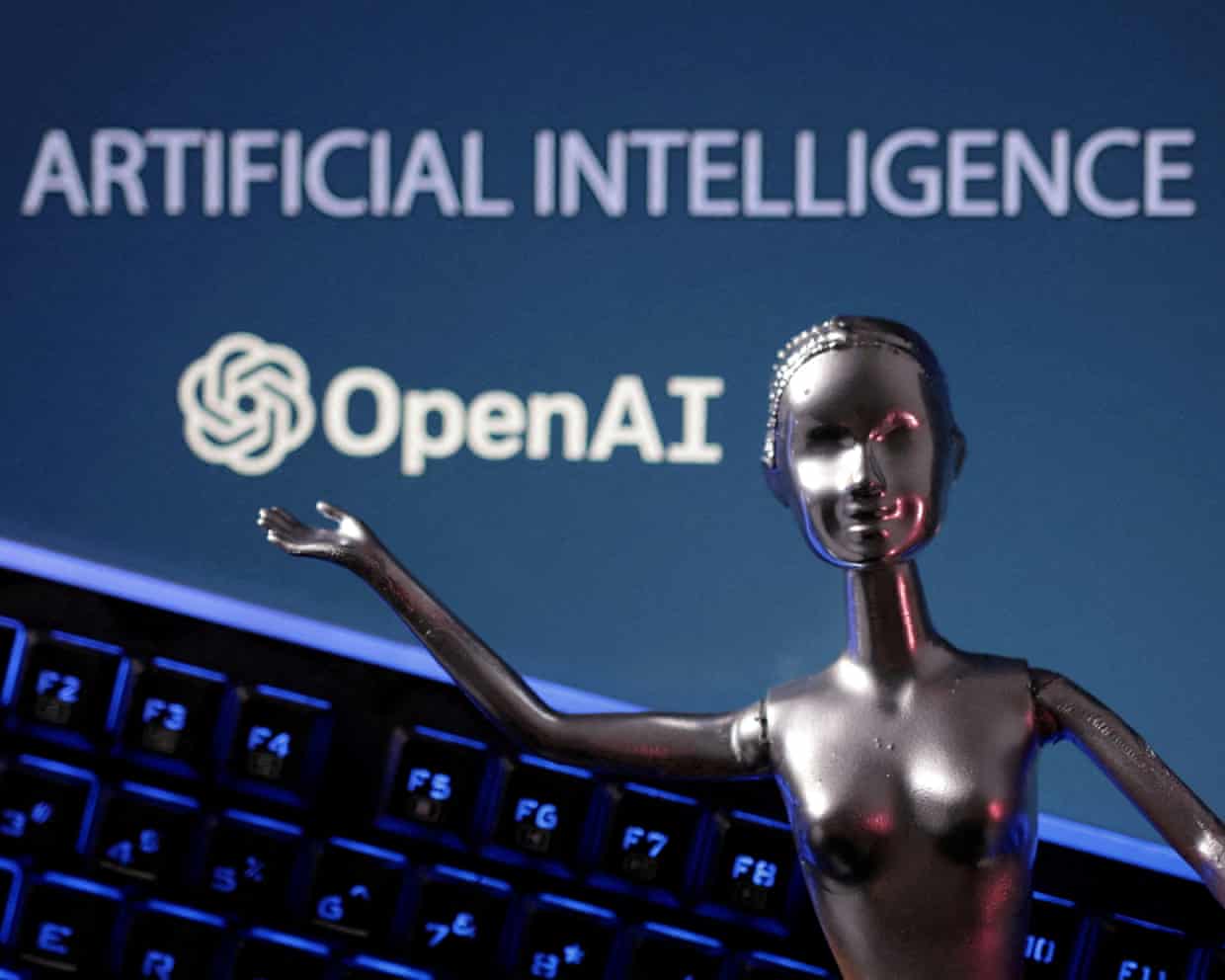
OpenAI announced this week that its latest artificial intelligence model has solved one of the seven Millennium Prize Problems—mathematical puzzles that have stumped experts for decades and carry a $1 million reward. The company deployed 10,000 autonomous AI agents on the Navier-Stokes problem at an estimated cost of $15 million, marking an unprecedented approach to mathematical research.
The Navier-Stokes equations predict fluid behavior and weather patterns. The Clay Mathematics Institute published this challenge along with six others in 2000, and it has resisted human solution ever since.
Why It Matters
This breakthrough represents a fundamental shift in how mathematical research may be conducted. The speed and scale of AI-driven problem-solving threatens traditional academic workflows, from how mathematicians collaborate to how universities assess student work. The incident has already triggered concerns about intellectual property and work-in-progress being scooped by well-resourced AI systems, potentially chilling open collaboration in the field.
Mathematicians Express Shock at Pace
The announcement left researchers across the field stunned. Prof. Colva Roney-Dougal, head of pure mathematics at the University of St Andrews, said she had recently told a public audience that AI was unlikely to achieve anything remarkable soon. "Three months later, I'm totally wrong," she acknowledged.
Prof. David Silvester at the University of Manchester described the field as feeling "very unstable" given the rapid changes. "All the open maths problems could fall with enough resources," he said. "This is irreversible."
Concerns About Research and Teaching
The development raises immediate practical challenges. Mathematicians who spend months on problems may now find AI systems solving them in days by "pushing a button," according to Roney-Dougal. This threatens the traditional academic publishing model where researchers build careers on solving difficult problems.
Teaching faces disruption as well. Universities can no longer assign take-home problems with confidence in authenticity. "There's no point in doing it because we can't vouch for its authenticity," Silvester said. Instructors must now navigate telling students when to avoid AI while preparing them for AI-assisted mathematics work.
Prof. James Robinson at the University of Warwick criticized the approach as wasteful. "It's frustrating to see these big tech companies burning this fuel up just so that they can show off about how great their latest model is," he said, noting concerns about environmental impact from massive computational resources.
Collaboration Under Threat
The announcement sparked additional controversy when it emerged that OpenAI had pursued the problem after hearing rumors that two Millennium Problems had been solved by human mathematicians. Prof. Tristan Buckmaster at New York University and Levent Alpöge at Anthropic were working on related Navier-Stokes research and suspected OpenAI's model had learned from their work-in-progress. OpenAI denied this after investigation.
Buckmaster told The Guardian the incident has already changed mathematical culture: "The big story now in mathematics is that nobody wants to share anything. Mathematics is different today than it was only a few days ago."
OpenAI's solution built heavily on work by Madrid-based mathematicians Diego Córdoba and Luis Martinez-Zoroa, illustrating how AI mathematical breakthroughs still depend on human foundations.
Prof. Alexander Paseau at Oxford offered a more optimistic view, suggesting mathematics will retain its appeal. "The sheer enjoyment and the beauty of a mathematical proof will always be there," he said. "AI is not going to take any of that away."
These details were first reported by The Guardian.
This is an original analysis by the Omega editorial team. Source reporting: AI Watch.
Want systems like this working for your business?
Book a Call