OpenAI Claims Navier-Stokes Solution Amid Cheating Allegations
Mathematician accuses the AI company of accessing private work and intimidation after both teams independently pursued the same mathematical approach.
OpenAI announced Tuesday that a multi-agent AI system solved one of mathematics' most challenging problems—the Navier-Stokes equations—but the achievement is now mired in allegations of data misuse and researcher intimidation.
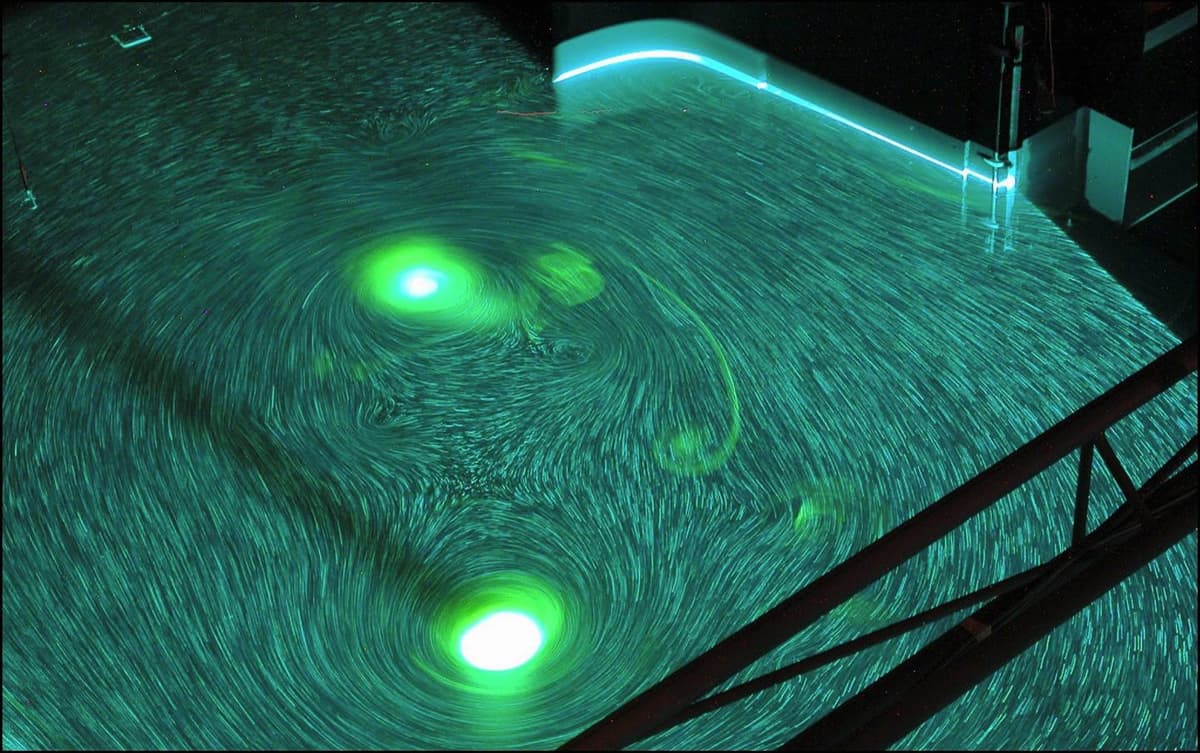
The Navier-Stokes equations describe fluid dynamics and are one of seven Millennium Prize Problems, each carrying a $1 million reward. OpenAI's system, powered by an unreleased internal model coordinating up to 10,000 sub-agents, proved that conditions exist under which the equations "blow up"—reaching singularities where fluid properties race toward infinity.
But mathematician Tristan Buckmaster of NYU's Courant Institute released his own statement alleging serious misconduct. Buckmaster and Levent Alpöge, a mathematician at Anthropic, had been working on the same problem for nearly a year using AI assistance from both companies' models. They developed a partial solution using an approach pioneered by other mathematicians, making rapid progress from mid-August onward.
The accusation
Buckmaster says OpenAI contacted him urgently starting September 3rd. During a September 6th call, OpenAI researchers revealed they had solved Navier-Stokes using the identical approach Buckmaster and Alpöge had pursued—despite only beginning work the previous week after rumors surfaced that Anthropic would announce a breakthrough.
The matching methodology raised immediate concerns. Buckmaster questioned whether OpenAI's model had been trained on his interactions with OpenAI's Codex tool, where he and Alpöge had documented their entire project. "I asked whether the model had been trained on, or had access to, our sessions in Codex," Buckmaster wrote. "I was told the model did not look up user data. I asked again, about training, and I did not get an answer."
Sebastien Bubeck, the OpenAI researcher leading the project, denied any access to Buckmaster's work. "We did not use their prompts or proofs to prompt our models or direct our agents," Bubeck said at a press conference.
Alleged intimidation
Buckmaster's allegations escalated further. He claims Bubeck offered him two options: publish his partial solution with OpenAI following the next day, or claim the prize himself—but only if he credited OpenAI's model and removed Alpöge's name due to his Anthropic affiliation.
When Buckmaster declined and threatened to go public, he alleges Bubeck said, "Why would you ruin your career?" and "If you don't want me to be nice, then I don't have to be nice."
Bubeck disputed the characterization on X, calling the allegations "false and inflammatory" and saying he followed "academic norms." In Tuesday's briefing, he said OpenAI recognizes "the priority of Levent Alpöge and Tristan Buckmaster's work."
OpenAI acknowledged it only pursued Navier-Stokes after hearing Anthropic rumors, consuming computing resources worth approximately $2 million—1,000 times what it typically uses for mathematical challenges.
Why it matters
The controversy extends beyond one disputed proof. Mathematician Terrence Tao, considered among the world's greatest living mathematicians, warned that AI companies are "strip-mining" mathematical problems for marketing purposes while providing little insight into how solutions were reached. This approach, Tao argues, destroys the ecosystem from which new mathematical techniques emerge—the failed attempts and alternative approaches that often prove more valuable than answers themselves.
The crisis facing mathematicians—questioning the purpose of their work when AI can crack nearly any problem—will soon confront all knowledge workers as AI capabilities expand across domains.
These details were first reported by Fortune's AI Watch newsletter.
OpenAI's computing costs
OpenAI told reporters it used computing resources at least 1,000 times greater than previous mathematical challenges, translating to roughly $2 million in compute costs for the week-long effort.
This is an original analysis by the Omega editorial team. Source reporting: AI Watch.
Want systems like this working for your business?
Book a Call