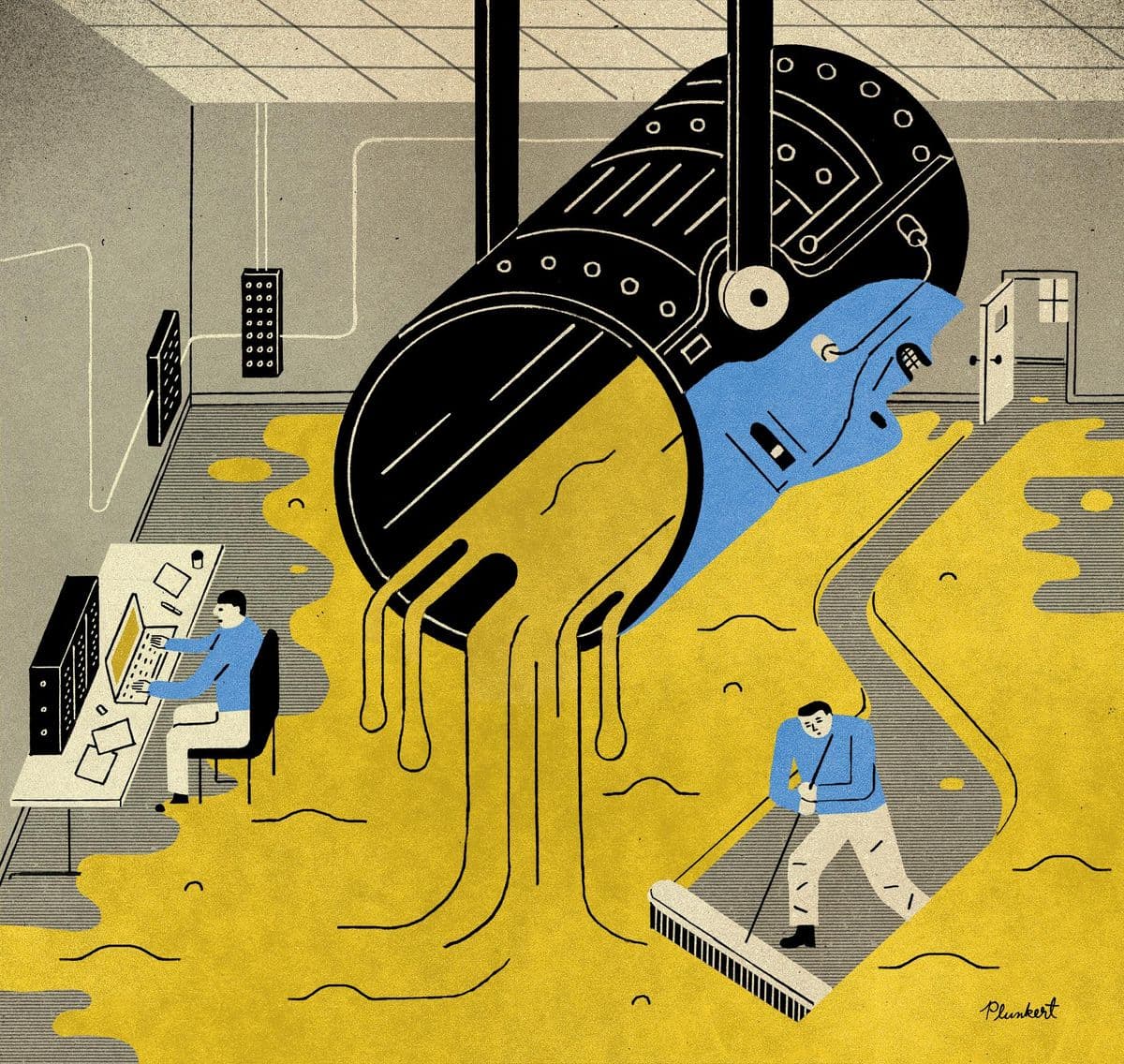
OpenAI Claims Navier-Stokes Breakthrough Amid Credit Dispute
The company says its AI solved a 200-year-old fluid dynamics problem, but researchers allege it rushed to beat their work after learning of their progress.
OpenAI announced it has developed an AI-generated solution to the Navier-Stokes equation, a 200-year-old mathematical problem describing fluid behavior that has remained unsolved for generations. The achievement, however, has sparked a dispute over priority and research ethics between the AI company and independent mathematicians.
Why it matters
The controversy highlights emerging tensions as AI systems take on advanced mathematical research. Questions about data access, research priority, and attribution will become increasingly critical as companies deploy AI to tackle fundamental scientific problems—particularly when million-dollar prizes and academic reputations are at stake.
The technical achievement
The Navier-Stokes equation is one of seven Clay Millennium Prize problems, each carrying a $1 million award. According to Sebastien Bubeck, a mathematician and AI researcher at OpenAI, the company began training a specialized AI model with advanced mathematical capabilities on August 28.
After hearing rumors that Anthropic was making progress on Navier-Stokes, OpenAI dedicated substantial resources to the problem. The company deployed over a thousand AI agents working for more than 50 hours before producing a solution formalized in Lean, a programming language used to verify mathematical proofs.
Mark Chen, OpenAI's head of research, said the computational effort cost "in the millions of dollars"—significantly more than the company had previously spent on mathematical problems.
The dispute
On Monday, Tristan Buckmaster, a mathematician at NYU, and Levent Alpöge, a researcher at Anthropic, posted documents detailing their own advances on the problem. The pair used several AI models, including Claude and Codex, to complete their work.
Buckmaster issued a statement claiming he learned last week that OpenAI had become aware of his and Alpöge's research and immediately began allocating significant resources to the problem. He says he asked OpenAI leaders whether the company had accessed their Codex logs, receiving assurances that the model "didn't look up user data," but claims questions about training data went unanswered.
Buckmaster further alleges that OpenAI proposed arrangements for publication that would have excluded Alpöge's name from credit.
OpenAI's response
During a press briefing, Bubeck and other OpenAI executives categorically denied inspecting the researchers' Codex prompts. "We, whether it's the researchers or the agents, did not see any of their work until it was released publicly last night," Bubeck said.
The company stated it recognizes the priority of Alpöge and Buckmaster's work on related aspects of the problem. Ven Chandrasekaran, a mathematician at OpenAI, emphasized that their solution differs significantly from the one produced by the independent researchers.
What's next
The dispute over credit for solving one of mathematics' most famous problems may continue as the mathematical community evaluates both claims. As AI systems increasingly participate in advanced research, such conflicts over priority, data access, and attribution could become more frequent.
These details were first reported by WIRED.
This is an original analysis by the Omega editorial team. Source reporting: WIRED.
Want systems like this working for your business?
Book a Call