Open-Weight AI Models Fall Short of True Open Source, Stanford Warns
As Chinese labs close the capability gap, a Stanford researcher argues the industry is confusing downloadable models with genuinely open science.
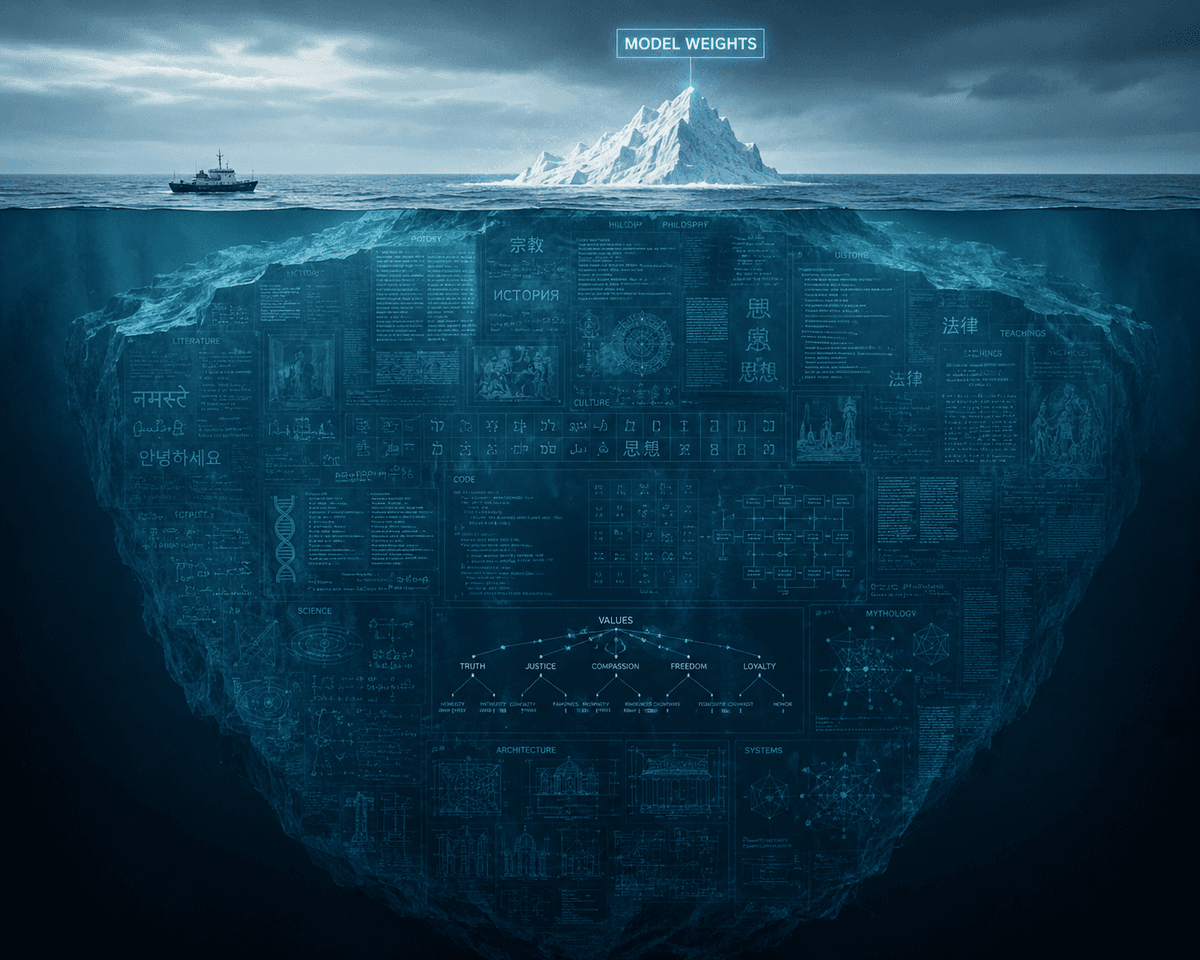
The Gap Between Open Weights and Open Source
Chinese AI companies have released powerful new models that rival American counterparts in performance while costing less to run. Moonshot AI's Kimi K3 and Alibaba's Qwen3.8-Max, both featuring around 2.4 trillion parameters, represent the most capable open-weight models yet released. According to Stanford's AI Index, the U.S.-China performance gap has narrowed to just a few percentage points.
But Stanford Institute for Human-Centered AI Denning Director James Landay argues the industry is having the wrong conversation. While U.S. policymakers debate export controls and more than 20 companies including Nvidia, Microsoft, and Meta warn against restricting open-weight models, Landay says everyone is missing a fundamental distinction: open weights are not the same as open source.
"Open weights are progress," Landay said, according to Stanford HAI. "You can download the model, run it on your own machine, keep it out of someone else's data pipeline. But you still can't see how the thing was built, what it was trained on, or why it behaves the way it does. That's not an open model. That's open distribution."
Why It Matters
The difference between downloadable models and genuinely open AI determines whether researchers can audit systems for bias, reproduce results, or build breakthrough innovations on top of existing work. Without access to training data and code, the scientific method breaks down—and so does accountability. As AI systems increasingly shape how people work and think, the concentration of frontier capability behind closed doors creates strategic chokepoints that can be weaponized in trade disputes or simply exploited for profit.
What True Openness Requires
Stanford HAI has defined its standard: alignment with the Linux Foundation's Model Openness Framework at the "Open Science" tier. That means releasing not just weights but training code, data (or thorough documentation of it), and tooling that allows outside researchers to download, study, modify, and contribute to the work.
Without that level of transparency, entire research directions become impossible. Scientists cannot study how training data shapes cultural assumptions, audit models for fair representation across populations, or test new architectures at the scale where novel behaviors emerge. They can only observe finished systems from the outside and guess at internal mechanics.
Landay notes that major AI breakthroughs—transformers, attention mechanisms, mixture-of-experts routing—all emerged from published research that other labs could examine and build upon. When frontier work moves behind closed doors, the next generation can only iterate on what a handful of companies choose to disclose.
The Risks of Concentration
Closed models create concentration risks regardless of which country builds them. A small number of firms controlling frontier AI through APIs decide who gets access, at what price, and whose values get embedded in tools that mediate daily work and thought.
Landay points to a familiar pattern of platforms that create value for users before pivoting to extract it. Closed frontier models represent the ultimate walled garden, where users own neither their data nor their history with the system. The longer someone uses a closed platform, the more context it accumulates—raising the cost of leaving and deepening lock-in.
The Commerce Department's order forcing Anthropic to take certain models offline demonstrates how quickly access to closed frontier AI can become a bargaining chip in trade disputes, with users caught in the middle.
A Path Forward
Landay proposes three requirements: decentralized AI that runs locally rather than through rental APIs, data portability that lets users move context between platforms, and verifiable agents whose builders and loyalties are transparent.
None of that works if underlying models remain closed. Landay argues universities—institutions that can commit to timelines beyond product cycles and pursue questions without clear revenue paths—should build and study leading-edge systems themselves.
"If 'open' just means 'downloadable,' we've traded one set of closed labs for another," he said. "Same concentration of power, different flag."
These details were first reported by Stanford HAI.
This is an original analysis by the Omega editorial team. Source reporting: AI Watch.
Want systems like this working for your business?
Book a Call